wayground logo

Free Printable Worksheets

NEW

Font size

S
M
L
XL
Worksheets

Bio-Living Earth Midterm Review

Total questions: 52

Worksheet time: 1hrs 15mins

Name
Class
Date
1.

Animal that gets its energy and nutrition from eating plants.

a)

Parasite

b)

Herbivore

c)

Carnivore

d)

Ominvore

2.

Animal that gets its energy and nutrition from eating meat.

a)

Detritivore

b)

Ominvore

c)

Carnivore

d)

Herbivore

3.

Organisms that produce their own food mostly through photosynthesis (producers). Examples are plants and algae.

a)

Ominvore

b)

Detritivore

c)

Heterotroph

d)

Autotroph

4.

Organisms that get their energy and nutrition from other organisms (consumers).

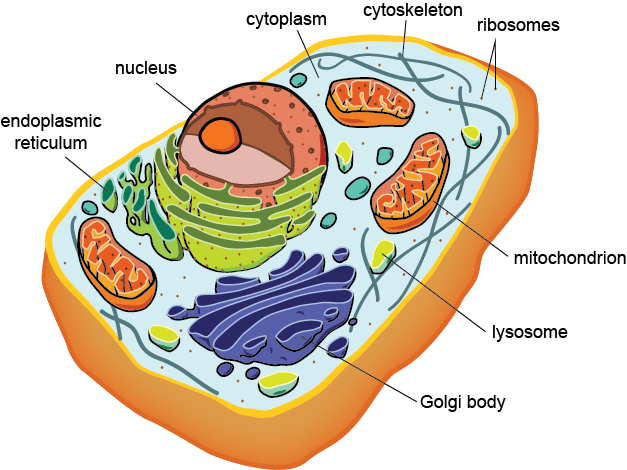
a)

Heterotroph

b)

Autotroph

c)

Photosynthetic Organisms

5.

Heterotrophs that get energy and nutrition from dead or decaying organisms or their waste products and recycle nutrients back to the ecosystem.

a)

Producer

b)

Trophic

c)

Decomposer

d)

Autotroph

6.

in an energy pyramid, which way does the energy transfer?

a)

from top of the pyramid to the bottom

b)

from the bottom of the pyramid to the top

c)

all of these

d)

none of these

7.
Which organism do the owl and the weasel compete for in the food web?
a)
Hawk
b)
Spider
c)
Grasshopper
d)
Shrew
8.
Which of the following would be the most likely effect, if there were a sudden increase in the cricket population?
a)
There would be a decrease in the small bird population.
b)
There would be a decrease in the grass/flowers population.
c)
There would be a decrease in the mice population.
d)
There would be an increase in the grass/flowers population.
9.
The arrows in a food chain or web represents what?
a)
They point to the organism that is being eaten.
b)
It shows how sunlight flows within an ecosystem.
c)
They show what direction the energy is flowing between organisms. 
d)
They represent how water is transferred within a habitat.
10.
How much energy is available to be passed on to the next trophic level in an ecosystem?
a)
100%
b)
10%
c)
50%
d)
75%
11.

Models the complex network of feeding relationships

a)

trophic levels

b)

food webs

c)

food chains

12.

An example of a producer is a

a)

fungus.

b)

animal.

c)

plant.

d)

person.

13.

In the food chain pictured, what type of organism is the bird?

a)

producer

b)

primary consumer

c)

secondary consumer

d)

tertiary consumer

14.
Proteins are made of monomers called ___________
a)
Nucleotides
b)
Monosaccharides
c)
Amino Acids
d)
Glycerol and fatty acids
15.
DNA and RNA are examples of 
a)
Carbohydrates
b)
Lipids
c)
Proteins
d)
Nucleic Acids
16.
Nucleotides are monomers of
a)
Carbohydrates
b)
Lipids
c)
Proteins
d)
Nucleic Acids
17.
Monosaccharides are monomers of
a)
Carbohydrates
b)
Lipids
c)
Proteins
d)
Nucleic Acids
18.
Waxes, oils and fats are examples of
a)
Carbohydrates
b)
Lipids
c)
Proteins
d)
Nucleic Acids
19.
Which of the following organic compounds is the main source of energy for living things?
a)
carbohydrates
b)
lipids
c)
nucleic acids
d)
proteins
20.
Which macromolecule stores energy, insulates us, and makes up the cell membrane?
a)
lipids
b)
proteins
c)
carbohydrates
d)
nucleic acids
21.
Lipids can be digested into what smaller subunits?
a)
nucleic acids
b)
amino acids
c)
fatty acids
d)
glucose
22.
All organic compounds contain the element
a)
carbon
b)
nitrogen
c)
phosphorus
d)
sulfur
23.
Building blocks of the body, hair , muscles etc.
a)
protein
b)
nucleic acid
c)
lipids
d)
carbohydrates
24.
Which particle has a positive charge?
a)
electron
b)
orbital
c)
proton
d)
neutron
25.
Choose the particle that has no charge.
a)
nucleus
b)
neutron
c)
proton
d)
electron
26.
An electron has a _____ charge.
a)
negative
b)
positive
c)
neutral
27.
Which particles make up the nucleus of an atom?
a)
protons and neutrons
b)
electrons and protons
c)
electrons, protons, and neutrons
d)
electrons and neutrons
28.
What is the atomic number of the atom pictured? 
a)
11
b)
12
c)
22
d)
23
29.
The negatively charged particles of an atom are the ______.
a)
electrons
b)
protons
c)
neutrons
d)
protons & neutrons
30.
Which is NOT a process of the water cycle?
a)
precipitation
b)
freezing
c)
transpiration
d)
evaporation
31.
The process of plants losing water through their leaves is called ____.
a)
condensation
b)
evaporation
c)
transpiration
d)
exhaling
32.
These gases, such as carbon dioxide, trap heat in the Earth's atmosphere causing global warming
a)
Global warming gases
b)
Hot House gases
c)
Green House gases
d)
Thermal pollution
33.
Carbon dioxide is added to the atmosphere by
a)
Burning fossil fuels 
b)
Cellular respiration
c)
Decomposing organic matter
d)
All answers are correct
34.
What is the only process that removes carbon from the atmosphere?
a)
combustion
b)
cellular respiration
c)
photosynthesis
d)
decomposition
35.
Cellular Respiration's goal is to
a)
make water
b)
make ATP
c)
make glucose
d)
make  oxygen
36.
In photosynthesis ...
a)
water is chloronated
b)
light energy is changed to glucose
c)
osmosis happens
d)
ATP is made
37.
What is the correct equation for cellular respiration?
a)
6O2 + C6H12O6 -> 6CO2 + 6H2O + Energy
b)
6O2 + C6H12O6 + Energy -> 6CO2 + 6H2O
c)
6CO2 + 6H2O -> 6O2 + C6H12O6 + Energy
d)
6CO2 + 6H2O + Energy -> 6O2 + C6H12O6
38.
The mitochondria is responsible for ...
a)
photosynthesis
b)
anaerobic respiration
c)
aerobic respiration
d)
fermentation
39.
A plant is releasing a gas. What is the mosl tlikely the gas?
a)
co2
b)
methane
c)
water vapor
d)
oxygen
40.
In which eukaryotic organelles does photosynthesis occur?
a)
mitochondria
b)
stomata
c)
xylem
d)
chloroplast
41.

what is included in the biosphere?

a)

all living things on earth

b)

all the gases

c)

all the water fresh & saltwater

d)

all the rocks and minerals

42.

what is included in the hydrosphere?

a)

all living things on earth

b)

all the gases

c)

all the water fresh & saltwater

d)

all the rocks and minerals

43.

what is included in the atmosphere?

a)

all living things on earth

b)

all the gases

c)

all the water fresh & saltwater

d)

all the rocks and minerals

44.

what is included in the geosphere/lithosphere?

a)

all living things on earth

b)

all the gases

c)

all the water fresh & saltwater

d)

all the rocks and minerals

45.

The basic building blacks from which all living organisms are made are

a)

cells

b)

DNA

c)

chromosomes

d)

Amoeba

46.

Has membrane bound organelles

a)

Prokaryote

b)

Eukaryote

c)

Both

47.

In what organelle is the genetic material found inside?

a)

Nucleus

b)

endoplasmic reticulum

c)

Mitochondria

d)

Lysosome

48.

What can only be found in plant cells?

a)

Chloroplast

b)

Vacuole

c)

Nucleus

d)

Cell membrane

49.

The two kinds of cells are Prokaryotes and Eukaryotes. How are they different?

a)

Prokaryotes are plant cells

b)

Eukaryotes have a nucleus

c)

Prokaryotes have a nucleus

d)

There is no difference

50.

What cell part is NOT found in all cells

a)

Cytoplasm

b)

Genetic material

c)

Cell membrane

d)

Cell wall

51.

What is the area in a cell that contains the gel-like substance and organelles?

a)

Cytoplasm

b)

Cytoskeleton

c)

Cell membrane

d)

Vacuole

52.
Which of the following statements is not part of the cell theory?
a)
Cells are the basic unit of structure and function in all living things.
b)
All cells are produced from other cells.
c)
Only animal cells are composed of cells.
d)
All living things are composed of cells.