wayground logo

Free Printable Worksheets

Font size

S
M
L
XL
Worksheets

Tutorial Online Ch 1 - Ch 3

Total questions: 70

Worksheet time: 38mins

Name
Class
Date
1.

Scientific name for fats and oils (made up of fatty acids)

a)

carbohydrates

b)

lipids

c)

proteins

d)

nucleic acids

2.
Information molecules that provide directions to make proteins. Most important DNA & RNA 
a)
carbohydrates
b)
lipids
c)
nucleic acids
d)
proteins
3.
Many monomers make up a _______________. 
a)
multimer
b)
polymer
c)
pillowmer
d)
micromolecule
4.
__________ is the monomer that makes up proteins. 
a)
amino acids 
b)
sugar
c)
nucleotides
d)
fatty acids 
5.

What elements are present in this fatty acid chain?

a)

H, O, C

b)

H, C

c)

Ag, C, He

d)

Ti, Aq, O

6.
Lipids are made up of which of the following?
a)
glycerol and fatty acids
b)
glycerol and monolipids
c)
fatty acids and phosolipids
d)
amino acids and nucleotides
7.
This is an example of a(n) ___________,
a)
amino acid
b)
monosaccharide
c)
disaccharide
d)
triglyceride
8.
These molecules are examples of ________.
a)
monosaccharides
b)
amino acids
c)
triglycerides
d)
fatty acids
9.
The molecules in the image represent the ____ structure of the protein.
a)
primary
b)
secondary
c)
tertiary
d)
quarternary 
10.
What are the four types of Macromolecules
a)
carbohydrates, proteins, lipids, amino acids
b)
carbohydrates, lipids, nucleic acids, proteins
c)
carbohydrates, monosaccharides, proteins, lipids
d)
carbohydrates, amino acids, lipids, proteins
11.
How many bonds can carbon form?
a)
two
b)
four
c)
three
d)
one
12.
Which of the following is NOT found in a nucleotide
a)
Amino Acid
b)
Pentose Sugar
c)
Nitrogen Base
d)
Phosphate Group
13.
What is a water molecule composed of?
a)
1 Hydrogen atom and 2 Oxygen atoms
b)
2 Hydrogen atoms and 1 Oxygen atom
c)
3 Oxygen atoms
d)
2 Helium atoms and 1 Oxygen atom
14.
Plants store glucose in the form of
a)
starch
b)
glycogen
c)
cellulose
d)
chitin
15.
This polysaccharide is important to the structure of plant cell walls, 
a)
Starch
b)
Glycogen
c)
Cellulose
d)
Chitin
16.

During the formation of the peptide bond which of the following takes place?

a)

Hydroxyl group is lost from its carboxyl group of one amino acid and a hydrogen atom is lost from its amino group of another amino acid

b)

Hydrogen atom is lost from its carboxyl group of one amino acid and a hydroxyl group is lost from its amino group of another amino acid

c)

Hydroxyl group is lost from its carboxyl group of one amino acid and a hydroxyl group is lost from its amino group of another amino acid

d)

Hydrogen atom is lost from its carboxyl group of one amino acid and a hydrogen atom is lost from its amino group of another amino acid

17.

Based on the diagram, the side chain of amino acid alanine is;

a)

NH2

b)

COOH

c)

H

d)

CH3

18.

What is the monomer of a lipid?

a)

monosaccharide

b)

nucleic acid

c)

fatty acid

d)

amino acid

19.
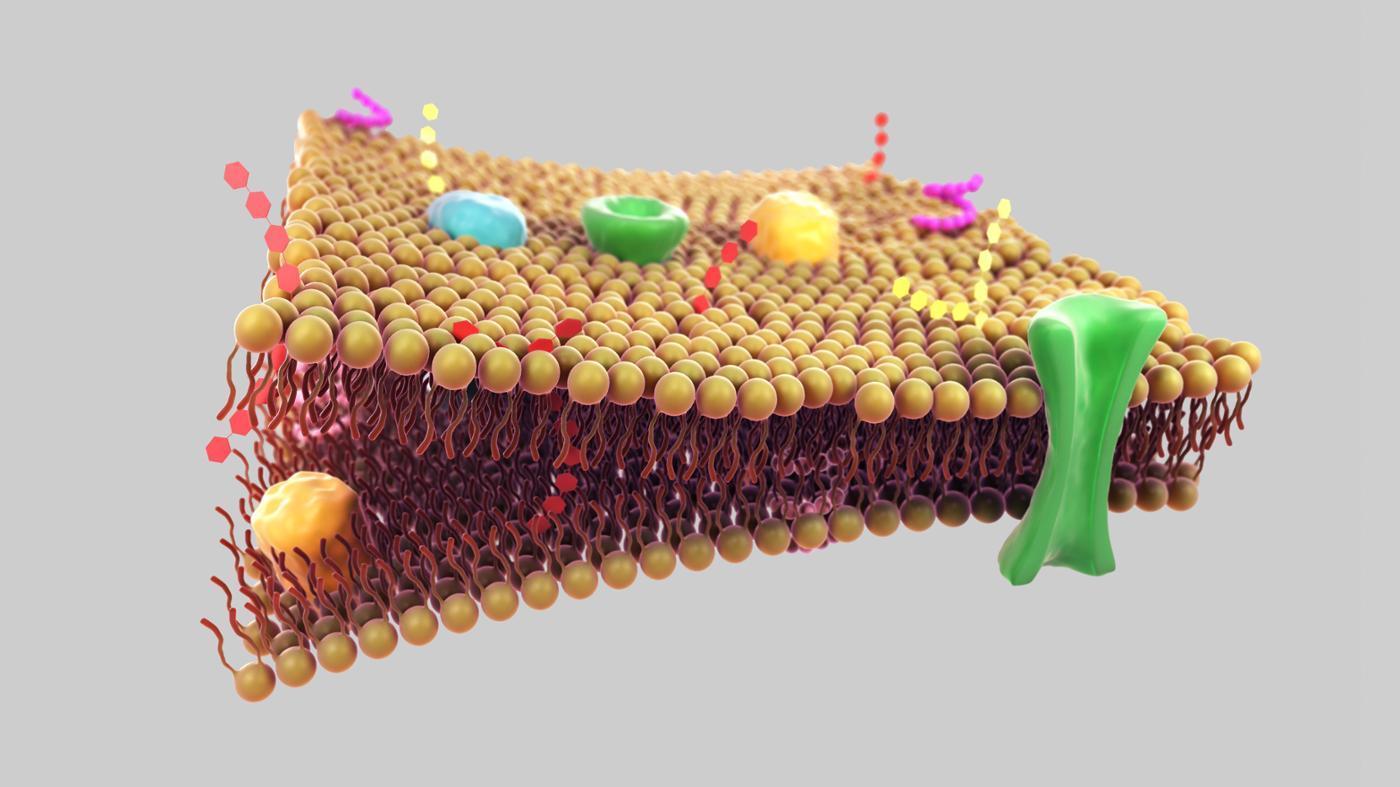
The phospholipid bilayer comprises what part of the cell?
a)
cytoplasm
b)
cell membrane
c)
cytoskeleton
d)
nuclear membrane
20.
What type of fat is this?
a)
saturated fatty acid
b)
unsaturated fatty acid
c)
steroid
d)
wax
21.
What type of lipid is this?
a)
steroid
b)
cholesterol
c)
phospholipid
d)
triglyceride
22.
In the phospholipid, the polar head is considered what type of structure?
a)
hydrophobic
b)
insoluble
c)
hydrophilic
23.

Which of the following molecules is not a lipid?

a)

testosterone

b)

triglycerides

c)

cellulose

d)

phospholipids

24.
The C-O-O-H on the end of a fatty acid structure is called a _______
a)
carboxyl group
b)
R group
c)
fatty acid
d)
amino acid
25.

Lipids do not dissolve in water because they are _______________

a)

polar

b)

water soluble

c)

non-polar

d)

charged

26.

1. Which of the following is a characteristic of a prokaryotic cell?

a)

Cellulose cell wall

b)

Mitochondrion

c)

Absence of nucleus

d)

Large subunit (80S) ribosome

27.

Which of the following is a characteristic of eukaryotic cells?

a)

Mesosome

b)

Chloroplast

c)

Only 70s ribosomes

d)

Peptidoglycan cell wall

28.

Which of the following are present in bacteria?

a)

Cytoplasm, DNA, 70S ribosome

b)

Mitochondria, chloroplasts, Golgi body, 80S ribosome

c)

Mitochondria, chloroplasts, DNA, nuclear membrane

d)

Mitochondria, chloroplasts, DNA, nuclear membrane

29.

Characteristics of Organelle J are listed below:

Located in cytosol Not found in prokaryotic cell Act as 'brain' of a cell and control all cellular activities


Organelle J is?

a)

Chloroplast

b)

Golgi body

c)

Nucleus

d)

Mitochondrion

30.

All these pairs are true, EXCEPT?

a)

Ribosomes - responsible for protein synthesis

b)

Mitochondrion - site of sugar production

c)

Smooth ER - detoxification of drugs in liver cells

d)

Golgi body - Process and packaging proteins for secretion

31.

Phospholipids consist of a glycerol molecule, two fatty acids, and a phosphate group that is modified by an alcohol which makes this part hydrophobic. The fatty acid chains are the uncharged, nonpolar tails, which are hydrophobic.


This property of phospholipid is called (a)   ? (clue: dual-loving)

32.

This organelle is the site for photosynthesis

(a)  

33.

The function of the organelle X is?

a)

Site of lipid synthesis

b)

Synthesize, packaging and transport the secretory proteins

c)

Detoxification of drugs and poisons

d)

Detoxification of drugs and poisons

34.

These two molecules which are _______ and _________ cause the fluidity of the plasma membrane.


(Format answer: Answer 1 and answer 2), Don't forget to put "and" in between Answer 1 and Answer 2)

(a)  

35.

Which organelle involves in energy conversion of a cell?

(a)  

36.

What is the function of columnar epithelium that has cilia?

a)

Absorption

b)

Secretion

c)

Protection

d)

Storage

37.

What is blood classified as?

a)

tissue

b)

organ

c)

organ system

d)

organism

38.

Which of the following is NOT a function of epithelial tissues?

a)

covering exposed surfaces

b)

lining internal passageways

c)

producing glandular secretions

d)

contracting to produce movement

39.
Which is NOT a shape of epithelial cells?
a)
cuboidal
b)
columnar
c)
squamous
d)
circular
40.
Used in places where diffusion needs to occur, such as blood vessels and air sacs in the lungs
a)
Cuboidal
b)
Columnar
c)
Simple Squamous
d)
Stratified Squamous
41.

What type of muscle is/are voluntary?

a)

smooth and cardiac

b)

smooth

c)

skeletal and smooth

d)

skeletal

42.
Nervous tissue
a)
Tissue that is responsible for lining, covering, and glandular tissue
b)
Tissue responsible for protecting, supporting, and binding together other body tissues
c)
Tissues that contracts and shortens to produce movement
d)
Tissue that receives and conducts electrochemical impulses from one part of the body to another
43.
Name this tissue
a)
Bone
b)
Hyaline cartilage
c)
Fibrocartilage
d)
Adipose
44.

The part of the neuron that insulates the axon and increases the speed of the neural message within the neuron.

a)

Cell Body

b)

Dendrite

c)

Myelin Sheath

d)

Axon Terminal

45.
This picture represents what type of cell transport?
a)
endocytosis
b)
exocytosis
c)
osmosis
d)
passive transport
46.
The concentration of water is higher in the soil than in plant root cells. Water moves into root cells of a plant by...
a)
Facilitated Diffusion
b)
Simple Diffusion
c)
Active Transport
d)
Osmosis
47.
Food is moved into the cell by ________________________.
a)
endocytosis
b)
diffusion
c)
exocytosis
d)
osmosis
48.

This cell organelle helps organisms maintain homeostasis by controlling the substances that enter or leave cells.

a)

vacuole

b)

nucleus

c)

cell membrane

d)

cell wall

49.
A molecule that diffuses down a concentration gradient goes from an area of ______ concentration into an area of ______ concentration.
a)
high, low
b)
low, high
c)
passive, active
d)
active, passive
50.
A cell with a 5% salt solution is placed into a beaker with a 10% salt solution.  This solution is considered to be _____ to the cell.
a)
Isotonic
b)
Hypertonic
c)
Hypotonic
d)
None of the Above
51.

Nuclear division is known as

(a)  

52.

Put the following stages of mitosis in order:

a)

prophase, metaphase, telophase, anaphase

b)

prophase, anaphase, metaphase, telophase

c)

prophase, metaphase, anaphase, telophase

d)

prophase, telophase, metaphase, anaphase

53.

Why would it be important to replicate DNA before a cell divides in mitosis or meiosis?

a)

In order for genetic information to be transferred into daughter cells.

b)

In order for the cell to be able to increase in size.

c)

In order for the DNA to be contained in the nucleus.

d)

In order for the cell to re-order the DNA sequencing in the new cells.

54.

Which phase of Mitosis is shown here?

a)

Cytokinesis

b)

Anaphase

c)

Telophase

d)

Prophase

55.

The ___________ holds the replicated sister chromatids together.

a)

centriole

b)

chromosomes

c)

centromere

d)

cycles

56.
What letter correctly represents structure X in the diagram? 
a)
Spindle fibers
b)
Cleavage Furrow 
c)
Chromosomes
d)
Centrioles
57.

The protein that associates with centromere, in which spindle microtubules attach

(a)  

58.

These states the chromosomal behaviour in mitosis, except.

a)

Centrosomes move to the opposite poles

b)

Chromatin fibres are condensed to chromosomes

c)

Sister chromatids are pulled to the opposite poles

d)

Chromatids are decondense to chromatin

59.

Solution with high water potential has ________ free water molecules, and _________ solute.

a)

more, less

b)

less, more

c)

more, more

d)

same, same

60.

Solution A has a water potential of -0.2 kPA while solution B has a water potential of -0.4kPa. They are separated by a semi permeable membrane. The water will diffuse...

a)

From solution B to A

b)

From solution A to B

c)

From both direction at equal rate

d)

No diffusion occurs

61.
What causes genetic variation in meiosis?
a)
chromosomes lining up
b)
crossing over of chromosomes
c)
separation of chromosomes
d)
chromosomes pulling apart
62.
If the Diploid number of Carrots is 18, the haploid number is
a)
18
b)
9
c)
27
d)
36
63.
The process of crossing over occurs in what phase of meiosis?
a)
anaphase 1
b)
prophase 1
c)
prophase 2
d)
telophase 1
64.
The chromosomes that pair up during meiosis, are called __________ chromosomes.  
a)
homozygous 
b)
asexual
c)
homologous
d)
genes
65.
When homologous chromosomes match up, they form a structure call a ___________.
a)
tetrad (pair of chromosomes, one from mom and one from dad)
b)
triad
c)
diploid
d)
quad (group of 4 replicated chromosomes, 2 from mom and 2 from dad)
66.
Which of the following best describes meiosis?
a)
It is carried out in all tissues theat require cell replacement
b)
It occurs only in cells in the reproductive structures of an organism
c)
It happens in all of the tissues except the brain and spinal cord
d)
It is the first stage of mitosis
67.
Meiosis makes sperm and egg cells. In humans, sperm and egg cells each have _____ chromosomes. Therefore a fertilized human egg cell (sperm and egg cell combined) would create a cell with _____ chromosomes.
a)
23, 46
b)
46, 23
c)
2, 4
d)
50, 100
68.
What phase is shown here?
a)
Anaphase I
b)
Prophase I
c)
Metaphase II
d)
 Metaphase I
69.
What phase is shown here?
a)
Telophase I
b)
Metaphase II
c)
Telophase II
d)
Anaphase I
70.
What phase is  shown in the picture?
a)
anaphase 1
b)
anaphase 2
c)
metaphase 1
d)
telophase 1