Wayground logo

Free Printable Worksheets

Font size

S
M
L
XL
Worksheets

Chemistry benchmark 2020-2021

Total questions: 50

Worksheet time: 48mins

Name
Class
Date
1.
Definite volume but not definite shape
a)
solid
b)
liquid
c)
gas
d)
solid, liquid and gas
2.
Change of state from a solid directly to a gas is called
a)
deposition
b)
melting
c)
evaporation
d)
sublimation
3.
water is heated and changed to steam
a)
physical change
b)
chemical change
4.
Temperature is the measurement of which type of energy?ABCD
a)
chemical
b)
mechanical
c)
potential
d)
kinetic
5.
How close a measurement is to the true value is called..
a)
Accuracy
b)
Precision
c)
Significant
d)
Estimate
6.
What is the volume of Object X?
a)
10.0 cm3
b)
15.0 cm3
c)
20.0 cm3
d)
25.0 cm3
7.
What is this?
a)
Measuring tube
b)
Test tube
c)
Graduated Cylinder
d)
Pipette
8.
Italian Salad Dressing
a)
heterogeneous mixture
b)
homogeneous mixture
9.
Definite volume but not definite shape
a)
solid
b)
liquid
c)
gas
d)
solid, liquid and gas
10.
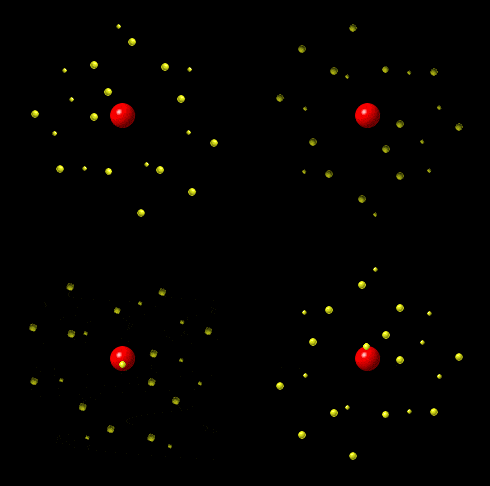
Each of these beakers contains the same substance, they are in different states. Which has the lowest kinetic energy?
a)
solid 
b)
liquid
c)
gas
d)
can't be determined because I don't know the temperature
11.
Which of the following is true about halogens?
a)
they have one valence electron
b)
they have two valence electrons
c)
they have seven valence electrons
d)
they have eight valence electrons
12.
Which of the following is evidence of a chemical change?
a)
change of state
b)
change of shape
c)
change of size
d)
change of chemical composition
13.
Where is most of the atom's mass located?
a)
protons
b)
neutrons
c)
electrons
d)
nucleus
14.
The atomic number of an atom represents:
a)
# of protons only
b)
# of electrons only
c)
# of protons and electrons (if atom is neutral)
d)
# of protons, electrons, and neutrons
15.

An electron is

a)

positively charged

b)

neutral

c)

negatively charged

16.

atomic number is

a)

the number of protons

b)

the number of electrons

c)

the number of neutrons

d)

the location of an atom on the periodic table

17.

An elements is

a)

a substance that cannot be split into simpler substances

b)

a substance that can be split into simpler substances

18.

A pure substance that is a compound is made out of

a)

particles of more than one type of atom

b)

particles of the same type of atom

c)

a mixture of two or more substances that can be physically separated

19.

In a chemical reaction, reactants contact each other, bonds between atoms in the reactants

are broken, and

a)

atoms rearrange and form new bonds to make the products.

b)

atoms remain the same and do not form new bonds to make the proudcts

20.

To neutralise an acid you add a

a)

acid

b)

base

c)

Ph indicator

d)

equal amount of water

21.

A Ph scale of7/8 is

a)

acidic

b)

neutral

c)

basic

22.

The type of reaction that releases energy as heat is called

a)

endothermic

b)

exothermic

c)

respiration

d)

photosynthesis

23.
The group number tells us how many _________ there are in an element.
a)
groups
b)
valence electrons
c)
energy levels
d)
chemicals
24.
The inner energy level can only hold ______ electrons.
a)
1
b)
0
c)
2
d)
18
25.
Which particle does not contribute mass to the atom?
a)
Proton
b)
Neutron
c)
Electron
d)
Nucleus
26.
Most of the mass in an atom is made up of _____________________?
a)
protons and electrons
b)
protons and neutrons
c)
neutrons and electrons
d)
electrons and quarks
27.

What is the number of protons that the element in this image contain?

a)

14

b)

7

c)

15

d)

18

28.

How do the following two elements bond together?

Al3+ O2-

a)

AlO

b)

Al2O3

c)

Al3O6

d)

Al3O2

29.

The proper formula for magnesium hydroxide:

a)

MgOH

b)

Mg2OH

c)

Mg(OH)2

d)

Mg2OH2

30.
The rate at which a radioactive element decays is its ____.
a)
quarter life
b)
whole life
c)
wonderful life 
d)
half life
31.
How many elements are in C6H12O6?
a)
1
b)
2
c)
3
d)
4
32.
A molecule is made up of
a)
one or more mixtures.
b)
one or more compounds.
c)
one or more atoms.
d)
one or more solutions.
33.
Which scientific law states that an atom cannot be created or destroyed:
a)
Law of Conservation of Matter
b)
Law of Gravity
c)
Law of Conservation of Mass
d)
Law of Motion
34.
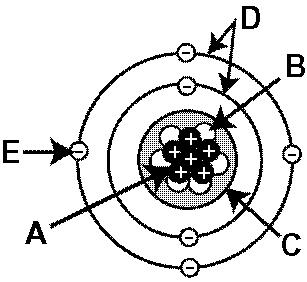
In the atom diagram shown, E is pointing to
a)
An electron
b)
a proton
c)
a neutron
d)
the nucleus
35.
Which of the following is described as the basic unit of matter?
a)
Element
b)
Atom
c)
Molecule
d)
Compound
36.
What charge does an electron have?
a)
Negative
b)
Positive
c)
Neutral
d)
Contrated
37.

In this chemical equation, the elements in red are the_______.

a)

Products

b)

Reactants

c)

Subscripts

d)

Coefficients

38.

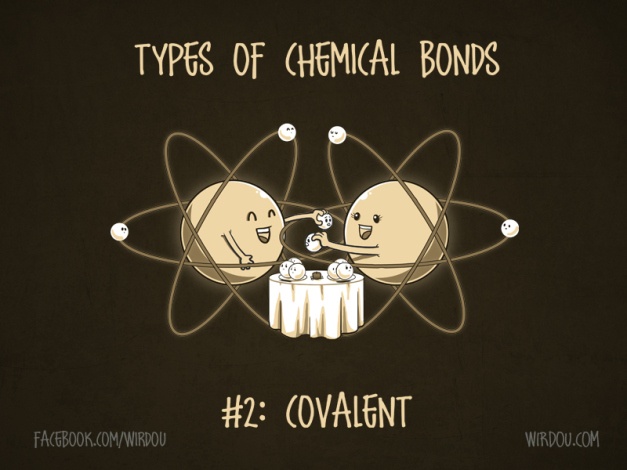
Covalent bonds form when

a)

the electronegativity difference between two atoms is very large.

b)

electrons are completely transferred between two atoms.

c)

pairs of electrons are shared between two atoms.

d)

ions are held together by opposite charges.
39.

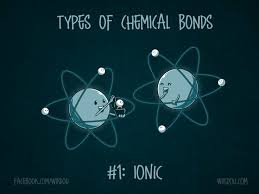
An ionic bond forms when

a)

valence electrons are shared back and forth (move between) two atoms.

b)

a sea of mobile electrons surround the cations and they then become negativly charged

c)

valence electrons are transferred from one atom to another, forming charged ions that are then pulled together by attraction between opposite charges

d)

none of the above

40.
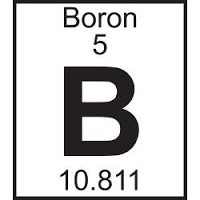
How many protons does this atom have?
a)
2.5
b)
6
c)
5
d)
10.811
41.
The ratio of mass and volume of a substance is its:
a)
density
b)
length
c)
weight
d)
chemical formula
42.
In an atom, _____ are found in the nucleus, and _______ are found orbiting the nucleus.
a)
protons; neutrons
b)
neutrons; electrons
c)
protons and neutrons; electrons
d)
electrons; protons and neutrons
43.
The atomic number of an atom represents:
a)
# of protons only
b)
# of electrons only
c)
# of protons and electrons (if atom is neutral)
d)
# of protons, electrons, and neutrons
44.
Why are noble gases non-reactive?
a)
they are ionic in nature
b)
they have atoms which are bonded to one another
c)
their valence orbitals are completely occupied
d)
none of the above
45.

Using the chemical equation below to answer:

H2 + O2 🡪 H2O

Is this equation balanced?

a)

Yes

b)

No

46.

How does a balanced chemical equation support the law of conservation of matter?

a)

It shows that all the matter present at the beginning of a reaction is still there at the end of a chemical reaction.

b)

It shows that matter is both created and destroyed in a chemical reaction.

c)

It shows that matter was created in a chemical reaction.

d)

It shows that matter was destroyed in a chemical reaction.

47.

Helium, Neon, Argon, Krypton, Xenon, and Radon make up the last column on the periodic table and all have similar properties. What do we call these elements?

a)

cousins

b)

sisters

c)

a family

d)

a period

48.

Matter is:

a)

anything that has mass

b)

anything that takes up spave

c)

anything that has mass and takes up space

d)

anything that does NOT have mass and does NOT take up space

49.

Which of the substances in the chart below is the most acidic?

Pure water - 7.0

coffee - 5.0

Apple juice: 3.5

cola: 2.5

a)

Cola

b)

Apple juice

c)

Pure water

d)

Coffee

50.

Zn + Ag2S 🡪 ZnS + ?Ag


The coefficient should be used in place of the questions mark to balance the equation above ?

a)

1

b)

2

c)

3

d)

4