

Wayground logo

Free Printable Worksheets

Font size

S
M
L
XL
Worksheets

Unit 2 Forces and Motion

Total questions: 43

Worksheet time: 47mins
Name
Class
Date
1.
What is the formula to calculate speed?
a)
Speed = time/distance
b)
Speed = distance/time
c)
Speed = distance x time
d)
Speed = time x distance
2.
Which of the following is a unit for acceleration?
a)
km/s
b)
m/s2
c)
mi/hr
d)
ft
3.
Acceleration is defined as the CHANGE in 
a)
time it takes for one place to move to another place. 
b)
velocity of an object.
c)
distance divided by the time interval 
d)
velocity divided by the time interval 
4.
Acceleration only takes place when things speed up. 
a)
True
b)
False
5.
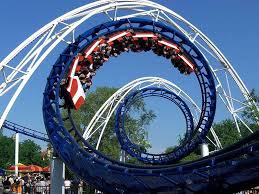
A roller coasters accelerates from an initial velocity of 6.0 m/s to a final velocity of 70 m/s over 4 seconds.  What's the acceleration?
a)
24 m/s2
b)
18 m/s2
c)
16 m/s2
d)
16 m/s
6.
Acceleration can be classified as _______________
a)
Speeding up
b)
Slowing Down
c)
Changing directions
d)
All of the above
7.
Why does a car accelerate as it round a corner at a constant speed?
a)
Its direction changes
b)
It doesn't
c)
It slows down
d)
Its speeds up  
8.
Velocity is both ____ and _____. 
a)
speed , direction 
b)
direction, mass
c)
volume, density 
d)
direction, magnitude 
9.
The momentum of an object depends upon the object's ___________&_____________.  
a)
size and shape
b)
mass and speed
c)
mass and veloctiy
d)
mass and energy
10.
Which has more momentum: a car stopped at a red light or a bike moving at 15 mph?
a)
car
b)
bike
c)
they are equal
d)
cannot determine using the info provided
11.
Momentum is a ____________________ quantity
a)
science
b)
scalar
c)
vector
d)
energy
12.
Which of the following has the greatest momentum? 
a)
a scurrying cockroach
b)
a parked semi-truck
c)
more information is needed
13.
When the speed of an object is doubled, its momentum
a)
remains unchanged in accord with the conservation of momentum.
b)
doubles
c)
quadruples
d)
decreases
14.
Which object listed below has the greatest momentum?
a)
A 0.05 kg object rolling at 0.2 m/s.
b)
A 0.15 kg object rolling at 2 m/s.
c)
A 0.15 kg object rolling at 1 m/s
d)
A 0.4 kg object rolling at 2 m/s.
15.
Which of the following has the least amount of momentum?
a)
An ant walking along the ground
b)
An ant at rest
c)
An elephant walking
d)
An elephant running
16.
What is Newton's Third Law?
a)
Object in motion stays in motion and an object at rest stays at rest unless acted on by a outside force
b)
Force = mass x acceleration
c)
For every action there is an equal and opposite reaction
17.
Which of the following has more momentum? 
a)
a moving SUV
b)
a moving semi-truck
c)
more information is needed
18.

Two skaters begin at rest. Skater 1 has a smaller mass than Skater 2. After they push off each other,...

a)

Skater 1 experiences a greater change in momentum

b)

Skater 2 experiences a greater change in momentum

c)

Skater 1 has a greater speed than Skater 2

d)

Skater 1 experiences a greater force

19.

Which object has more momentum?

a)

motorcycle at 15 mph?

b)

bike at 15 mph

c)

car at a stoplight

d)

runner at 10 mph

20.

which object has more momentum?

a)

baby crawling

b)

car at stoplight

c)

butterfly in flight

d)

ant carrying crumb

21.

Which is the most important factor in an object's momentum?

(2 answers)

a)

shape

b)

mass

c)

velocity

d)

volume

22.

If an object has a momentum of 40 kgm/s and a mass of 60 kg, what is it's velocity?

a)

2400 m/s

b)

1.5 m/s

c)

240 m/s

d)

.67 m/s

23.

If an object has a mass of 20 kg and a velocity of 4 m/s, what is the momentum of the object?

a)

80 kgm/s

b)

4 kgm/s

c)

5 kgm/s

d)

.2 kgm/s

24.
All objects in the universe have a gravitational attraction to each other. 
a)
True
b)
False
25.
A Newton is a derived unit of force that is actually... (Think of the units involved in Newton's second law of motion) 
a)
Kg m/s2
b)
Kg m/s
c)
Kg 
d)
Kg m2/s2 
26.
What type of force is shown in the picture above?
a)
Magnetic
b)
Gravitational
c)
Applied
d)
Normal
27.
Forces that produce a non-zero net force and change an object's motion are______________.
a)
balanced
b)
unbalanced
28.
Issac Newton's First Law of Motion states that...
a)
Objects in motion remain in motion.
b)
Force equals mass times acceleration.
c)
Every action has an equal and opposite reaction.
d)
Speed equals distance divided by time.
29.
The force of the Earth, moon or other large body that attracts other objects towards it is called________.
a)
friction
b)
electricity
c)
gravity
d)
speed
30.
Two factors that affect the rate of gravity are ____________.
a)
distance and mass
b)
weight and resistance
c)
location and speed
d)
position and friction
31.
Newton's 3rd Law of Motion states...
a)
Every action has an equal and opposite reaction.
b)
Force equals mass times acceleration.
c)
Objects in motion stay in motion.
d)
Speed equals distance over time.
32.
Velocity is an object's ________________.
a)
speed in a specific direction
b)
distance traveled in a certain amount of time
c)
unit of force measurement
d)
change in speed or direction
33.
Newton's 2nd Law of Motion states...
a)
Force equals mass times acceleration.
b)
Objects in motion stay in motion unless acted upon by an outside force.
c)
Every action has an equal and opposite reaction.
d)
All objects are required to have a gravitational force.
34.
What is an example of a force that can work at a distance without needing to touch?
a)
magnets
b)
friction
c)
gravity
d)
both magnets and gravity
35.

This picture demonstrates which of Newton's three Laws of Motion?

a)

intertia

b)

F=ma

c)

Action forces and reaction forces

36.

The rate at which velocity decreases; also known as negative acceleration

a)

Deceleration

b)

Acceleration

c)

Speed

d)

Motion

37.

When the sum of all forces acting on an object is no change in motion

a)

Unbalanced Force

b)

Force

c)

Net Force

d)

Balanced Force

38.

A _________________ is needed to make a motionless object move.

a)

direction

b)

command

c)

force

d)

magnet

39.
Force depends on
a)
Force
b)
mass
c)
acceleration
d)
mass and acceleration 
40.
How do you calculate force? What is the equation you use? (Hint: it was in the first picture.)
a)
f=m/a
b)
f=a/m
c)
f=m*a
d)
a=m*f
41.
Intermolecular forces are the forces
a)
within molecules
b)
between molecules
42.
_____________ is the force that binds protons together in the nucleus of an atom. 
a)
Gravity 
b)
Electromagnetism 
c)
Strong Nuclear 
d)
Weak Nuclear 
43.
An electron moving in wire is an example of  ____________. 
a)
Gravity 
b)
Electromagnetism 
c)
Strong Nuclear 
d)
Weak Nuclear
