wayground logo

Free Printable Worksheets

Font size

S
M
L
XL
Worksheets

First semester overstuffed final review

Total questions: 197

Worksheet time: 4hrs 10mins

Name
Class
Date
1.

Does the following diagram represent an element, compound or mixture?

a)

Element

b)

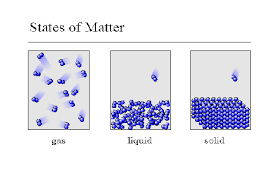
Compound

c)

Mixture

2.

Does the following diagram represent an element, compound or mixture?

a)

Element

b)

Compound

c)

Mixture

3.

Does the following diagram represent an element, compound or mixture?

a)

Element

b)

Compound

c)

Mixture

4.

Does the following diagram represent an element, compound or mixture?

a)

Element

b)

Compound

c)

Mixture

5.

Does the following diagram represent an element, compound or mixture?

a)

Element

b)

Compound

c)

Mixture

6.

Does the following diagram represent an element, compound or mixture?

a)

Element

b)

Compound

c)

Mixture

7.

Does the following formula represent an element compound or mixture?
 SO2SO_{2_{ }}  

a)

Element

b)

Compound

c)

Mixture

8.

Does the following formula represent an element, compound or mixture?
 CuCu  

a)

Element

b)

Compound

c)

Mixture

9.

Does the following formula represent an element, compound or mixture?
 NaCl + H2ONaCl\ +\ H_2O  

a)

Element

b)

Compound

c)

Mixture

10.

Does the following formula represent an element, compound or mixture?
 O2O_2  

a)

Element

b)

Compound

c)

Mixture

11.
What line segment represents only the solid state?
a)
A-B
b)
B-C
c)
C-D
d)
D-E
12.
A substance's heating curve is shown in the graph.  What is its boiling point?
a)
100 C
b)
60 C
c)
80 C
d)
20 C
13.
At higher temperatures
a)
particles in an object have less energy
b)
particles in an object move faster
c)
a gas contracts
14.
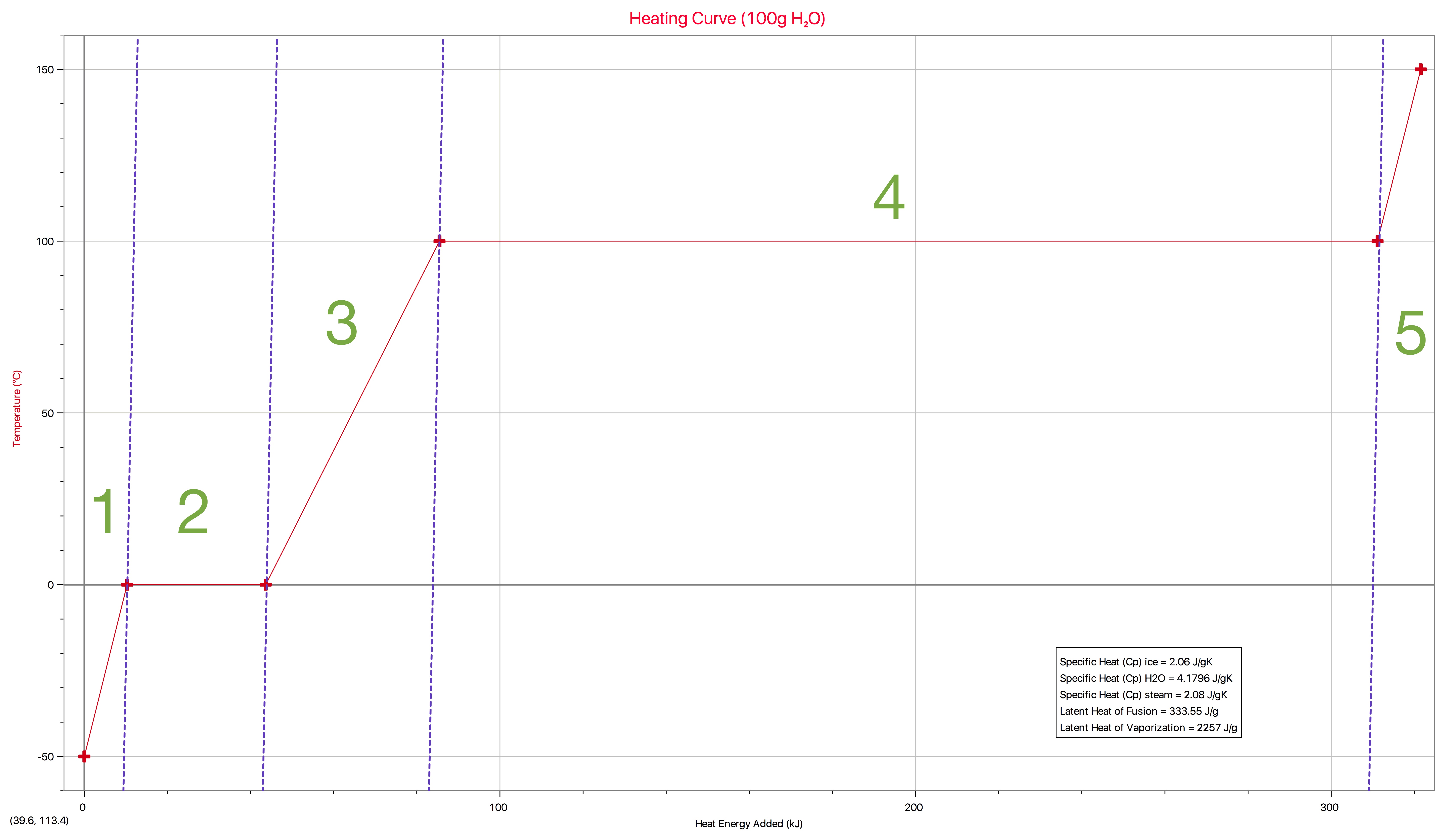
In which region(s) does temperature remain constant?
a)
Region 1, 3, & 5
b)
Region 2 & 4
c)
Region 1 only
d)
Region 1 & 2
15.
In which region(s) of the graph would the substance be a solid and a liquid?
a)
Region 1
b)
Region 2
c)
Region 3
d)
Region 4
16.
Which of the following terms identifies the change from a liquid to gas?
a)
Vaporization
b)
Condensation
c)
Deposition
d)
Sublimation
17.

From point A to point E, the sample is going through an

a)

exothermic process by releasing heat to the surroundings

b)

exothermic process by absorbing heat from the surroundings

c)

endothermic process by releasing heat to the surroundings

d)

endothermic process by absorbing heat from the surroundings

18.
In which region(s) of the graph would the substance only be in one phase?
a)
Region 1, 3, & 5
b)
Region 2 & 4
c)
Region 1 only
d)
Region 1 & 2
19.

Particles that are touching, but can flow over each other can be found in which state?

a)

Liquid

b)

Gas

c)

Solid

20.

Particles that are not touching and have lots of energy can be found in which state?

a)

Liquid

b)

Gas

c)

Solid

21.

The temperature of a substance does not change during a state change?

a)

True

b)

False

22.

Given the heating curve of a solid being heated at a constant rate, what is the boiling point of this substance?

a)

20°C

b)

50°C

c)

110°C

d)

170°C

23.

Given the heating curve of a solid being heated at a constant rate, during which time segment was there a change in kinetic energy?

a)

between min 3 and 4

b)

between min 4 and 5

c)

between min 10 and 12

d)

between minutes 14 and 15

24.

NaCl(s) was heated up starting at an initial temperature of 0°C. The heating curve is shown in the picture. What is the melting point of this substance?

a)

0°C

b)

801°C

c)

1000°C

d)

1465°C

25.

NaCl(s) was heated up starting at an initial temperature of 0°C. The heating curve is shown in the picture. Which phase(s) of matter are present during segment BC? (Check all that apply)

a)

solid

b)

liquid

c)

gas

26.
Density
a)
Physical Property
b)
Chemical Property
27.
Reacts with acid
a)
Physical Property
b)
Chemical Property
28.
Sour taste
a)
Physical Property
b)
Chemical Property
29.
Melting point
a)
Physical Property
b)
Chemical Property
30.
You blow dry your wet hair. 
a)
Physical Change
b)
Chemical Change
31.
You forgot to dry the bread knife when you washed it and reddish brown spots appeared on it. 
a)
Physical Change
b)
Chemical Change
32.
A straight piece of wire is coiled to form a spring. 
a)
Physical Change
b)
Chemical Change
33.
You take out your best silver spoons and notice that they are very dull and have some black spots. 
a)
Physical Change
b)
Chemical Change
34.
In a fireworks show, the fireworks explode giving off heat and light. 
a)
Physical Change
b)
Chemical Change
35.
Chewing food to break it down into smaller particles represents a _________ change, but the changing of starch into sugars by enzymes in the digestive system represents a ___________change. 
a)
Chemical then Physical 
b)
Physical then Chemical
c)
Both Physical
d)
Both Chemical
36.
Which one of the following would you use to separate sand from iron filings?
a)
a bar magnet
b)
filter paper
c)
chromatography paper
d)
alum
37.
To separate a mixture of soil and water what separation method is used?
a)
Filtration
b)
Distillation
c)
Chromatography
d)
Evaporation
38.
The separation technique that involves heating a solution until the liquid changes into a gaseous state, leaving behind a solid is known as
a)
decanting
b)
 evaporation
c)
loading
d)
chromatography
39.
Two or more substances mingled together, but not chemically combined are known as a
a)
residue
b)
solution
c)
distillate
d)
mixture
40.

What mixture could you use this tool to best separate that mixture?

a)

Sugar and Salt

b)

Sand and rocks

c)

Apples and grapes

41.

If I have a mixture of wooden blocks and metal blocks. What is a fast way to separate them?

a)

relative density (put them in water)

b)

filter

c)

sieve

42.
In which region(s) of the graph does a phase change occur?
a)
Region 1, 3, & 5
b)
Region 2 & 4
c)
Region 1 only
d)
Region 1 & 2
43.
This curve indicates what about the heat energy?
a)
heat energy is being added or absorbed
b)
heat energy is being removed
44.
In which region of the graph would be used to find the melting of the substance?
a)
Region 2
b)
Region 3
c)
Region 4
d)
Region 5
45.
In which region of the graph would be used to find the boiling point of the substance?
a)
Region 2
b)
Region 3
c)
Region 4
d)
Region 5
46.
In which region(s) of the graph would the substance be a gas only?
a)
Region 2
b)
Region 3
c)
Region 4
d)
Region 5
47.
In which region(s) of the graph would the substance be a liquid and a gas?
a)
Region 2
b)
Region 3
c)
Region 4
d)
Region 5
48.

A substance is cooled for sixteen minutes according to the cooling curve shown. During which time interval is the substance in the liquid phase only?

a)

between min 0 and 2

b)

between min 2 and 6

c)

between min 6 and 11

d)

between min 11 and 14

e)

between min 14 and 16

49.

A substance is cooled for sixteen minutes according to the cooling curve shown. During which line segement(s) is there only one phase of matter present? (Check all that apply)

a)

AB

b)

BC

c)

CD

d)

DE

e)

EF

50.

Heat is being removed from a substance at a constant rate starting in the liquid phase at 75°C and ending at 15°C. The graph shows the temperature change during cooling. What phase change is occurring?

a)

melting

b)

freezing

c)

boiling

d)

condensation

51.
Complete the missing label on the diagram.
a)
Neutron
b)
Centre
c)
Nucleus
d)
Sub atomic particle
52.
How many neutrons does a sodium atom have? (Use the image to help you)
a)
23
b)
11
c)
12
d)
34
53.
How many protons does an aluminium atom have? (Use the image to help you)
a)
27
b)
14
c)
40
d)
13
54.
The total number of protons and neutrons in an atom is called the...
a)
Atomic number
b)
Proton number
c)
Mass number
d)
Weight number
55.
What mass does a neutron have?
a)
1
b)
0
c)
-1
d)
+2
56.
What electrical charge does a proton have?
a)
+1
b)
0
c)
-1
d)
+2
57.
Which subatomic particles are found in the nucleus of an atom?
a)
Protons and Electrons
b)
Protons and Neutrons
c)
Neutrons and Electrons
d)
Protons, Neutrons and Electrons
58.
What is atomic number?
a)
Number of protons in an atoms 
b)
Number of neutrons in an atom
c)
Mass of an atom
d)
Charge on an atom
59.
Atoms of the same element must always have the same number of _________
a)
electrons
b)
neutrons
c)
isotopes
d)
protons
60.
The _________ of an element equals the number of protons in an atom of that element
a)
mass number
b)
atomic weight
c)
atomic number
d)
isotopes
61.
The __________ of an atom is the sum of the protons and neutrons in the nucleus of that atom.
a)
mass number
b)
atomic number 
c)
atomic weuight
d)
isotope weight
62.
The mass number of an element that has18 protons, 18 electrons, and 19 neutrons is _____.
a)
12.5
b)
13
c)
25
d)
37
63.
The atomic number of an element that has 9 protons, 9 electrons, and 10 neutrons is _____.
a)
9
b)
10
c)
19
d)
28
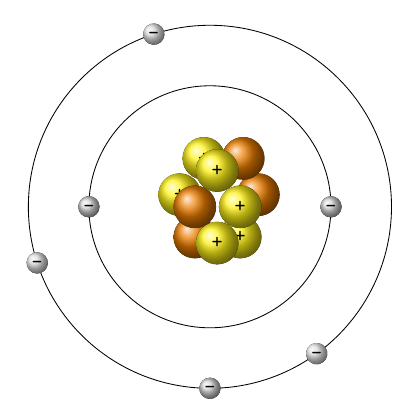
64.
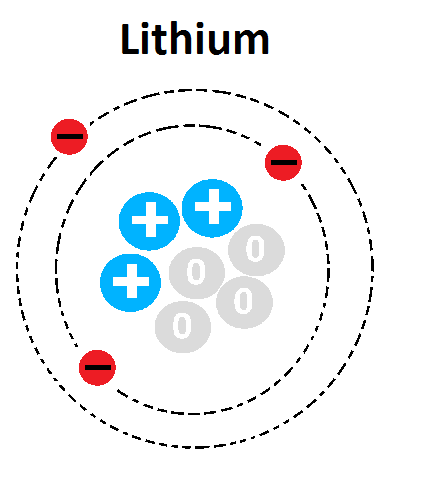
What element is represented in this Bohr Model? 
a)
Carbon
b)
Hydrogen
c)
Aluminum
d)
Lithium
65.
Which particle is negatively charged?
a)
proton
b)
atom
c)
neutron
d)
electron
66.

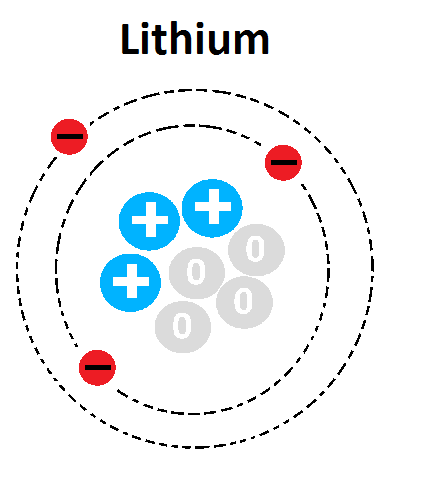
What is the atomic number of this atom?

a)

1

b)

3

c)

4

d)

7

67.

What is the mass number of this atom?

a)

1

b)

3

c)

4

d)

7

68.
Most of the mass in an atom is made up of _____________________?
a)
protons and electrons
b)
protons and neutrons
c)
neutrons and electrons
d)
electrons and quarks
69.
In order for an atom to be neutral what has to be true?
a)
The atom has more protons than neutrons
b)
The atom has more neutrons than protons
c)
The atom has the same number of protons and neutrons
d)
The atom has the same number of protons and electrons
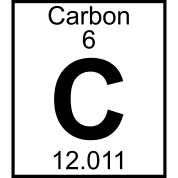
70.
What does the C represent?
a)
atomic mass
b)
atomic number
c)
element name
d)
chemical symbol 
71.
How is the number of neutrons in the nucleus of an atom calculated?
a)
Add the number of e- and p+ together
b)
Subtract the number of e- from p+
c)
Subtract the number of p+ from the mass number
d)
Add the mass number to the number of e-
72.

What does the 6 represent?

a)

Atomic mass

b)

atomic number

c)

chemical symbol

d)

element name

73.
If an atom has 12 positively charged subatomic particles, which of the following must it also have to be considered a neutral atom?
a)
12 neutrons
b)
12 electrons
c)
12 protons
d)
24 protons and neutrons
74.

An atom has 10 protons, 15 neutrons and 10 electrons what is its mass number.

a)

20

b)

10

c)

35

d)

25

75.

How many electrons does this atom have?

a)

2

b)

4

c)

6

d)

10

76.
An element with a mass number of 11 and an atomic number of 5 has how many neutrons?
a)
11
b)
5
c)
6
d)
16
77.
If an element has 14 protons, 15 neutrons, and 14 electrons, what is that elements atomic mass
a)
28
b)
14
c)
29
78.
What element does the Bohr Model represent?
a)
Nitrogen
b)
Potassium
c)
Sodium
79.
For an atom, the number of electrons is equal to the number of _____
a)
protons
b)
protons plus neutrons
c)
neutrons
d)
nucleons
80.
What is the Element's atomic number?
a)
Fe
b)
26
c)
55.847
d)
Iron
81.
What is the tiny, massive central part of the atom?
a)
Neutron
b)
Electron
c)
Proton
d)
Nucleus
82.
What element is represented in this Bohr Model? 
a)
Carbon
b)
Hydrogen
c)
Aluminum
d)
Lithium
83.
How many electrons does potassium K contain? 
a)
19
b)
39
c)
20
d)
40
84.
How many electrons are in the outer most shell of Sodium (Na)?
a)
3
b)
1
c)
2
d)
4
85.
Which of these have 8 outer most level electrons?
a)
Carbon
b)
Helium
c)
Neon
d)
Boron
86.

What is a representation of an ion?

a)

Li

b)

Na-22

c)

O-2

87.

What charge does an atom have when it GAINS electrons?

a)

Positive

b)

Negative

c)

Neutral

88.

What is the mass number of bromine?

a)

35

b)

45

c)

80

d)

79.904

89.

How many neutrons does this bromine atom have?

a)

35

b)

45

c)

80

90.

What is the mass number of this Neon atom?

a)

10

b)

11

c)

21

d)

20

91.

How many electrons does this magnesium ion have?

a)

24

b)

12

c)

10

d)

14

92.

What does it change in an ion?

a)

The number of electrons

b)

The number of protons

c)

The number of neutrons

93.

How many neutrons does this Neon atom have?

a)

21

b)

11

c)

10

d)

12

94.

What is the average atomic mass of Magnesium?

a)

12.011

b)

14.007

c)

22.990

d)

24.305

95.

What is the atomic number of this element?

a)

17

b)

18

c)

35

d)

35.453

96.

What is the mass number of this atom of Chlorine?

a)

17

b)

18

c)

35

d)

35.453

97.

If an atom of Phosphorus has 16 neutrons, what is it's mass number?

a)

15

b)

16

c)

30.974

d)

31

98.

If an atom of Sodium has a mass number of 23, it will have...

a)

23 protons

b)

11 neutrons

c)

12 protons

d)

12 neutrons

99.
When an atom loses a valence electron, it becomes a(n) _____________ ion.
a)
positive
b)
negative
c)
neutral
d)
polyatomic
100.
How many protons are in this element?
a)
79
b)
196
c)
117
d)
Cannot be determined
101.
What do these isotopes of carbon all have in common?
a)
neutrons & mass number
b)
atomic number and neutrons
c)
atomic number and electrons
d)
protons, atomic number, and mass number
102.
How many protons are in an atom with an atomic number of 20, an atomic mass of 45, and a charge of +2?
a)
20
b)
10
c)
2
d)
18
103.
Isotopes are elements with a different amount of
a)
protons
b)
neutrons
c)
electrons
d)
atoms
104.
How many electrons are in an atom with an atomic number of 20, an atomic mass of 45, and a charge of +2?
a)
20
b)
45
c)
18
d)
2
105.
How many neutrons are in an atom with an atomic number of 20, an atomic mass of 45, and a charge of +2?
a)
20
b)
25
c)
2
d)
18
106.
How many electrons are in an atom that has an atomic number of 34, an atomic mass of 74 and a charge of -2?
a)
34
b)
36
c)
2
d)
40
107.

Looking at elements in the same group/family, what factor has a greater effect on Coulombic attraction?

a)

number of protons

b)

distance from the nucleus (because electrons are in higher shells)

108.

Looking at elements with the same number of occupied electron shells, what factor has a greater effect on Coulombic attraction?

a)

number of protons

b)

distance from the nucleus

109.
Electronegativity is the...
a)
energy needed to remove the outermost electron.
b)
ability of an atom to attract electrons from another atom.
110.
As the Coulombic attraction increases the atomic radius: increases or decreases?
a)
increases
b)
decreases
111.
Which element has the smaller atomic radius: potassium (K) or bromine (Br)?
a)
potassium (K)
b)
bromine (Br)
112.

As the number of protons in an atom increases, the attraction for an electron in a particular shell: increases or decreases?

a)

increases

b)

decreases

113.

Which element has the greater electronegativity: Aluminum (Al) or Chlorine (Cl)?

a)

Aluminum (Al)

b)

Chlorine (Cl)

114.
As the Coulombic attraction of an atom increases, the electronegativity of the atom: increases or decreases?
a)
increases 
b)
decreases
115.

Which element has the greater electronegativity: Nitrogen (N) or Arsenic (As)?

a)

Nitrogen (N)

b)

Arsenic (As)

116.

As you move down a group, atomic radius increases because -

a)

the atoms have more and more neutrons

b)

the atoms have more and more protons

c)

electrons occupy higher shells (energy levels)

d)

the atoms have more atomic mass

117.
The atom with the largest atomic radius in Group 18 is - 
a)
Ar
b)
He
c)
Kr
d)
Rn
118.

As you move across the periodic table from left to right, the atomic radius decreases. This is because -

a)

the number of protons increases, so attraction to electrons increases

b)

the number of occupied energy levels increases

c)

the number of electrons increases

d)

the atomic mass increases

119.
The atom with the largest atomic radius in Period 4 (row 4) is - 
a)
K
b)
Kr
c)
Fe
d)
Fe
120.
The atom with the largest atomic radius in Period 4 (row 4) is - 
a)
K
b)
Kr
c)
Fe
d)
Fe
121.

Francium (Fr) has the lowest electronegativity in Group 1 because -

a)

it has the smallest number of valence electrons

b)

it has the greatest atomic mass

c)

it has the greatest number of protons, so it attracts its electrons the strongest

d)

its first 6 electron shells are full, so it can't attract other atoms' electrons well

122.

The element with the smallest electronegativity in Period 6 is -

a)

Rn

b)

Cs

c)

Os

d)

Tm

123.

As you move across the periodic table atoms tend to get smaller because, ______________.

a)

the atoms have more mass, increasing gravitational attraction.

b)

the atoms have less mass, reducing gravitational attraction.

c)

the atoms have more protons, increasing Coulombic attraction.

d)

the atoms have less electrons, reducing Coulombic repulsion.

124.

Electronegativity __________ from left to right within a period and __________ from top to bottom within a group.

a)

decreases, increases

b)

increases, increases

c)

increases, decreases

d)

stays the same, increases

125.

Which has the greater electronegativity:

H or F?

a)

H

b)

F

126.
Which of the following will have a higher electronegativity than arsenic (As)?
a)
Carbon (C)
b)
Neon (Ne)
c)
Antimony (Sb)
d)
Germanium (Ge)
127.
As atoms of elements in group 16 are considered in order from top to bottom, the electronegativity of each successive element....
a)
decreases
b)
increases
c)
remains the same
d)
none of the above
128.
Which atom has the largest atomic radius?
a)
potassium
b)
rubidium 
c)
francium
d)
cesium
129.
Atoms that have a high electronegativity, _______________.
a)
give up their electrons more easily.
b)
hold on to their electrons more tightly.
c)
have more electron shells.
130.

Electronegativity is...

a)

how good an atom is at attracting electrons in a bond

b)

the ability of an atom to lose electrons

c)

the energy required to remove an electron from a specific atom

d)

how easy it is to make friends.

131.

Which statement correctly and completely identifies a trend?

a)

Atomic radius decreases across a period and increases down a group.

b)

Electronegativity decreases across a period and decreases down a group.

132.
The element with the largest electronegativity in the halogens is - 
a)
At
b)
F
c)
Cl
d)
Br
133.

The element with the lowest electronegativity in Period 3 is -

a)

Na

b)

Cl

c)

Ar

d)

Mg

134.
For an electron to change from ground state to an excited stated it must...
a)
Absorb energy
b)
Release energy
135.

True or False: The ground state is the highest energy state of an atom.

a)

True

b)

False

136.

What is the light that you can see called?

a)

observatory light

b)

ultraviolet light

c)

visible light

d)

infrared light

137.
Visible spectrum is shown below. Which light has the highest energy?
a)
Red light
b)
Yellow light
c)
Green light
d)
Blue light
138.

Diagram below shows

a)

Emission spectrum

b)

Absorption spectrum

c)

Line absorption spectrum

139.
The _______________ determines the color of visible light. 
a)
wavelength
b)
speed
c)
amplitude
d)
light
140.
Emission of light from an atom occurs when an electron
a)
drops from a higher to a lower energy level.
b)
   jumps from a lower to a higher energy level.   
c)
   moves within its atomic orbital.
d)
falls into the nucleus.
141.
For an electron to change from ground state to an excited stated it must...
a)
Absorb energy
b)
Release energy
142.
When talking about energy levels in an atom, what is an "excited state"?
a)
The highest energy state of an atom.
b)
Any level higher than the ground state.
c)
The lowest energy state of an atom.
d)
When an atom loses an electron
143.
Why are line emission spectra of elements called "atomic fingerprints"?
a)
They are all the same
b)
They are all unique
c)
They are all similar
d)
They all contain colored light
144.

A line spectrum is produced when an electron moves from one energy level

a)

into the nucleus

b)

to a higher energy level

c)

to another position in the same sublevel

d)

to a lower energy level

145.

If an electron moves from n=4 to n=2 it ____

a)

absorbs energy

b)

releases energy

146.

Emission spectra emitted by an element (or compound) will produce ___ through a spectroscope.

a)

bright lines

b)

a continuous rainbow

c)

dark lines

d)

white light

147.
The parallel lines represents...
a)
energy levels of the atom
b)
energy levels of the electrons
c)
energy levels of the photons
d)
energy levels of the nucleus
148.
Light is emitted when electrons ...
a)
jump from high to low 
b)
jump from low to high 
c)
either of these
d)
none of these
149.
What is the unknown spectra?
a)
beryllium
b)
copper
c)
manganese
d)
strontium
150.
Which elements are in the unknown sample?
a)
A and B
b)
B and C
c)
A and D
d)
B and D
151.

Which element(s) is/are in Unknown W?

a)

Cadmium, Potassium, and Helium

b)

Hydrogen, Potassium, and Lithium

c)

Cadmium and Sodium

d)

Only Sodium

152.

The unknown emissions spectra belongs to the element

a)

Hydrogen

b)

Mercury

c)

Neon

d)

Sodium

153.

The unknown emissions spectra belongs to the element

a)

Hydrogen

b)

Mercury

c)

Neon

d)

Helium

154.

Look carefully at the picture. It shows an electron in the excited state on the left, and the electron returning to its ground state on the right. When the electron return to the ground state it emits a_______________________.

a)

blast of cold air

b)

electrostatic charge

c)

proton

d)

photon (light)

155.
What atom matches this electron configuration?
1s2s2p3s2
a)
Neon
b)
Magnesium
c)
Aluminum
d)
Potassium
156.

Which is the electron configuration for an oxygen atom?

a)

1s22s23s24s2

b)

1s22s22p4

c)

1s22s42p2

d)

[Ne]-2p2

157.
What is the maximum number of electrons that an orbital can have?
a)
1 electron
b)
2 electrons
c)
3 electrons
d)
4 electrons
158.
How many valence electrons are represented here?
a)
7
b)
5
c)
2
d)
8
159.
How many d orbitals are there in a given sublevel?
a)
1
b)
3
c)
5
d)
7
160.
How many p orbitals are there in a sublevel?
a)
2
b)
1
c)
4
d)
3
161.
How many electrons can the d sublevel hold?
a)
8
b)
10
c)
2
d)
4
162.
What is this element? 
1s22s22p63s23p6
4s23d104p6
a)
Argon
b)
Krypton
c)
Selenium
d)
Bromide
163.

What atom matches this electron configuration?

[Xe] 6s2 4f14 5d10

a)

Mercury

b)

Gold

c)

Platinum

d)

Thallium

164.

What is the noble gas (shorthand) electron configuration for Sulfur atom?

a)

[Ar]-3p2

b)

[He] 2s22p63s23p4

c)

[Ne] 3s23p4

d)

[Mg] 3p4

165.
How many electrons can the first energy level hold?
a)
1
b)
2
c)
8
d)
0
166.
How many valence electrons does Chlorine have?
a)
5
b)
2
c)
7
d)
5
167.
How many valence electrons does phosphorus have?
a)
5
b)
2
c)
8
d)
15
168.
What element has the valence shell configuration
3s2 3p2
a)
Al
b)
B
c)
Si
d)
Ga
169.
Which element is pictured?
a)
neon
b)
fluorine
c)
magnesium
d)
argon
170.
What noble gas should be used to write the shorthand configuration for Te?
a)
Ar
b)
Kr
c)
Xe
d)
Sb
171.
Identify the element in Period 5 that has 1 valence electron?
a)
Rb
b)
Nb
c)
Ag
d)
Sb
172.
What element in Period 4 has 5 valence electrons?
a)
Zr
b)
As
c)
V
d)
Sb
173.
Which of the following is a p block element?
a)
Ca
b)
Ar
c)
Re
d)
Au
174.
Electron arrangement that uses arrows
a)
Electron configuration
b)
Shorthand configuration
c)
Lewis dot structure
d)
Orbital diagram
175.

By having the electrons spread out in the 3p sublevel (1 electron in each orbital, rather than doubling up in one and having another empty), what concept does this illustrate?

a)

Pauli Exclusion Principle

b)

Heisenberg's Uncertainty Principle

c)

Aufbau principle

d)

Hund's rule

176.

By having the electrons occupying the 1s orbital rather than the empty spots in the 3p sublevel, what concept does this illustrate?

a)

Pauli Exclusion Principle

b)

Heisenberg's Uncertainty Principle

c)

Aufbau principle

d)

Hund's rule

177.

How is this an incorrect ground state atom of carbon?

a)

The electron in the 3s orbital should be in the 2s orbital, but still spinning "up"

b)

The electron in the 3s orbital should be in the 2s orbital, but spinning "down"

c)

The electron in the 3s orbital should be in a 2p orbital, but still spinning "up"

d)

The electron in the 3s orbital should be in the 2p orbital, but spinning "down"

178.

How is this incorrect for a ground state atom of Oxygen?

a)

This IS correct

b)

The "up" arrow in the 3rd 2p orbital should be a down "arrow" in the 2nd 2p orbital

c)

The "up" arrow in the 3rd 2p orbital should be a down "arrow"

d)

The "up" arrow in the 3rd 2p orbital should be in the 3s orbital

179.

How is this incorrect for a ground state atom of Nitrogen?

a)

This IS correct

b)

The "down" arrow in 1st 2p orbital should be an "up" arrow

c)

The "down" arrow in 1st 2p orbital should be an "up" arrow in the 3rd 2p orbital

d)

The "down" arrow in 1st 2p orbital should be an "up" arrow in the 3s orbital
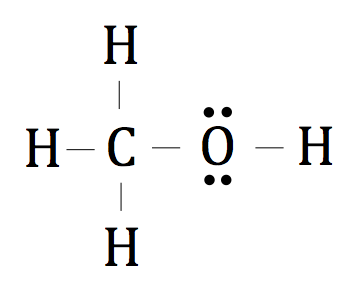
180.

Classify the following molecule.

a)

polar

b)

nonpolar

181.

Classify the following molecule as polar or nonpolar: HF (hydrogen fluoride)

a)

Polar

b)

Nonpolar

182.

Classify the following molecule as polar or nonpolar: F2

a)

Polar

b)

Nonpolar

183.

Is the following molecule polar or nonpolar?

a)

polar

b)

nonpolar

184.

Which of the following formulas represents a polar molecule?

a)

H2

b)

NI3

c)

CO2

d)

CCl4

185.
Which formula represents a nonpolar molecule?
a)
HBr
b)
H2S
c)
CBr4
d)
PCl3
186.

Classify the following molecule as polar or nonpolar: NCl3 (nitrogen trichloride) (Hint: draw the Lewis structure)

a)

polar

b)

nonpolar

187.

Classify the following molecule.

a)

polar

b)

nonpolar

188.

Classify the following molecule.

a)

polar

b)

nonpolar

189.

Is the following molecule polar or nonpolar?

a)

polar because there are different types of elements bonded to the central atom

b)

nonpolar because the central atom has no lone pairs of electrons

c)

polar because the central atom has a lone pair of electrons

d)

nonpolar because there are no lone pairs on the central atom and the atoms bonded to the central atom are all the same

190.

Why is the molecule polar?

a)

There is a lone pair of electrons on the central atom.

b)

There are different types of elements bonded to the central atom.

c)

There are no lone pairs of electrons on the central atom and all of the atoms bonded to the central atom are the same.

191.
H2O
a)
Polar 
b)
Nonpolar 
192.
Which characteristic of water will allow a paperclip to remain floating on water when the paperclip is gently placed on top of the water?
a)
adhesion
b)
surface tension
c)
solvent properties
d)
nonpolar
193.
Which types of compounds dissolve easily in water?
a)
Polar and Nonpolar
b)
Polar and Ionic
c)
Nonpolar and Ionic
d)
Covalent and Nonpolar
194.
What is the reason why oil and water don't mix?
a)
Oil is too heavy to mix with water
b)
Water can only mix with polar molecules 
c)
Water can only mix with non-polar molecules
d)
Oil is too light to mix with water 
195.

If a liquid has high viscosity, it probably has:

a)

strong intermolecular forces

b)

weak intermolecular forces

196.

Intermolecular forces are attractions between ______.

a)

Cations and anions

b)

Atoms within a molecule

c)

Neighboring molecules

d)

Protons and electrons

197.

Which of the following has the highest boiling point?

a)

H2 (nonpolar; 2.02 g/mol)

b)

NH3 (polar; 17.03 g/mol)

c)

N2 (nonpolar; 28.02 g/mol)

d)

O2 (nonpolar; 32.00 g/mol)