wayground logo

Free Printable Worksheets

NEW

Font size

S
M
L
XL
Worksheets

Environment Quiz

Total questions: 50

Worksheet time: 25mins
Name
Class
Date
1.
Which natural disaster uses the Richter scale to measure strength? 
a)
Earthquake
b)
Tornado
c)
Tsunami
d)
Hurricane
2.
Where do most hurricanes start? 
a)
Near the poles
b)
Near land
c)
Near the equator
d)
Over deserts
3.
What is the center of a hurricane called? 
a)
Middle
b)
Eye
c)
Center
d)
Wall
4.

What is an herbivore?

a)

an animal that gets energy from eating other animals

b)

an organism that gets energy from eating only plants

c)

an animal that gets energy by eating both plants and other animals

d)

an animal that eats only herbs

5.
An animal that is hunted and eaten for food is a __________.
a)
predator
b)
prey
c)
population
6.
Which of the following is a living part of the ecosystem?
a)
Air
b)
Sunlight
c)
Mushroom
d)
Soil
7.
Where do all life forms get their energy?
a)
Earth's Core
b)
Water
c)
Plants
d)
The Sun
8.

An energy source that is produced at the same rate or faster than it is consumed is called...

a)

usable

b)

perpetual

c)

renewable

d)

nonrenewable

9.

Which of the following is least likely to characterize a sustainable energy future?

a)

fiber-optic cables and microprocessors

b)

larger, regional power plants

c)

energy management systems

d)

improved energy efficiency

10.

Which of the following nonrenewable energies does NOT cause massive amounts of greenhouse gases to be released?

a)

coal

b)

natural gas

c)

nuclear

d)

petroleum

11.
Which of these describes the rainforest?
a)
populated by squirrels, bears and pine trees
b)
relatively few trees
c)
generally close to the equator
d)
short, mild, dry summers
12.
A type of animal adaptation.  The animal will sleep all winter.
a)
camouflage
b)
hibernation
c)
burrowing
d)
climbing
13.

What best describes the term succession?

a)

rapid changes that create an ecosystem overnight

b)

gradual changes over time to fully create or restore and ecosystem

c)

forest with the tallest trees

d)

the rate species produce offspring

14.
What is soil?
a)
A mixture of minerals
b)
A mixture of water, minerals, gases and organic matter
c)
A type of rock
d)
A type of bacteria
15.
The process of plants losing water through their leaves is called ____.
a)
condensation
b)
evaporation
c)
transpiration
d)
exhaling
16.
What is the only process that removes carbon from the atmosphere?
a)
combustion
b)
cellular respiration
c)
photosynthesis
d)
decomposition
17.
These gases, such as carbon dioxide, trap heat in the Earth's atmosphere causing global warming
a)
Global warming gases
b)
Hot House gases
c)
Green House gases
d)
Thermal pollution
18.

What is the largest reservoir for water?

a)

the ocean

b)

rocks and minerals

c)

the atmosphere

d)

glaciers

19.
Do fish lay eggs or give birth?
a)
Give Birth
b)
Lay Eggs
20.
Which of the following will increase the size of a population?
a)
emigration and births
b)
immigration and deaths
c)
immigration and births
d)
emigration and deaths
21.
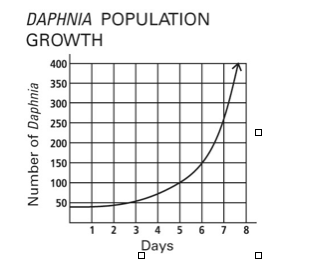
What type of population growth is shown in the graph?  
a)
logistic growth
b)
logical growth
c)
exponential growth
d)
density-dependent growth
22.

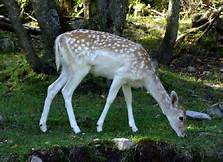
Identify which image below is showing a population:

a)
b)
c)
d)
23.
What is the difference between biotic and abiotic?
a)
Biotic are non-living things
b)
Abiotic are living organisms
c)
Biotic is life,
Abiotic is non-living
d)
Biotic is non-living, Abiotic is living
24.
What does biodiversity mean?
a)
Only one species in an area.
b)
The different amount of species in an area
c)
All abiotic life
d)
Nitrogen fixation
25.
What gas from the list below is a cause for global warming?
a)
Urethane
b)
Oxygen
c)
Carbon Dioxide
26.
What is the greenhouse effect?
a)
The warming of a planet due to trapped radiation.
b)
The cooling of Earth due to air pollution.
c)
The heating of a solid, such as a rock.
27.
Melting of glaciers and polar ice caps....
a)
will result in cooler temperatures in the Arctic
b)
will result in sea-levels rising
c)
Will have no effect on ecosystems
d)
None of the above
28.
An endangered species is
a)
One whose numbers are so small that it is at risk of extinction
b)
One whose not been spotted after many years.
c)
One whose numbers are abundant.
29.
What is a habitat?
a)
It is an artificial area where wildlife lives.
b)
 It is any natural region where wildlife lives undisturbed
c)
It is a protected region created by people to save wildlife.
30.
What are the greatest problems facing plants, animals, and people?
a)
introducing new species that  can cause problems 
b)
habitat destruction
c)
illegal hunting 
d)
all of the above
31.
Who can help save endangered species?
a)
environmentalist
b)
you
c)
scientists
d)
all of the above!
32.
Humans cause long and short term harm to their environment.
a)
true
b)
false
33.
Select the natural form of air pollution.
a)
CFC's
b)
Burning Fossil Fuels
c)
Forest Fires
d)
Paints and Solvents
34.

What is a hypothesis?

a)

an explanation about what you observed

b)

using your 5 senses to gather data

c)

the thing changed on purpose in the experiment

d)

an educated guess about what will happen in the experiment.

35.

When is a hypothesis written?

a)

before you decide on a question

b)

after the experiment

c)

after the conclusion

d)

before the experiment

36.

Cutting of trees in a forest is callled

a)

Reforestation

b)

Deforestation

c)

tree fall

d)

None of them

37.

Which of the following is biodegradable?

a)

Plastic

b)

Paper

c)

Glass

d)

None of them are biodegradable

38.

You can ........... plastic bags again and again until they get holes in them.

a)

Reduce

b)

Reuse

c)

Resume

d)

Rewaste

39.

Energy efficient vehicles and appliances use.......

a)

less energy

b)

more energy

c)

much energy

d)

no energy

40.

The place in which a plant, animal, bird or fish normally lives is its ........

a)

food chain

b)

habitat

c)

eco-community

d)

eco-friendly

41.
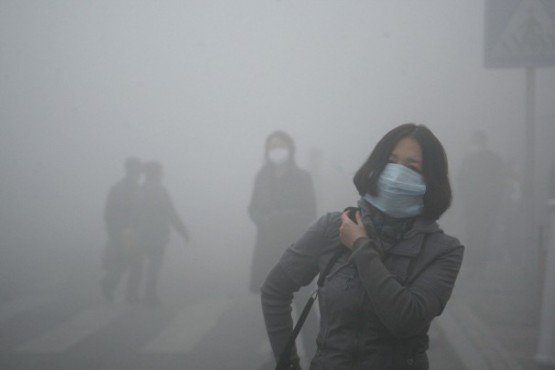
This picture shows people walking through a highly-polluted city in China. From what type of pollution are they protecting themselves based on what they are wearing?

a)
air pollution
b)
water pollution
c)
land pollution
d)
noise pollution
42.

Noise pollution is

a)
b)
c)
43.

Recycling is

a)
b)
c)
44.

The three R's are

a)

repeat, radical, rain

b)

race, red, racket

c)

revise, reduce, respect

d)

reduce, reuse, recycle

45.

Does plastic waste affect our sea life and ocean?

a)

Yes

b)

No

46.

Can recycled goods be turned into another product?

a)
b)
47.

What is it?

a)

a carton

b)

a bottle

c)

cardboard

d)

plastic

48.
Change over time...
a)
Evolution
b)
Nucleotide 
49.
Charles Darwin came up with this theory 
a)
Natural Selection
b)
Mutation
50.
To adjust to a changing environment
a)
Mutation
b)
Adapt