
 Worksheets
Earning and Spending
Total questions: 48
Worksheet time: 23mins
Which of the following BEST describes income?
Money received from a parent to pay for ice cream at lunch.
Money spent on a pair of new Nike Shoes.
Money donated to a charity.
Money received for completing your weekly chores.
Which of the following is a benefit of having a personal savings plan?
Personal savings plans let people spend more time doing activities they enjoy.
People who save money are able to spend more money in the future and pay for unexpected expenses.
People who save money are able to spend a lot of money right now.
Personal savings plans help people have an unbalanced budget.
Check all statements that are true about a balanced budget.
A balanced budget is when you have more expense than income.
A balanced budget is when you have the same number of ten dollar bills as one dollar bills.
A balanced budget is when income is equal to or greater than expenses.
A balanced budget helps you make responsible spending and saving decisions.
What is the difference between income and expense (expenditures)?
An expenditure is money that is saved; an income is money that is spent
An expenditure is money that is earned; an income is money that is received
An income is money that is given to another person; an expenditure is money that is received by another person
An income is money that is received; an expenditure is money that is spent
When you buy something using credit, you only have to pay back the money that you borrowed.
True
False
Interest is a fee paid for using your own money.
True
False
Investing is how you make your money grow, or appreciate, to gain a financial return.
True
False
Taxes paid by employees to federal and state government through a direct deduction from their paycheck
Sales Tax
Income Tax
paycheck
salary

Why should we INVEST instead of SAVE for retirement?
Investing money can make it grow in the long term.
Investing is safer than saving.
Saving is too risky for retirement.
Investing is more fun than saving.

Why shouldn't we invest our emergency fund or other short-term savings?
Investments are risky and can drop in value, especially in the short term.
Investments are safe and can grow in value, especially over the long term.
We should invest all of our money so it can grow quickly and we can become rich.
We should never invest any money because we could lose it all.

What is debt?
Money you have borrowed and need to pay back
Money you make from working at a job
Money you make from the government
Taxes that you pay when you buy something
The value of all assets minus the value of all liabilities.
Financial obligations
Assets
Net Worth
Property
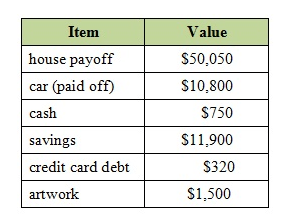
The table below shows Claude's assets and liabilities. What is his net worth?
$24,950
$-25,420
-$24,950
$25,420
What are fixed expenses?
Irregular expenses that change from week to week or month to month
The amount of money in your bank account
The amount of cash in your purse or wallet
Expenses that stay the same from week to week or month to month
What are variable expenses?
Irregular expenses that change from week to week or month to month
The amount of money in your bank account
Costs that do not fluctuate from week to week or month to month
The amount of cash in your purse/wallet
Every month, Jack’s mother pays the following expenses: the house payment, the club membership, the car payment, and the cost of food. Which is a variable expense?
the house payment
the cost of food
the club membership
the car payment
Money must stay in this type of savings account for a SET PERIOD OF TIME. It is called a ___________________.
Custodial Account
Money Market Account
Savings Account
Certificate of Deposit
Card used to deduct funds immediately from your checking account is a ______________________.
EBT Card
Credit Card
Debit Card
IRA Card
Property owned by an individual
Liability
Asset
Property
Net Worth

What is the first rule of financial literacy?
Spend your money - you earned it.
Always put your money in a safe place.
Never lend money to friends.
Pay yourself first.
Investments are important to building:
For emergencies
For your future net worth
A trade-off to higher returns is lower liquidity and higher risk
Tax-advantaged investments
Money invested is usually used to pay to:
Achieve long-term goals
For emergencies
To purchase expensive items
To pay off loans
Retirement account that allows investors to make tax-deductible contributions. Individuals are responsible for setting up and managing the account.
401K
IRA
CD
Money Market
The more liquid an investment, the more likely it is to have a higher rate of return.
True
False
To earn as much interest as possible, you should open a savings account that earns ___ interest and has the ____ interest rate
compound;lowest
compound;highest
simple;lowest
simple;highest
the payment people receive for providing resources in the market
Income
Wages
Salary
Investment
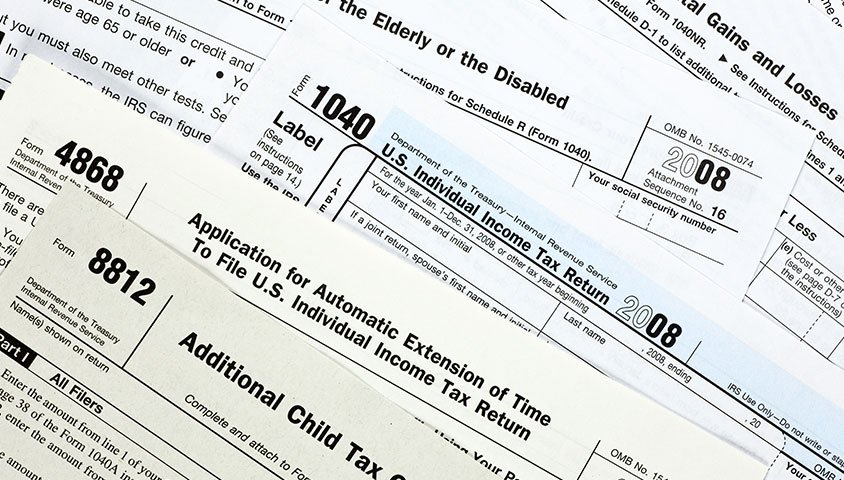
The W-4 form lets...
the government know how much you paid in taxes last year
your employer know how much to withhold from your paycheck
the 3 major credit bureaus know how many dependents you have
you know how much you paid in taxes last year
The more allowances you claim on your W-4...
The more money is withheld from your paycheck
The less money is withheld from your paycheck
The # of allowances doesn't impact how much $ is withheld
You claim allowances on a W-2, not the W-4
Which of these are the ways to increase your net worth? (Choose TWO answers!)
Decrease your assets
Increase your assets
Decrease your liabilities
Increase your liabilities
True or False: On average, people with college degrees earn more money in their lifetime than people who don't finish college.
True
False
True or False: A house can be both a liability AND an asset
True
False
Most millionaires have jobs where they make more than $500k/year
True
False

