
 Worksheets
Cytoplasm/Cytoskeleton/Nucleus
Total questions: 27
Worksheet time: 2hrs 59mins
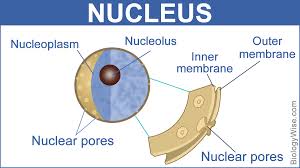
Made up of two layers (an inner and an outer), this acts like a cushiony outer shell of protection.
nucleoplasm
nuclear pores
nuclear envelope
nucleolus
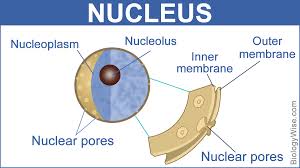
Tiny holes in the nuclear membrane that allow different cellular materials to come in and go out of the cell.
nucleus
nucleoplasm
nucleolus
nuclear pores
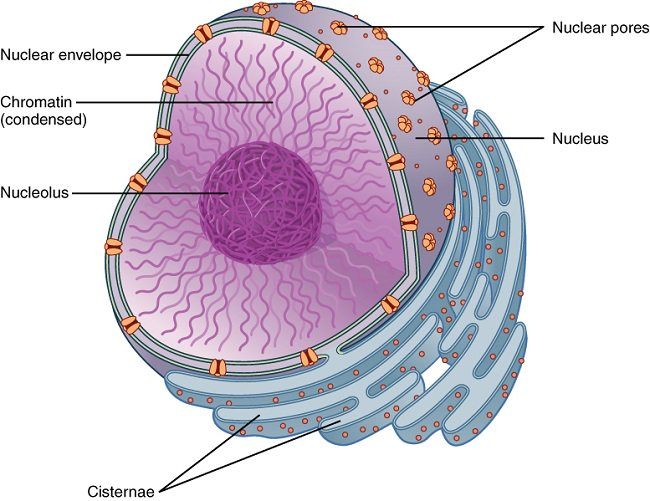
Helps assemble ribosomes, which are combinations made of protein and RNA (ribonucleic acid ).
nuclear membrane
nuclear pores
nucleoplasm
nucleolus

What is the nucleus?
A part of the cell that tells everything else what to do.
An organ that makes you healthy.
A wall that protects everything in the cell.

What important material is contained in the nucleus?
Jeans
Digestive enzymes
DNA
Nuclear ladders
What is the function of the nucleus?
The nucleus gives the cell energy
The nucleus protects the cell from outside things
The nucleus controls what happens in the cell
The nucleus does not have a job in the cell
Helps assemble ribosomes, which are combinations made of protein and RNA (ribonucleic acid ).
nuclear membrane
nuclear pores
nucleoplasm
nucleolus
Without enzymes our metabolism will be very slow.
True
False
Proteins make up different enzymes and hormones used inside and outside the cell activities.
True
False
DNA leaves the nucleus through pores in the nuclear membrane
True
False
The DNA is found outside the chromosomes, floating around inside the nucleus.
True
False

What are example of nucleic acids:
DNA and proteins
Proteins and Lipids
RNA and proteins
DNA and RNA
Multicelullar organisms are all eukaryotic cells?
True
False
cyanobacteria is an example of a prokaryotic cell. It has a nucleus inside.
True
False
A rigid supporting layer that surrounds the cells of plants

The 2 exact copies of DNA in a chromosome are called ________.
sister chromatids
genes
mutations
pathogens

The structure that holds two sister chromatids together until they separate for cell division is called a...
chromosome
chromatin
centromere
centriole

A _________ is DNA tightly coiled around proteins.
gene
chromosome
trait
mutation
Which of the following make up mitotic spindle?
Intermediate filaments
Microtubules
Nuclear Lamins
Actin filaments
Which part of the cell is made up of a network of filaments that maintains the cell structure?
Cytoplasm
Endoplasmic reticulum
Cytoskeleton
Vacuoles
Structural support, movement and communication of the cell involve:
Cytoskeleton
Plasma membrane
Cell wall
All of the above
Cytoplasm without organelles is
mitochondria
cell membrane
cytosol
water

