Wayground logo

Free Printable Worksheets

Font size

S
M
L
XL
Worksheets

Chemistry Unit 4 Practice Test

Total questions: 50

Worksheet time: 4hrs 10mins

Name
Class
Date
1.
The electron configuration of an atom is 1s22s22p6.  The number of electrons in the atom is 
a)
3
b)
6
c)
8
d)
10
2.
What atom matches this electron configuration?
1s22s22p63s23p64s23d10
a)
Zinc
b)
Copper
c)
Nickel
d)
Germanium
3.
What is the noble gas shorthand electron for Sulfur atom?
a)
[Ar] 3p4
b)
[He] 3s23p4
c)
[Ne] 3s23p4
d)
[Na] 3s23p4
4.
The electron configuration of an atom is 1s22s22p6.  The number of valence electrons in the atom is 
a)
3
b)
6
c)
8
d)
10
5.
This orbital diagram represents:  
a)
C
b)
B
c)
N
d)
O
6.
Which family would have electrons filling orbitals in the d-block
a)
Transition metals
b)
Halogens
c)
Noble Gases
d)
Inner-Transitions
7.
How many electrons can the d sublevel hold?
a)
8
b)
10
c)
2
d)
4
8.
This orbital diagram represents:  
a)
C
b)
B
c)
N
d)
O
9.
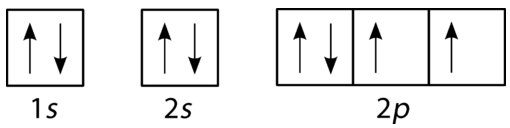
What is incorrect about this orbital diagram?
a)
Both arrows in the 2p box should be pointing up
b)
There is nothing incorrect with this diagram
c)
In the there should only be 1 orbital in the first 2p box and one in the 2nd 2p box
d)
All the arrows should be pointing up.
10.
How many valence electrons are found in atoms of group 1?
a)
7
b)
6
c)
4
d)
1
11.

This is a correct dot diagram for nitrogen (N)

a)

true

b)

false

12.

This could be the dot diagram for...

a)

He

b)

Al

c)

Be

d)

Si

13.

USE THE PERIODIC TABLE

How many valence electrons does Phosphorus have?

a)

31

b)

5

c)

15

d)

4

14.

How many valence electrons does Hydrogen have?

a)

4

b)

1

c)

8

d)

2

15.

How many valence electrons does Helium have?

a)

4

b)

1

c)

8

d)

2

16.

Which of these is incorrect?

a)
b)
17.

Which ones are acceptable?

a)
b)
c)
18.

How many Valence electrons does Sulfur have? Type in a number only

(a)  

19.

How many valence electrons does Rubidium have? Type in a number only

(a)  

20.
What is an ion?
a)
A Charged Atom
b)
A Large Atom
c)
A Small Atom
d)
A Cute Atom
21.
Why are ions formed?
a)
To make our lives difficult
b)
Because atoms want 8 valence electrons
c)
Because atoms have the same number of protons and electrons
d)
Because atoms gained neutrons
22.
An atom becomes _________ when it gains electrons.
a)
Positive
b)
Negative
c)
Neutral
d)
Invinsible
23.

What is the charge of a sodium ion?

a)

+2

b)

+1

c)

-1

d)

-2

24.
Group 17 always has ions with a charge of 
a)
+1
b)
+2
c)
-1
d)
-2
25.
What charge will an Oxygen ion have? 
a)
+1
b)
-1
c)
+2
d)
-2
26.
If an element has 3 valence electrons, what charge will likely form on its ion ?
a)
+3
b)
+5
c)
-3
d)
-5
27.
Which of the following has a -3 charge?
a)
Boron
b)
Fluorine
c)
Nitrogen
d)
Neon
28.
charge of lithium ion
a)
-2
b)
-1
c)
+1
d)
+2
29.
charge of beryllium ion
a)
-2
b)
-1
c)
+1
d)
+2
30.
Which of the following has a -1 charge? 
a)
Aluminum
b)
Bromine
c)
Calcium
d)
Potassium
31.
Cations are...
a)
Positive
b)
Negative
c)
Neutral
d)
Purring
32.
Elements on the LEFT side of the periodic table will most likely form:
a)
Positive ions
b)
Negative ions
c)
Neutral Ions
d)
None of these
33.
An atom becomes _______ when it loses electrons.
a)
Positive
b)
Negative
c)
Neutral
d)
Invinsible
34.
As you move down a group, atomic radius increases because - 
a)
you add more and more neutrons
b)
you add more and more protons
c)
you add more and more shells (energy levels)
d)
you add more atomic mass
35.
The atom with the largest atomic radius in Group 18 is - 
a)
Ar
b)
He
c)
Kr
d)
Rn
36.
As you move across the periodic table from left to right, the atomic radius decreases.  This is because - 
a)
the number of protons increases, so attraction to electrons increases
b)
the number of energy levels increases
c)
the number of electrons increases
d)
the atomic mass increases
37.
The atom with the largest atomic radius in Period 4 (row 4) is - 
a)
K
b)
Kr
c)
Fe
d)
Fe
38.
The element with the smallest ionization energy in Period 6 is - 
a)
Rn
b)
Cs
c)
Os
d)
Tm
39.
The energy required to remove electrons is the definition of: 
a)
Electronegativity
b)
Atomic Number
c)
Atomic Radius
d)
Ionization
40.
Electronegativity is...
a)
the ability of an atom to attract/ accept electrons
b)
the ability of an atom to lose electrons
c)
the energy required to remove an electron from a specific atom
d)
how easy it is to make friends. 
41.
Which has the greater Electronegativity: 
N or C?
a)
C
b)
N
42.
Electronegativity __________ from left to right within a period and __________ from top to bottom within a group.
a)
decreases, increases 
b)
increases, increases
c)
increases, decreases 
d)
stays the same, increases
43.
Which of the following will have a lower ionization energy than Scandium (Sc)?
a)
Helium (He)
b)
Titanium (Ti)
c)
Calcium (Ca)
d)
Magnesium (Mg)
44.
The element with the lowest electronegativity in Period 3 is - 
a)
Na
b)
Cl
c)
Ar
d)
Mg
45.
The element with the largest electronegativity in the halogens is - 
a)
At
b)
F
c)
Cl
d)
Br
46.

Neon is a noble gas because it is stable, nonreactive, and has ___ valence electrons.

a)

1

b)

8

c)

10

d)

4

47.

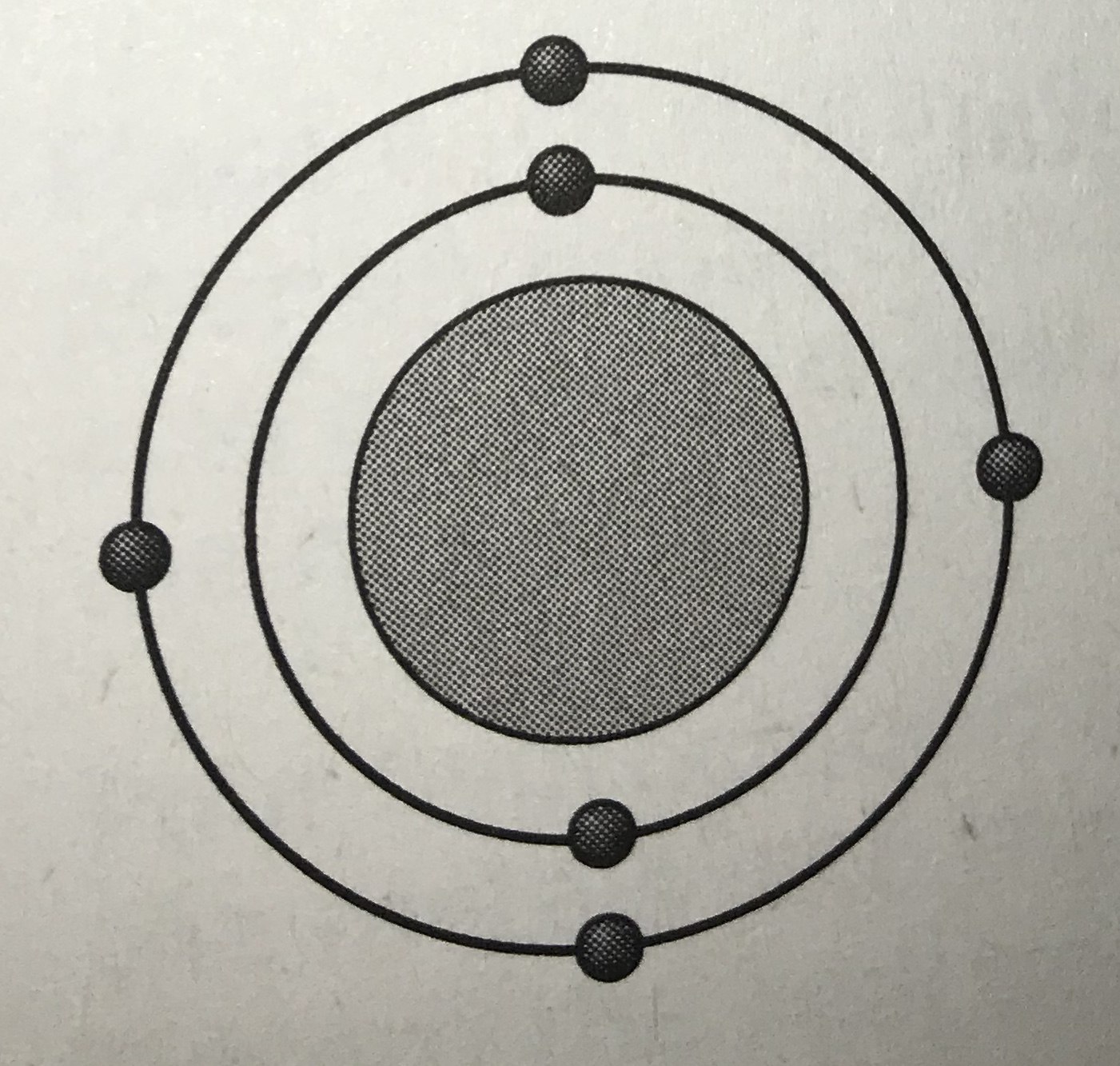
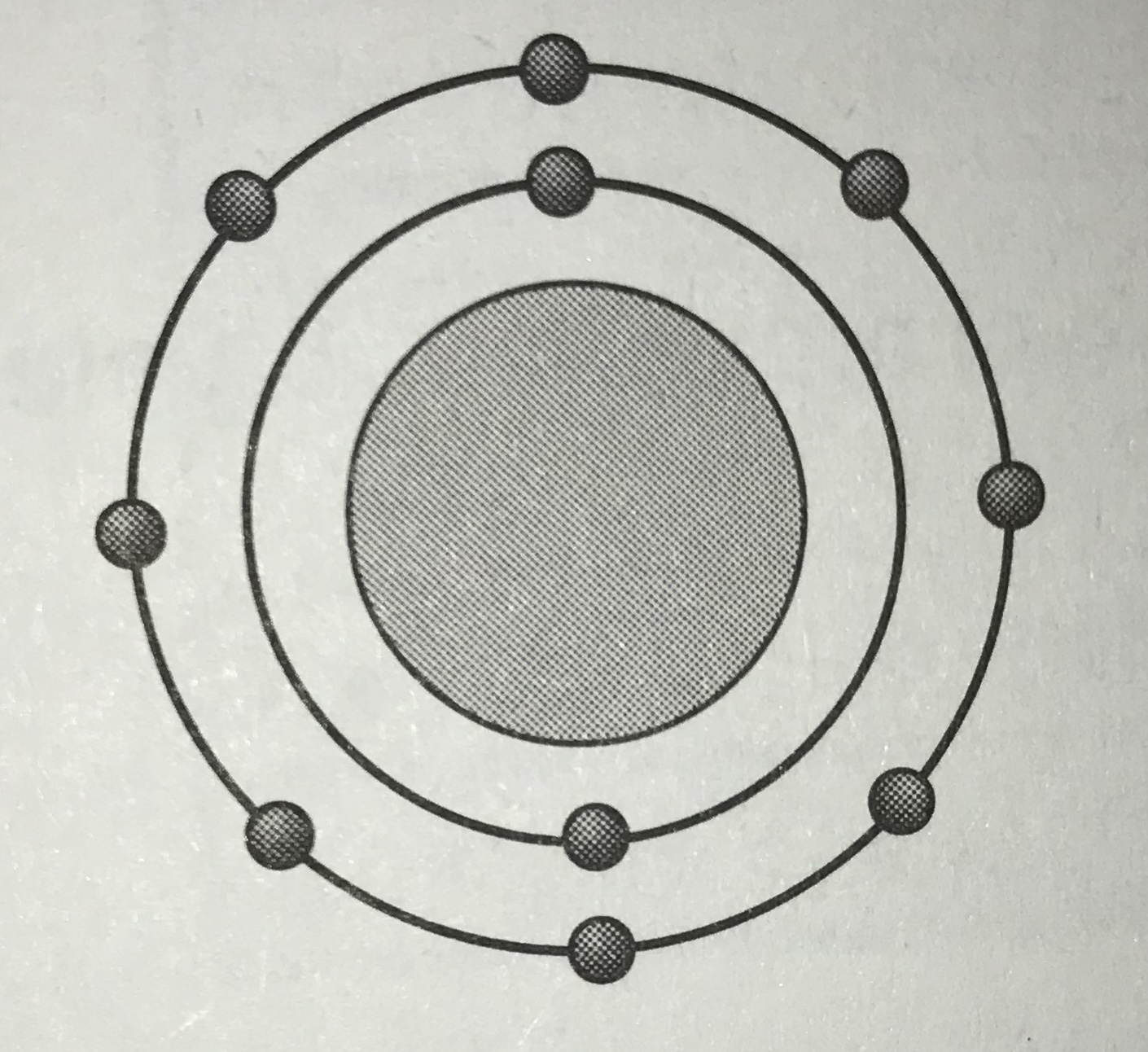
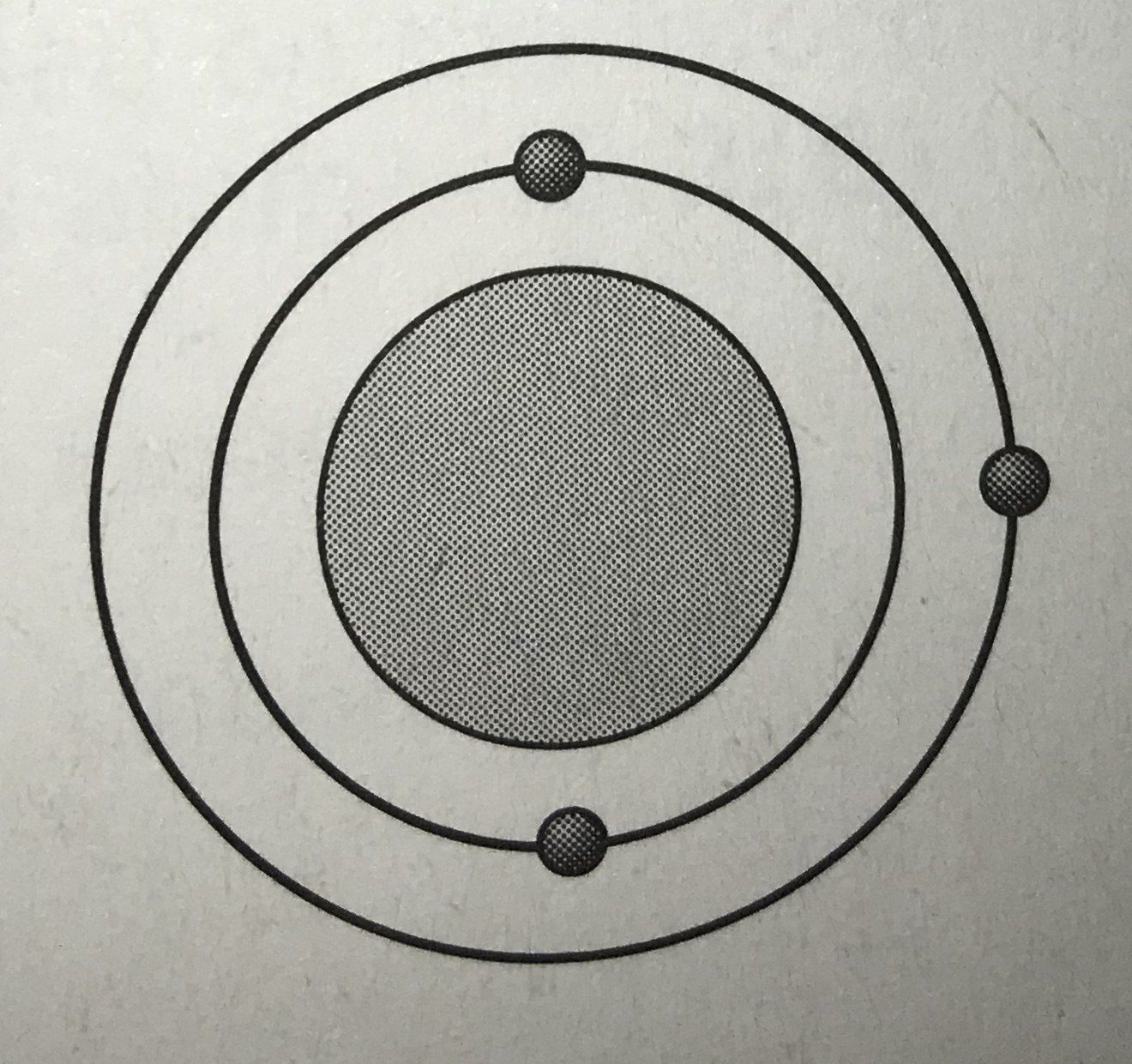
Which model represents the most reactive atom?
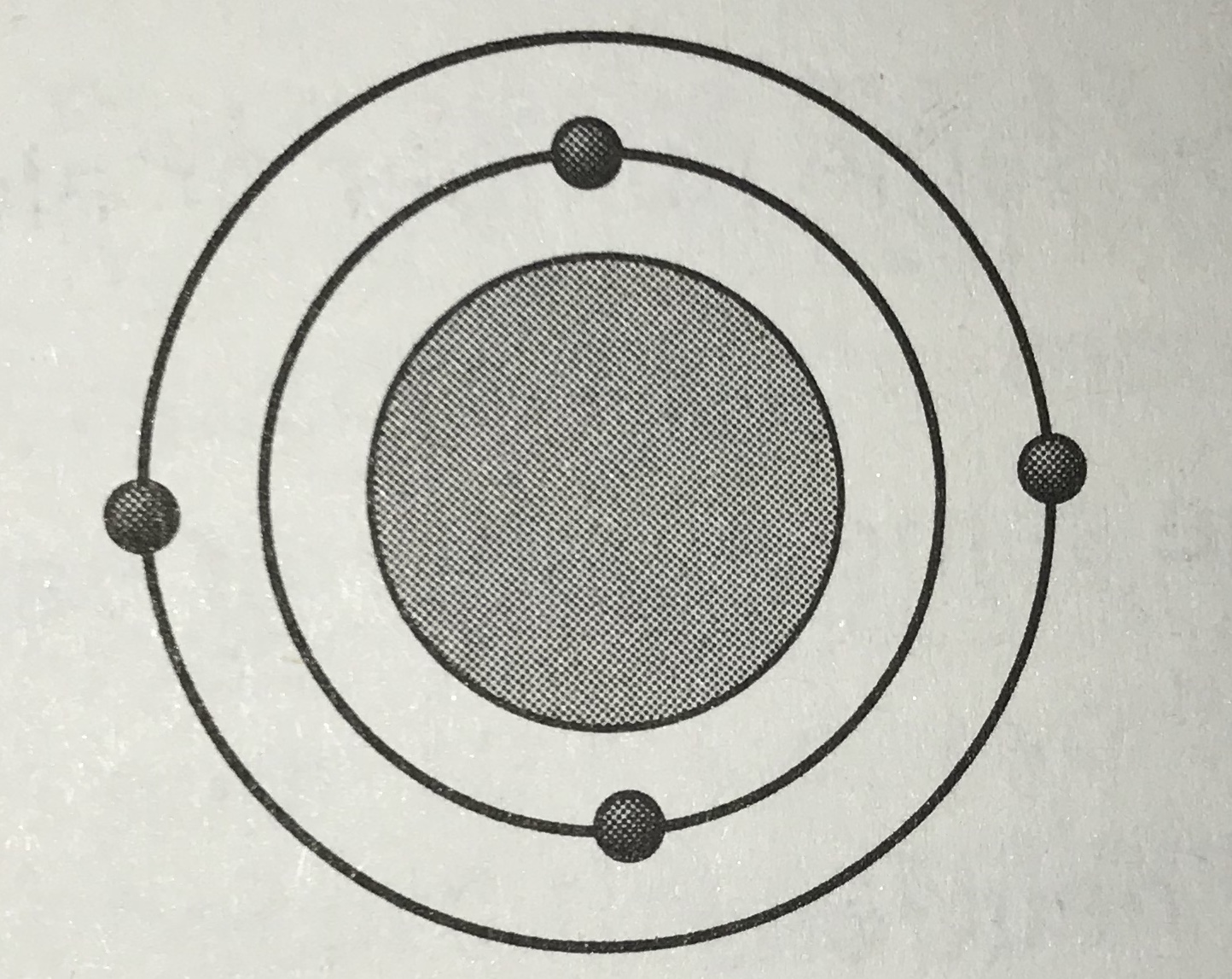
a)
b)
c)
d)
48.
a)
12
b)
7
c)
8
d)
14
49.

USE THE PERIODIC TABLE

How many valence electrons does carbon have?

a)

4

b)

12

c)

6

d)

14

50.

USE THE PERIODIC TABLE

Find the element that has 5 Valence Electrons and 4 energy levels.

a)

Arsenic - As

b)

Selenium - Se

c)

Calcium - Ca

d)

Vanadium - V