wayground logo

Free Printable Worksheets

NEW

Font size

S
M
L
XL
Worksheets

Unit 3A REVIEW

Total questions: 55

Worksheet time: 2hrs 38mins

Name
Class
Date
1.
Adding or subtracting neutrons (charge = 0, mass = 1) makes the element change into an...
a)
ion
b)
mixture
c)
isotope
d)
neutral atom
2.
The atomic number is equal to _.
a)
the number of protons and electrons
b)
the number of neutrons only
c)
the total number of protons and neutrons
d)
the number of protons neutrons and electrons
3.
What is the charge on a lithium atom that looses 1 electron?
a)
+1
b)
0
c)
-1
d)
-2
4.
Is the element shown in this image an ion, isotope or normal atom?
a)
atom
b)
isotope
c)
cation (+ ion)
d)
anion (- ion)
5.
Helium (He atomic number 2) has 2 protons, 2 neutrons, and 2 electrons) is the He element shown above an atom, an element, or an isotope?
a)
atom
b)
cation  (+ ion)
c)
isotope
d)
anion (-)
6.
The atomic mass is equal to _.
a)
the number of protons only
b)
the number of neutrons only
c)
the total number of protons and neutrons
d)
the number of protons, neutrons, and electrons.
7.
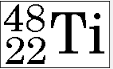
How many protons does this isotope of titanium have? Hint titanium has an atomic number of 22.
a)
48
b)
22
c)
26
d)
70
8.
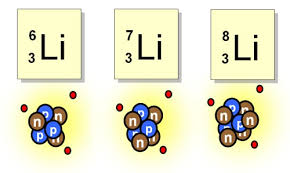
Which atom has  4 neutrons?
a)
Li-6
b)
Li-7
c)
Li-8
d)
they have the same # of neutrons
9.
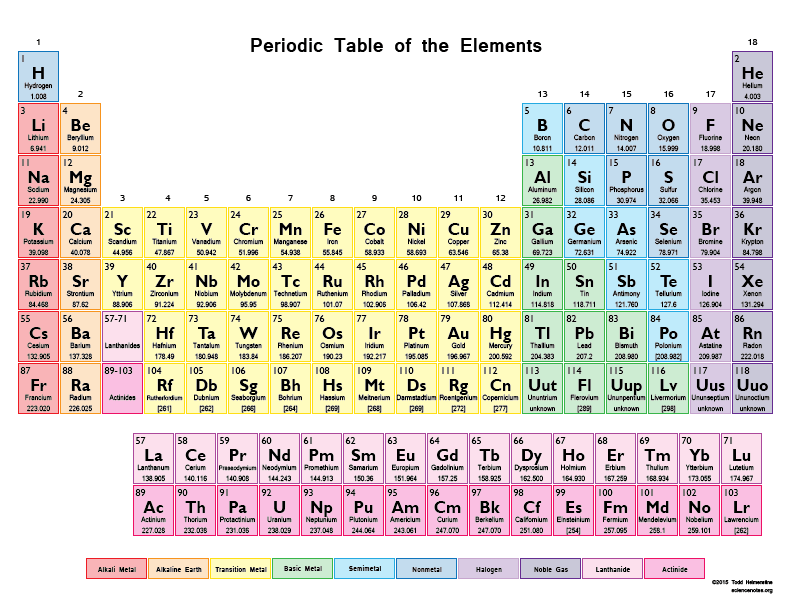
What is the atomic number of Fe? (click to see image)
a)
26
b)
55.845
c)
56
d)
None of these
10.
Carbon has an atomic number of 6 and an atomic mass of 12. Which elements are considered isotopes of carbon?
a)
Carbon-12
b)
Carbon-13
c)
Carbon-14
d)
Both Carbon-13 and Carbon-14
11.

What charge does an atom have when it GAINS electrons?

a)

Positive

b)

Negative

c)

Neutral

12.

What is a representation of an ion?

a)

Li

b)

Na-22

c)

O-2

13.

What is the mass number of bromine?

a)

35

b)

45

c)

80

d)

79.904

14.

How many neutrons does this bromine atom have?

a)

35

b)

45

c)

80

15.

What type of atom is this?

a)

Normal Atom

b)

Cation

c)

Anion

d)

Isotope

16.

How many electrons does this magnesium ion have?

a)

24

b)

12

c)

10

d)

14

17.

What does it change in an ion?

a)

The number of electrons

b)

The number of protons

c)

The number of neutrons

18.

How many protons, neutrons, and electrons?

a)

proton = 16, neutron = 8, electron = 10

b)

proton = 8, neutron = 16, electron = 8

c)

proton = 8, neutron = 8, electron = 10

d)

proton = 6, neutron = 2, electron = 6

19.

How many protons, neutrons, and electrons?

a)

proton = 6, neutron = 4, electron = 1

b)

proton = 4, neutron = 4, electron = 5

c)

proton = 1, neutron = 6, electron = 10

d)

proton = 4, neutron = 2, electron = 3

20.

If an ion has a negative charge you would __________ the charge number to the number of protons to figure out how many electrons there are.

a)

Add

b)

Subtract

c)

Divide

d)

Multiply

21.

Atoms of the same element that have different mass than expected because they have a different number of neutrons.

a)

Neutral Atom

b)

Ion

c)

Isotope

d)

Cation

22.

How many neutrons are in Magnesium?

a)

36

b)

12

c)

24

d)

6

23.
What is the atomic number of the atom pictured? 
a)
9
b)
10
c)
18
d)
19
24.
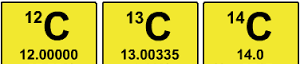
What do these isotopes of carbon all have in common?
a)
neutrons & mass number
b)
atomic number and neutrons
c)
atomic number and electrons
d)
protons, atomic number, and mass number
25.

Isotopes are atoms of the same element with different #’s of __________ & therefore different __________.

a)

neutrons ; atomic numbers

b)

protons ; atomic numbers

c)

electrons ; mass numbers

d)

neutrons ; mass number

26.
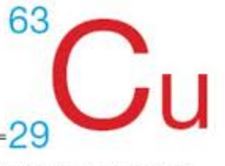
How many electrons does a Copper atom have?
a)
63
b)
29
c)
92
d)
34
27.

What is this atom's atomic mass?

a)

16

b)

8

c)

-2

d)

10

28.

Determine the relationship between the following atoms:

a)

The same atom

b)

Isotopes of the same element

c)

A different element

29.

Determine the relationship between the following atoms:

a)

The same atom

b)

Isotopes of the same element

c)

A different element

30.

Determine the relationship between the following atoms:

a)

The same atom

b)

Isotopes of the same element

c)

A different element

31.

Determine the relationship between the following atoms:

a)

The same atom

b)

Isotopes of the same element

c)

A different element

32.
The central region of an atom where neutrons and protons are located is the __________________.
a)
nucleus 
b)
electron cloud
c)
core 
d)
center 
33.
What number indicates the nucleus?
a)
1
b)
2
c)
3
d)
4
34.
How many electrons does this picture show?
a)
4
b)
5
c)
6
d)
3
35.
The number in the upper corner of an element tile (7 for nitrogen) is called _____
a)
the proton number
b)
the atomic number
c)
the electron number
d)
the mass number
36.
If an atom contains exactly three protons, then it's an atom of _____
a)
lithium
b)
gold
c)
nitrogen
d)
carbon
37.

Which part of an atom is used to identify it?

a)

number of protons

b)

number of neutrons

c)

number of electrons

38.

A Bromine ion gains 1 electron, which of the following is the correct symbol for a Bromine ion?

a)

Br-1

b)

Br+1

c)

Br+7

d)

Br-7

39.

How many electrons would a Calcium if it looses its 2 valence electrons.

a)

22

b)

20

c)

18

d)

38

40.

How many neutrons does C-14 contain? (tap to enlarge the image)

a)

6

b)

7

c)

14

d)

8

41.

ALL atoms of the same element have:

a)

same number of proton

b)

same number of nucleon

c)

different number of neutron

d)

different number of electron

42.

Isotopes of an element have a different number of...

a)

Protons

b)

Neutrons

c)

Electrons

43.
An atom is electrically neutral when
a)
protons and neutrons are the same
b)
protons and electrons are the same
c)
neutrons and electrons are the same
d)
neutrons balance the protons and electrons
44.
If the number of electrons in an atom changes you make a(n) __________________.
a)
ion
b)
isotope
c)
new element
d)
isomer
45.

The number of protons + neutrons in an atomic nucleus is referred to as what?

a)

Atomic number

b)

Mass number

46.

Atoms of the same element with differing numbers of neutrons are _______________.

a)

isotopes

b)

ions

c)

elements

d)

nucleus

47.
Is the element shown in this image an ion, isotope or normal atom?
a)
atom
b)
isotope
c)
cation (+ ion)
d)
anion (- ion)
48.
What is the name of the pictured isotope?
a)
Carbon-12
b)
Carbon-13
c)
Carbon-14
d)
Carbon-15
49.
Which answer choice describes the subatomic particles and their respective charges?
a)
p-    e+    n
b)
p+    e     n-
c)
p+    e-    n
d)
p-     e+    n
50.
a)
Neutrons = Mass Number + Atomic Number
b)
Neutrons = Mass Number - Atomic Number
c)
Neutrons = Atomic Number + Electrons
d)
Neutrons = Atomic Number - Electrons
51.
a)
Mass Number = Atomic Number + Neutrons
b)
Mass Number = Atomic Number - Neutrons
c)
Mass Number = Atomic Number + Electrons
d)
Mass Number = Atomic Number - Electrons 
52.
a)
Protons and Neutrons
b)
Protons and Electrons
c)
Neutrons and Electrons
d)
Neutrons and Valence Electrons
53.
How many neutrons does B (Boron) contain?
a)
5
b)
11
c)
6
d)
10.811
54.

Adding or subtracting neutrons makes the element change into

a)

an ion

b)

a mixture

c)

an isotope

d)

a neutral atom

55.

What happened to this Magnesium atom to make it an ion?

a)

It LOST electrons

b)

It GAINED electrons

c)

It GAINED protons

d)

It LOST protons