wayground logo

Free Printable Worksheets

NEW

Font size

S
M
L
XL
Worksheets

Physical Science Final Review

Total questions: 60

Worksheet time: 1hrs 18mins

Name
Class
Date
1.
A testable explanation to a problem that has not yet been tested. 
a)
data
b)
theory
c)
hypothesis
d)
fact
2.
What is the first step in the scientific method?
a)
Ask a question
b)
Conclusion
c)
No Horse Play
d)
Observe
3.
There are ___ millimeters(mm) in 2.7 centimeters (cm)
a)
270 mm
b)
.27 mm
c)
27 mm
d)
.027 mm
4.
There are _____ centigrams (cg) in 308 hectagrams (Hg)
a)
.0308 cg
b)
30800 cg
c)
3080 cg
d)
3080000 cg
5.
How would you write 4.3756 x 10in standard form?
a)
437,560,000
b)
0.00043756
c)
43,756
d)
4,3756
6.

How would you write 0.0005 in scientific notation?

a)

50 x 10-5

b)

5 x 10⁻⁴

c)

5 x 10³

d)

.5 x 103

7.
Express the following in scientific notation:
.000457
a)
457 x 106
b)
457 x 10-6
c)
4.57 x10⁴
d)
4.57 x 10⁻⁴
8.

Convert to scientific notation:

520,000,000

a)

52 x 107

b)

5.2 x 10⁻⁷

c)

5.2 x 10⁸

d)

0.52 x 10⁹

9.
Convert 8 kilometers to meters
a)
800 m
b)
80,000 m
c)
8,000 m
d)
.008 m
10.
Convert 5 cm to mm:
a)
5,000mm
b)
0.5 mm
c)
0.05 mm
d)
50 mm
11.

On the Celsius scale, at what temperature does water boil?

a)

0 degrees

b)

212 degrees

c)

100 degrees

d)

32 degrees

12.
What are the states of matter?
a)
solid, liquid, and juice
b)
solid and liquid
c)
solid and gas
d)
solid, liquid, and gas
13.
What term describes a liquid changing to a solid?
a)
Deposition
b)
Sublimation
c)
Evaporation
d)
Freezing
14.
No Definite Shape and No Definite Volume
a)
Gas
b)
Liquid
c)
Solid
15.
Definite shape and a definite volume.
a)
Gas
b)
Liquid
c)
Solid
16.

The relationship of which two variables are compared in Boyle's Law?

a)

pressure & volume

b)

volume & temperature

c)

temperature & pressure

d)

volume & moles (amount of gas)

17.
This particle is found in the nucleus and has a positive charge
a)
Electron
b)
Proton
c)
Neutron
18.
This particle is found in the nucleus and has no charge
a)
Neutron
b)
Proton
c)
Electron
19.
This is a negatively charged particle found outside the nucleus
a)
Electron
b)
Proton
c)
Neutron
20.
This contains most of the mass of an atom
a)
Electron Cloud
b)
Nucleus
c)
Electron
21.
What is the number highlighted?
a)
Atomic number
b)
Atomic mass
c)
Number of protons
d)
Number of electons
22.
What number is circled?
a)
Number of Neutrons
b)
Number of Protons
c)
Atomic Mass
d)
Number of Electrons
23.
Hyphen notation for 81 protons, mass number of 204
a)
Thallium - 81
b)
Thallium - 204
c)
Thallium - 124
d)
Thallium - 205
24.
Hyphen notation for 39 protons, 50 neutrons
a)
Yttrium - 89
b)
Yttrium - 88
c)
Yttrium - 50
d)
Yttrium - 39
25.
What is an atom mostly made up of?
a)
protons
b)
electrons
c)
empty space
d)
neutrons
26.
All of the mass of an atom comes from what location?
a)
nucleus
b)
electron cloud
27.
Each column in the periodic table is called a 
a)
period
b)
group
c)
cluster
d)
unit
28.
Which group of the periodic table is composed of inert (not reactive)  gases?
a)
alkali metals
b)
alkaline earth metals
c)
halogens
d)
noble gases
29.
Elements which are shiny, conduct electricity and heat are called
a)
metal
b)
nonmetal
c)
metalloid
d)
nonexistent
30.
The atoms along the staircase are called 
a)
metals
b)
nonmetals
c)
metalloids
d)
noble gases
31.
A horizontal row of elements in the periodic table.
a)
column
b)
group
c)
period
32.
How did Mendeleev arrange the elements?
a)
alphabetical 
b)
density
c)
melting point
d)
atomic mass
33.
Pure forms of these elements are stored in oil so they won't react with oxygen and water in the air.
a)
Alkali Metals
b)
Alkaline-earth metals
c)
Halogens
d)
Noble Gases
34.
Most of the elements on the periodic table are classified as _____.
a)
Metals
b)
Nonmetals
c)
Metalloids
d)
Periods
35.

The modern periodic is arranged by....

a)

number of neutrons

b)

atomic number

c)

atomic mass

d)

number of nuclei

36.

The middle block (groups 3-12) are called the...

a)

alkali metals

b)

halogens

c)

transition metals

d)

noble gases

37.
Valence electrons are the...
a)
Innermost electrons
b)
Middle electrons
c)
Outermost electrons
d)
Any electrons
38.

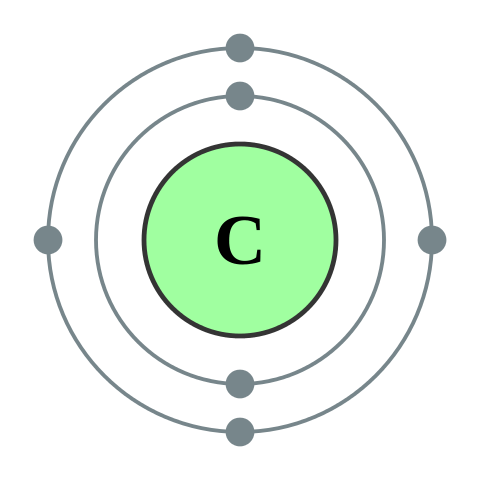
How many valence electrons does carbon have?

a)

4

b)

5

c)

6

d)

7

39.
How many valence electrons does Krypton have?
a)
7
b)
8
c)
9
d)
10
40.

What is the formula for strontium nitride?

a)

Sr2N3

b)

SrN

c)

Sr2N3

d)

Sr3N2

41.

What is the name of CaBr2

a)

Carbon Bromine

b)

Calcium Bromide

c)

Calcium (II) Bromide

d)

Carbon (II) Bromide

42.

What is the formula for: Magnesium Phosphate

a)

MgPO

b)

MgPO4

c)

Mg3(PO4)2

d)

Mg2(PO4)3

43.

What is the name of BeO?

a)

Beryllium (II) oxygen

b)

Beryllium Oxygen

c)

Beryllium oxide

d)

Oxygen beryllide

44.
Covalent bonds are between...
a)
Metal and Non-metal
b)
Non-metal and Non-metal
c)
Metal and Metal
45.
P2O5
a)
Phosphorus Oxide
b)
Pentaphosphorus Dioxide
c)
Diphosphorous pentoxide
d)
Phosphoric Oxygen
46.
SeF4
a)
Tetraselenium fluoride
b)
Selenium Fluoride
c)
Selenium tetraflouride
d)
Selenium (IV) Fluoride
47.
Write the formula for:
disulfur decafluoride
a)
2SF10
b)
SF5
c)
S2F10
d)
F10S2
48.
Write the formula for:
dinitrogen pentoxide
a)
NO
b)
N2O5
c)
2NO5
d)
O5N
49.
How do covalent bonds form?
a)
Donating & receiving valence e- between atoms.
b)
Opposite slight charges attract each other between compounds.
c)
Scientists are still not sure how they form.
d)
Sharing valence e- between atoms.
50.
Ionic Bonding involves...
a)
The transfer of protons
b)
The transfer of nuetrons 
c)
The transfer of electrons
d)
None Of the above
51.
How many elements are in C6H12O6?
a)
1
b)
2
c)
3
d)
4
52.
Element or compound?
O2
a)
Element
b)
Compound
53.
Element or compound?
H2O
a)
element
b)
compound
54.
In the equation,          2Mg + O2 ---> 2MgO, which are the reactants?
a)
Mg and O
b)
MgO
c)
Mg and MgO
d)
O and MgO
55.
In a chemical reaction, everything to the rightof the arrow is called ______________.
a)
Products
b)
Yields
c)
Molecules
d)
Reactants
56.
What type of reaction occurs between an element and a compound?
Zn + 2HCl --> ZnCl2 + H2
a)
Synthesis
b)
Decomposition
c)
Single Replacement
d)
Double Replacement
57.
What kind of reaction is this:
2H2 + O2 --> 2H2O
a)
Synthesis
b)
Decomposition
c)
Single Replacement
d)
Double Replacement
58.
The total amount of matter (atoms) before and after a chemical reaction (change), remains the same.
a)
True
b)
False
59.
What kind of reaction is this:
2C3H7OH +9O2 -> 6CO2 + 8H2O
a)
Double Replacement
b)
Combustion
c)
Single Replacement
d)
Decomposition
60.
What kind of reaction is this:
2H2O2 →2 H2+ O2
a)
Synthesis
b)
Decomposition
c)
Single Replacement 
d)
Combustion