Wayground logo

Free Printable Worksheets

Font size

S
M
L
XL
Worksheets

Thermal Energy

Total questions: 36

Worksheet time: 18mins

Name
Class
Date
1.

A group of parts that work together to do a job, perform a function, or produce a result is called a

a)

function

b)

system

c)

feedback

2.

All systems are made up of parts that work together.

a)

True

b)

False

3.

A system input is

a)

something that happens within a system.

b)

something that goes into a system.

c)

something that comes out of a system.

d)

something that is always man-made.
4.

A system process is

a)

something that happens within a system.

b)

something that goes into a system.

c)

something that comes out of a system.

d)

something that is always man-made,

5.

A system output is

a)

something that happens within a system.

b)

something that goes into a system.

c)

something that comes out of a system.

d)

something that is always man-made.
6.
A system can be defined as
a)
A collection of parts that work together to complete a purpose
b)
A system
c)
A piece of a whole
d)
A group that individually does work
7.
What types of systems are there?
a)
Mechanical and Electrical Systems
b)
Inside and Outside Systems
c)
Open and Closed Systems
d)
Human and Machine Systems
8.
A boiling pot of water on a stove is what type of system
a)
Closed System
b)
Open System
9.
A boiling pot with a lid on it to keep in the energy is what type of system
a)
Closed System
b)
Open System
10.
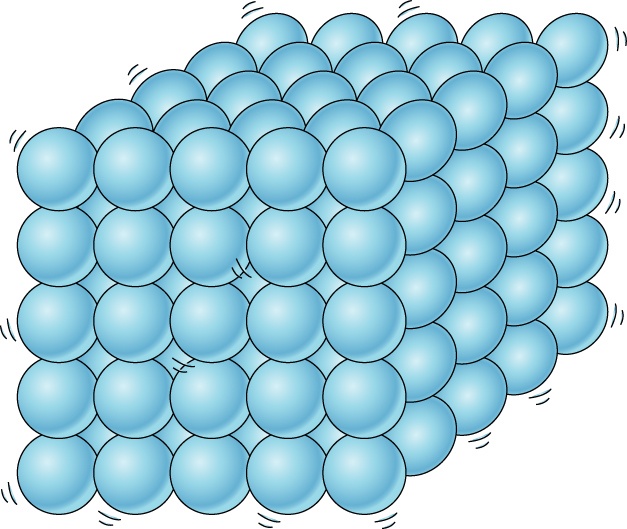
Which description best matches this particle model?
a)
Closely packed and can't move a lot. 
b)
Particles are close together but can move a little. 
c)
Particles have lots of energy and can move around. 
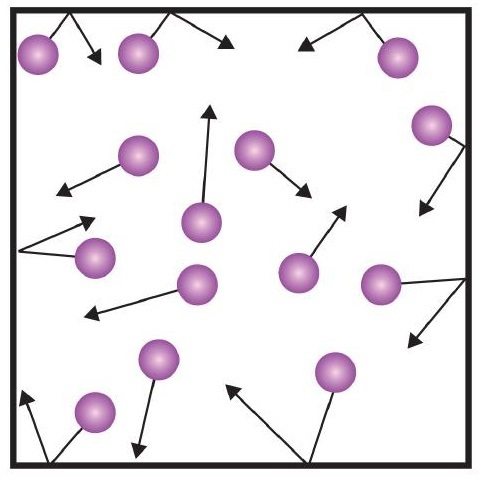
11.
Which description best matches this particle model?
a)
Closely packed and can't move a lot. 
b)
Particles are close together but can move a little. 
c)
Particles have lots of energy and can move around. 
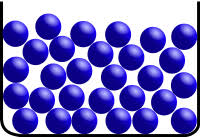
12.
Which description best matches this particle model?
a)
Closely packed and can't move a lot. 
b)
Particles are close together but can move a little. 
c)
Particles have lots of energy and can move around. 
13.
Which of the following occurs when a liquid becomes a gas?
a)
the particles slow down
b)
the particles beak away from one another
c)
the particles move closer together
14.

Select ALL that is true

a)

A model is a simple representation of a system

b)

Models are expensive!

c)

A toy car is a model of a real car

d)

A model helps you understand a system

15.

Pick the reasons why we use models

a)

Models are expensive

b)

Models help you understand complex systems

c)

Models are used when systems are too expensive or impossible to use

16.

Models can be helpful in scientific investigations because

a)

it may not be possible to work with the real thing.

b)

they can be smaller and more manageable than the real thing.

c)

they can be safer to work with than the real thing.

d)

all of the above

17.

The kidneys are organs that filter wastes out of the blood stream. Which of the following objects could best be used to make a simple model of a kidney?

a)

block of wood

b)

coffee filter

c)

plastic bag

d)

water pump

18.

A tennis ball could be used to represent the sun because it's round and yellow. Which of the following could also be used to model the sun?

a)

a light bulb

b)

an empty cup

c)

an eraser

d)

a Kleenex box

19.
What is a scientific model?
a)
A representation of an object but smaller
b)
An exact representation made of similar material
c)
A representation of an object or system
d)
A familiar copy of an object
20.
What is the advantage of creating a model of a dinosaur?
a)
they are too large to easily study 
b)
they are too complicated to study
c)
Real dinosaurs cannot be studied because they are extinct
d)
The model is safer to work with. 
21.
A drawing, diagram, or map are types of ___.
a)
mental models
b)
three-dimensional models
c)
two-dimensional models
d)
plastic models
22.
Scientists use ___________ to understand how systems work.
a)
models
b)
figures
c)
process
d)
energy
23.
Making models involves creating representations of complex objects or processes to help people study and understand things that cannot be observed directly.
a)
True
b)
False
24.

__________ particles are shown in this image

a)

Solid

b)

Liquid

c)

Gas

d)

Plasma

25.

__________ particles are shown in this image

a)

Solid

b)

Liquid

c)

Gas

d)

Plasma

26.
Anything that takes up space and has mass is
a)
Matter
b)
Volume
c)
Liquid
d)
Atom
27.

What is MATTER?

a)

Anything that has MASS

b)

Anything that takes up SPACE

c)

Anything that has MASS and takes up SPACE

d)

Anything that DOES NOT have mass or take up space

28.

If particles are locked in place the substance is in a phase we call _____.

a)

solid

b)

liquid

c)

gas

29.

If particles are not locked in place and can slide past each other the substance is in a phase we call ____.

a)

solid

b)

liquid

c)

gas

30.

This is an example of...

a)

Evaporation

b)

Condensation

c)

Freezing

d)

Melting

31.

This is an example of...

a)

Evaporation

b)

Condensation

c)

Freezing

d)

Melting

32.
Which state of matter has particles that are tightly packed?
a)
liquid
b)
gas
c)
solid
33.
What state of matter is shown in this picture?
a)
plasma
b)
solid
c)
gas
d)
liquid
34.
What state of matter is shown in this picture?
a)
solid
b)
gas
c)
liquid
d)
plasma
35.
What state of matter has particles that vibrate in place?
a)
solid
b)
liquid
c)
gas
d)
plasma
36.
What state of matter has particles that are far apart and move freely?
a)
solid
b)
liquid
c)
gas
d)
plasma