Wayground logo

Free Printable Worksheets

Font size

S
M
L
XL
Worksheets

Parts of the Microscope, Char of Life, and Cell Theory

Total questions: 38

Worksheet time: 23mins

Name
Class
Date
1.
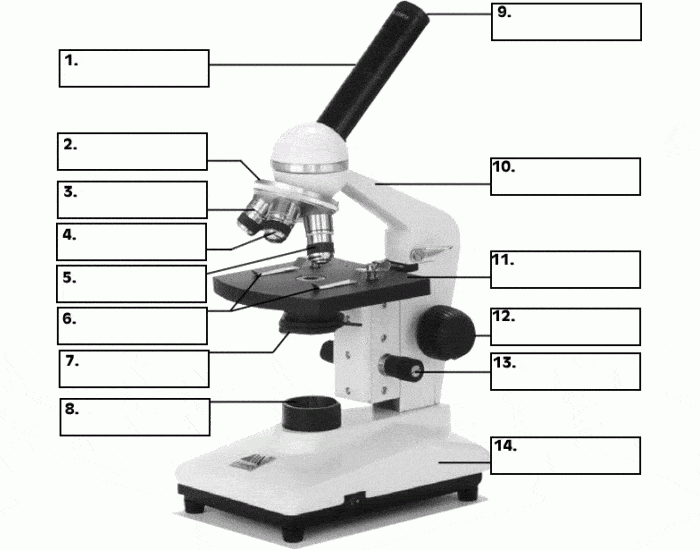
Which number is the arm in the image?
a)
3
b)
6
c)
9
d)
12
2.
Part 9
a)
Body tube
b)
Eyepiece
c)
Objective
d)
Light Source
3.
Part 10
a)
Stage
b)
Arm
c)
Base
d)
Diaphragm
4.
Part 12
a)
Fine Adjustment Knob
b)
Coarse Adjustment Knob
c)
Diaphragm
d)
Objective
5.
Part 14
a)
Stage
b)
Diaphragm
c)
Base
d)
Illuminator
6.
This bring the specimen into sharp focus
a)
Coarse Adjustment Knob
b)
Fine Adjustment Knob
c)
Eyepiece
d)
Diaphragm
7.
Connects to the base and helps carry the microscope easily
a)
Arm
b)
Base
c)
Body Tube
d)
Revolving Nosepiece
8.

Used to control the amount of light reaching the specimen

a)

Illuminator

b)

Stage

c)

Eyepiece

d)

Iris Diaphragm

9.
Used to hold the slides in place
a)
Stage
b)
Stage Clips
c)
Diaphragm
d)
Arm
10.
Part that holds two or more objectives
a)
Stage
b)
Stage Clip
c)
Revolving Nosepiece
d)
Body Tube
11.
The flat surface where the slide with the specimen is placed
a)
Base
b)
Arm
c)
Stage
d)
Diaphragm
12.
A microscope is an instrument that.
a)
makes faraway objects look closer.
b)
makes small objects appear larger.
c)
decreases the size of small objects.
d)
increases the size of small objects.
13.
If your teacher asks you to move a microscope to table, how do you carry it?
a)
by the body tube and the eyepiece
b)
with one hand
c)
one hand on the arm and the other under the base
d)
with one hand on the base and the other on the eyepiece.
14.

All Living things are made of.....

a)

Atoms

b)

Electrons

c)

Cells

d)

Don't Pick this One

15.

All living things need to obtain and use what?

a)

Organisms

b)

Energy

c)

Cells

d)

Archie

16.

All living things maintain what?

a)

Energy

b)

Good Grade

c)

Homeostasis

d)

Cells

17.

Which of the following are examples of Homeostasis?

a)

Body Temperature

b)

Blood Sugar

c)

Blood Pressure

d)

All of the above are examples of Homeostasis

18.

Homeostasis is your way of....

a)

Keeping internal balance

b)

Keeping external balance

c)

storing energy

d)

sleeping

19.
What is the most basic unit of life?
a)
cell
b)
tissue
c)
organ
d)
organ system
20.

Identify the characteristic: A camel has eyelashes that work to keep the dust and sand out of its eyes.

a)

All living things adapt/respond to their environment

b)

All living things grow

c)

All living things have cells

d)

All living things use energy

21.

Identify the characteristic: Green plants produce their own food through the process of photosynthesis.

a)

All living things use energy

b)

All living things contain cells

c)

All living things maintain homeostasis

d)

All living things grow

22.
Fire is living because it has 6 of the 8 characteristics of life. 
a)
True 
b)
False
23.
Multicellular means
a)
made of many cells
b)
made of one kind of cell
c)
made of only one cell
24.
Which of the following is NOT a characteristic shared by all living organisms?
a)
Ability to move
b)
Ability to grow and develop
c)
Made up of one or more cells
d)
Responds to stimuli
25.

In order for something to be considered a living organism, it must display _____ of the characteristics of living things.

a)

all

b)

some

c)

one

d)

more than half

26.
Which of the following characteristics of living things best explains why your legs and arms get longer and stronger as you get older?
a)
You grow and develop.
b)
You maintain homeostasis.
c)
Your cells contain genetic information.
d)
You display organization.
27.

A pet goldfish needs fish food.


Which characteristic of life does this refer to?

a)

Living things need energy

b)

Living things are composed of one or more cells

c)

Living things respond to their environment

d)

Living things grow and reproduce

e)

Living things maintain a stable internal environment

28.

Human skin is constantly losing dead cells, while new cells are also forming underneath.


Which characteristic of life does this refer to?

a)

Living things need energy

b)

Living things are composed of one or more cells

c)

Living things respond to their environment

d)

Living things grow and reproduce

e)

Living things maintain a stable internal environment

29.

Cells in your body divide to create new cells.


Which characteristic of life does this refer to?

a)

Living things need energy

b)

Living things are composed of one or more cells

c)

Living things respond to their environment

d)

Living things grow and reproduce

e)

Living things maintain a stable internal environment

30.

Shivering when your cold generate heat to warm your body.


Which characteristic of life does this refer to?

a)

Living things need energy

b)

Living things are composed of one or more cells

c)

Living things respond to their environment

d)

Living things grow and reproduce

e)

Living things maintain a stable internal environment
31.
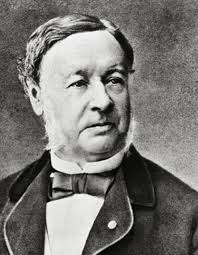
Which of the following scientists concluded that all animals are made of cells?
a)
Rudolf Virchow
b)
Matthais Schleiden
c)
Robert Hooke
d)
Theodor Schwann
32.
Which of the following scientists was the first to observe bacteria?
a)
Anton van Leuwenhoek
b)
Matthais Schleiden
c)
Robert Hooke
d)
Theodor Schwann
33.
Which of the following statements is not part of the cell theory?
a)
Cells are the basic unit of structure and function in all living things.
b)
All cells are produced from other cells.
c)
Only animal cells are composed of cells.
d)
All living things are composed of cells.
34.
Which scientist did NOT contribute to the cell theory?
a)
Anton Van Leeuwenhoek
b)

Robert Hooke
c)
Albert Einstein 
d)

Matthias Schleiden
35.
Who looked at cork and named the cell?
a)
Robert Hooke
b)
Van Leeuwenhoek
c)
Robert Brown
d)
Francesco Redi
36.
Who said that cells come from other cells?
a)
Hooke
b)
Leeuwenhoek
c)
Schlieden and Schwann
d)
Virchow
37.

Which scientists is credited with making the first compound microscope?

a)

Virchow

b)

Hooke

c)

Jansen

d)

Schleiden

38.

What was Mathias Schleiden's contribution to cell theory?

a)

That all cells come from other cells.

b)

He created the first compound microscope.

c)

He said all plants are made of cells.

d)

He said all animals are made of cells.