wayground logo

Free Printable Worksheets

NEW

Font size

S
M
L
XL
Worksheets

Unit 1-Introduction to Ecology Review

Total questions: 56

Worksheet time: 46mins

Name
Class
Date
1.
The shrew provides energy for the _______?
a)
cricket
b)
grasshopper
c)
frog
d)
snake
2.
All of the living and nonliving things in an area that interact with each other are called a/an ______.
a)
community
b)
habitat
c)
population
d)
ecosystem
3.
What may happen if the snowshoe hare was removed from the food web pictured?
a)
The insects in the habitat would increase.
b)
The shrew population would decrease due to being only hawk food source.
c)
The willow tree population would decrease.
d)
Foxes would dies due to no food source. 
4.
An organism that produces its own food supply from inorganic compounds is called a(an)
a)
heterotroph
b)
consumer
c)
detritivore
d)
autotroph
5.
which symbiosis is this 
a)
parasitism 
b)
mutualism
c)
commensalism
d)
nonalism 
6.
a relationship between two in which one species, the predator, feeds on the other species, the prey
a)
chemosynthesis
b)
predation
c)
cellular respiration 
d)
commensalism
7.

Scientists found, that over a period of 200 years, a mountain pond was transformed into a meadow. During that time, several communities of organisms were replaced by different communities. Which of these best explains why new communities were able to replace older communities?

a)

A.The original species became extinct.

b)

A.Species in the older community died from old age.

c)

A.The abiotic characteristics of the habitat changed.

d)

A.Diseases that killed the older organisms disappeared.

8.

The study of the interactions between organisms and their environment is:

a)

Ecology

b)

Microbiology

c)

Biology

d)

Evolution

9.

All living things in a given area, living and non-living.

a)

Ecosystem

b)

Biotic

c)

Community

d)

Species

10.

The role an organism plays in its environment is known as its

a)

ecosystem

b)

habitat

c)

niche

d)

biosphere

11.

All the organisms of the same species living in the same area

a)

Community

b)

Population

c)

Habitat

d)

Ecosystem

12.

The non-living parts of the environment such as rocks, air, temperature, sunlight, and water

a)

Abiotic

b)

Biotic

c)

Habitat

d)

Community

13.

A group of very similar organisms that can mate and reproduce offspring of the same type

a)

Community

b)

Population

c)

Species

d)

Niche

14.

The living or once living organisms in an ecosystem

a)

Biology

b)

Abiotic

c)

Biotic

d)

Ecology

15.

An entity that displays all of the characteristics of life. Has the ability to maintain homeostasis

a)

animal

b)

organism

c)

species

d)

trophosphere

16.
Which of the following is an abiotic factor?
a)
leaves
b)
soil
c)
grass
d)
animals
17.

The physical place where an organism lives is known as its

a)

niche

b)

habitat

c)

community

d)

biome

18.
Groups of rabbits that live in the same area make up a
a)
species
b)
population
19.
The rabbits and squirrels in an area are a part of the same
a)
population 
b)
community
20.
Organisms that are similar enough to reproduce are grouped into a
a)
species
b)
population 
c)
community
d)
biome
21.

The smallest level of ecological classification

a)

population

b)

biome

c)

ecosystem

d)

organism

22.
The largest level of ecological classification 
a)
ecosystem
b)
biome
c)
population
d)
biosphere
23.

One specific member of a population

a)

organism

b)

species

c)

community

d)

dude

24.

All the living and nonliving things in an area (biotic & abiotic)

a)

population

b)

community

c)

ecosystem

d)

biome

25.

In a desert ecosystem, sand is an example of a(n)______________ factor.

a)

biotic

b)

abiotic

c)

ecosystem

d)

community

26.

A cactus is an example of a(n) ________________factor.

a)

biotic

b)

abiotic

c)

habitat

d)

niche

27.

Populations of sharks, along with shells and water are included in an ocean ____________________.

a)

niche

b)

community

c)

habitat

d)

ecosystem

28.

What determines where a population can live?

a)

whether its needs are met by the biotic factors in the habitat

b)

whether its needs are met by the abiotic factors in the habitat

c)

whether its needs are met by the abiotic and biotic factors in the habitat

d)

whether its needs are met by the other populations in the habitat

29.

Two animal species almost never occupy the same niche within an ecosystem.

a)

true

b)

false

30.

Organisms depend on, but do not compete with each other in an ecosystem.

a)

true

b)

false

31.

An ecosystem relies on both predator and prey to survive.

a)

true

b)

false

32.

An increase in predators won't affect the population of prey.

a)

True

b)

False

33.

Competition is good in a healthy ecosystem.

a)

True

b)

False

34.
A relationship between two organisms in which one organism benefits and the other is unharmed...
a)
Mutualism 
b)
Competition
c)
Parasitsm 
d)
Commensalism 
35.
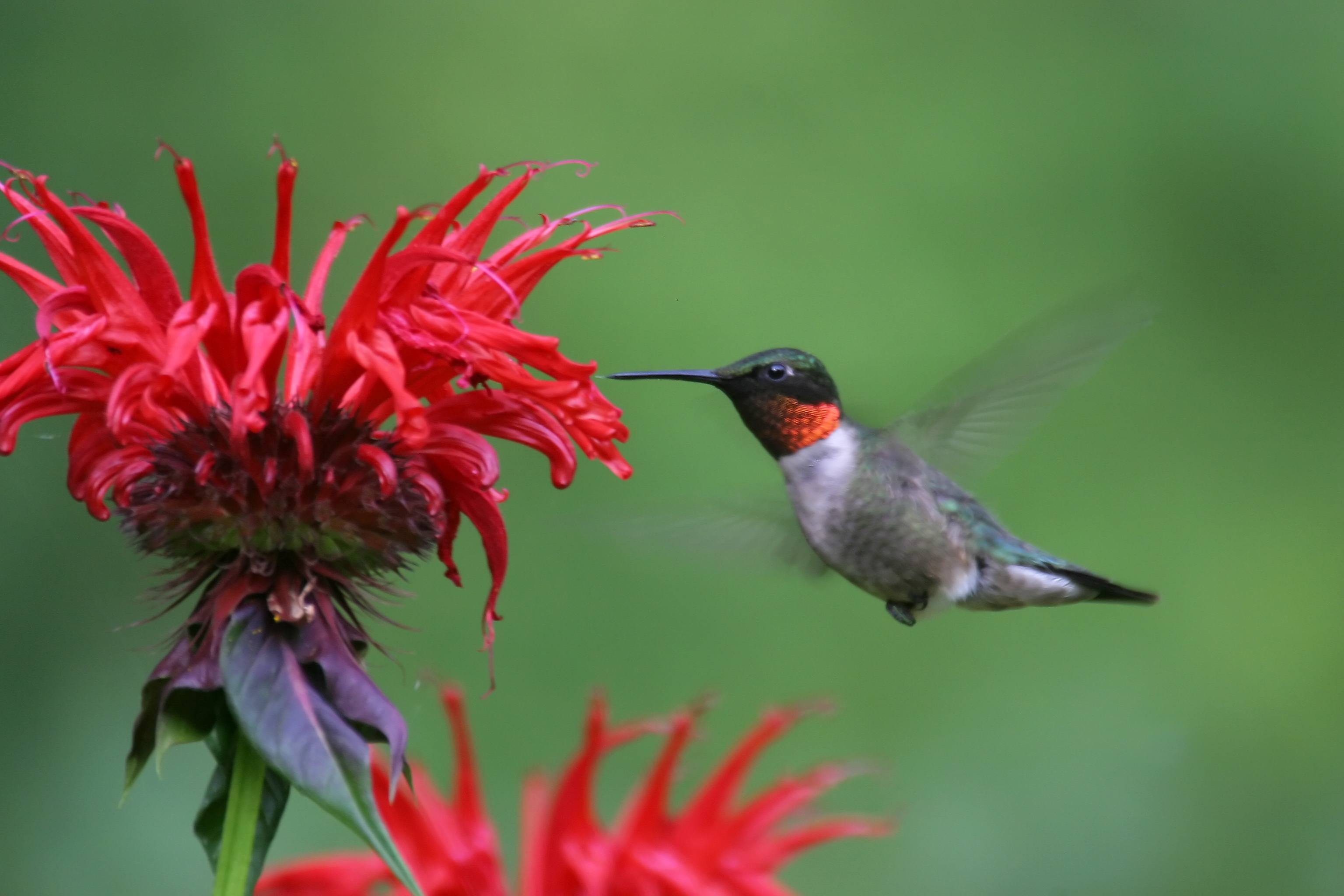
What type of symbiosis?  Hummingbirds feed on nectar from flowers.  The flowers are pollinated by hummingbirds as they move from flower to flower.
a)
commensalism
b)
mutualism
c)
parasitism
d)
predation
36.
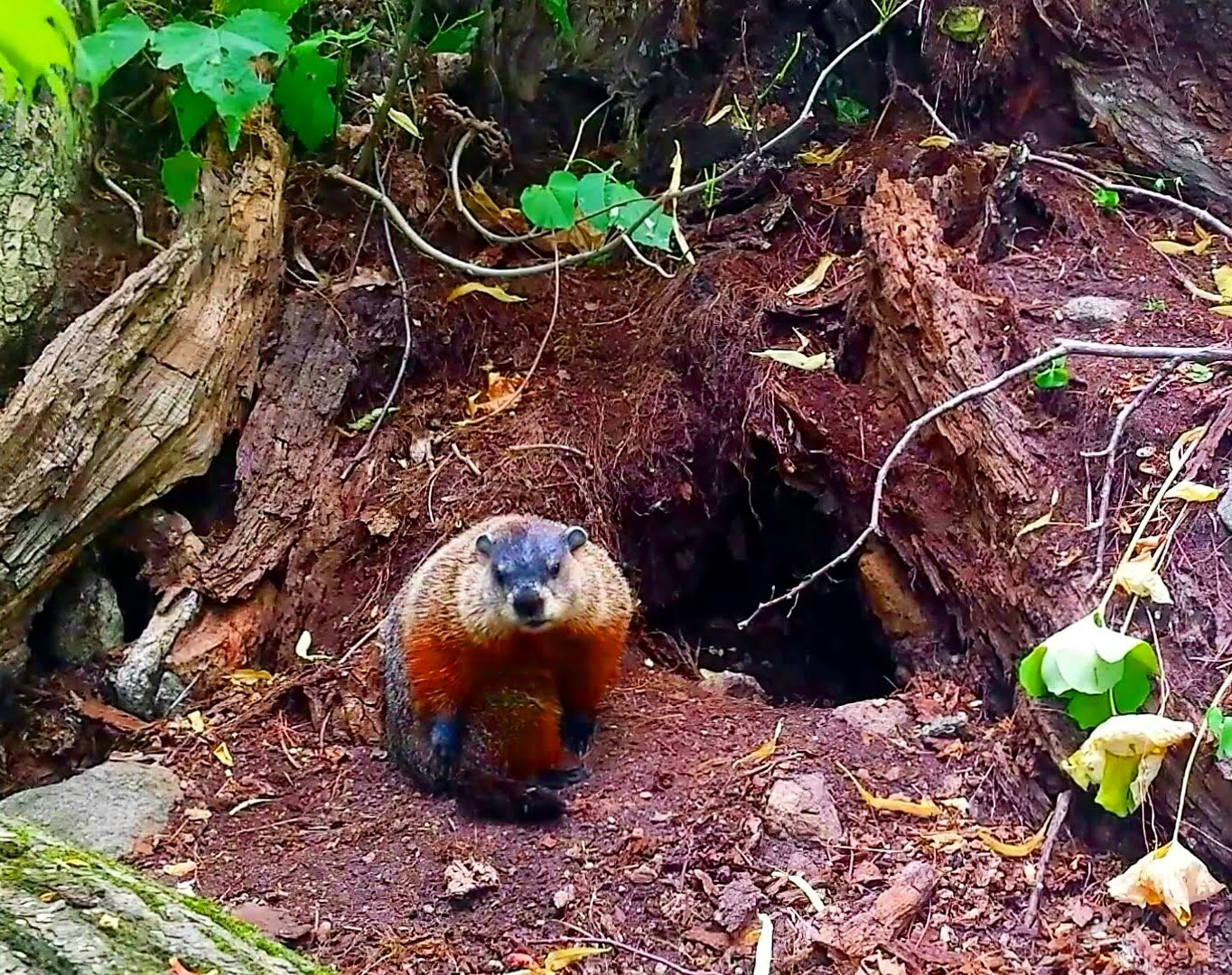
What type of symbiosis?  Skunks often live in burrows that have been dug and abandoned by woodchucks.  
a)
commensalism
b)
mutualism
c)
parasitism
d)
predation
37.
Which symbols best describe parasitism?
a)
+,+
b)
+,-
c)
+,0
d)
-,0
38.
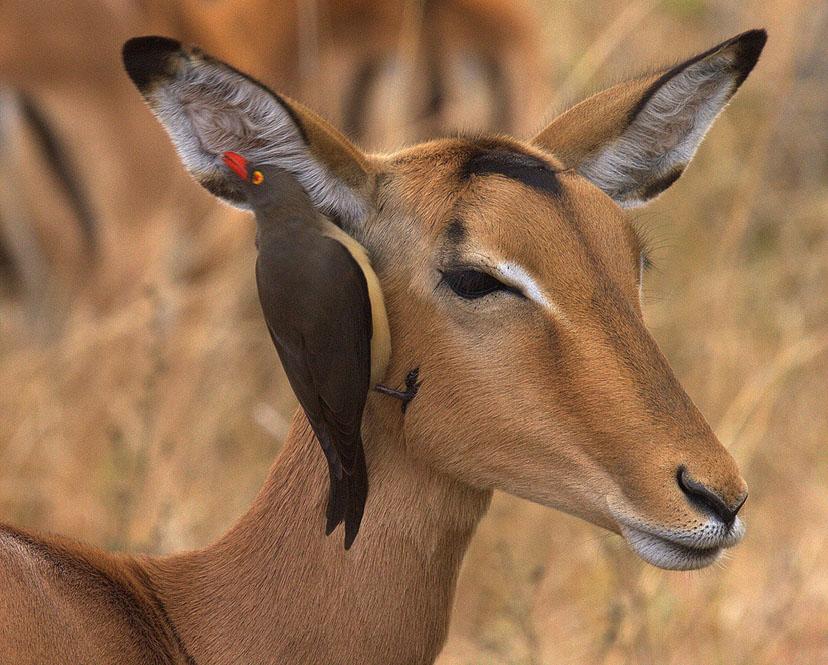
Red-billed oxpeckers are birds that often feed on parasites that infest impala.  This is an example of _______.
a)
commensalism
b)
mutualism
c)
neutralism
d)
competition
39.
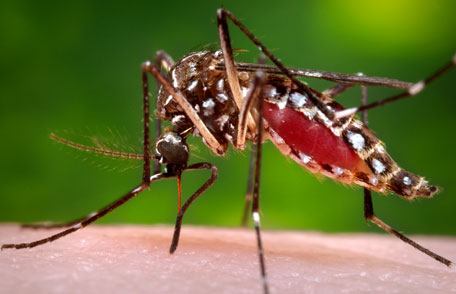
When a mosquito bites you, you are the __________ and the mosquito is the  ____________.
a)
host, hostess
b)
parasite, host
c)
host, parasite
d)
prey, predator
40.

Aphids are tiny insects that live on and eat the leaves of plants, removing vital nutrients from the plants.

a)

Predation

b)

Parasitism

c)

Commensalism

d)

Mutualism

41.
What type of symbiosis is this?
*
Hermit crabs find shells left by snails that have died and move in.
*
  Snails die and leave behind their shells.
a)
commensalism
b)
mutualism
c)
parasitism
d)
predation
42.
In a parasitic relationship, one organism is ___________ and one organism is benefiting. 
a)
helped
b)
harmed
c)
not effected
d)
happy
43.
All energy transformations in an ecosystem begin with
a)
a scavenger
b)
the sun
c)
a decomposer
d)
a herbivore
44.
Which event is the best example of competition between species in a pond?
a)
dragonflies landing on lily pads
b)
lizards and snakes lying in the sun
c)
hawks eating mice
d)
frogs and toads eating flies
45.
Which is the smallest level of an ecosystem?
a)
organsism
b)
population
c)
community
d)
ecosystem
46.
Which relationship describes predator/prey
a)
hawks and shrubs
b)
mountain lion and deer
c)
frogs and trees
d)
grasses and crickets
47.
Example of a consumer
a)
worm
b)
bacteria
c)
mushroom
d)
hawk
48.
Example of a decomposer
a)
fungus
b)
mouse
c)
plants
d)
frogs
49.
A tree is a ....
a)
composer
b)
decomposer
c)
producer
50.
Humans are considered...
a)
consumers
b)
decomposers
c)
producers
51.
Worms are considered...
a)
producer
b)
consumer
c)
decomposer
52.
What is a producer?
a)
an organism that gets energy from eating other organisms
b)
an organisms that uses sunlight to make its own food
c)
an organism that gets energy from eating dead organisms, non-living material or waste
d)
an organism that uses chemical energy to make its own food
53.
What is a herbivore?
a)
an animal that gets energy from eating other animals
b)
an organism that gets energy from eating only plants
c)
an animal that gets energy by eating both plants and other animals
54.
A connection of food chains with many food energy paths in an ecosystem is a ____________
a)
ecosystem
b)
food web
c)
environment
d)
population
55.
What is a carnivore?
a)
an animal that gets energy by eating other animals
b)
An animal that gets energy by eating only plants
c)
an animal that gets energy by eating both plants and animals
d)
an animal that makes its own energy through photosynthesis
56.
Which of the following examples describes how a consumer depends on a producer for food? 
a)
Milo drinks water from his water bowl
b)
A flower uses photsysnthesis to get it's food.
c)
A bunny eats grass .