wayground logo

Free Printable Worksheets

NEW

Font size

S
M
L
XL
Worksheets

AP Unit 1 Topics 1-3

Total questions: 20

Worksheet time: 16mins

Name
Class
Date
1.

Which of the following elements is Not one of the six most common in living organisms?

a)

carbon

b)

oxygen

c)

iron

d)

nitrogen

e)

hydrogen

2.

In which of these are the electrons shared unequally?

a)

double covalent bond

b)

triple covalent bond

c)

hydrogen bond

d)

polar covalent bond

e)

ionic and covalent bonds

3.

In an aqueous environment which of the following is the strongest bond?

a)

covalent

b)

ionic attraction in solution

c)

van der Waals

d)

hydrogen

4.
Which of the following properties of water enables molecules to cling together as they move from the roots to the leaves of plants?
a)
Water expands as it freezes.
b)
Water is an excellent solvent.
c)
Water exhibits cohesive behavior.
d)
Water moderates temperature.
5.

The type of isomer that occurs when two molecules are mirror images of each other is a(n)

a)

structural isomer

b)

geometric isomer

c)

enantiomer

d)

stereoisomer

6.
Which biomolecule is found in fats, oils, and waxes and is a source of long-term energy
a)
Proteins
b)
Nucleic Acid
c)
Lipids
d)
Carbohydrate
7.
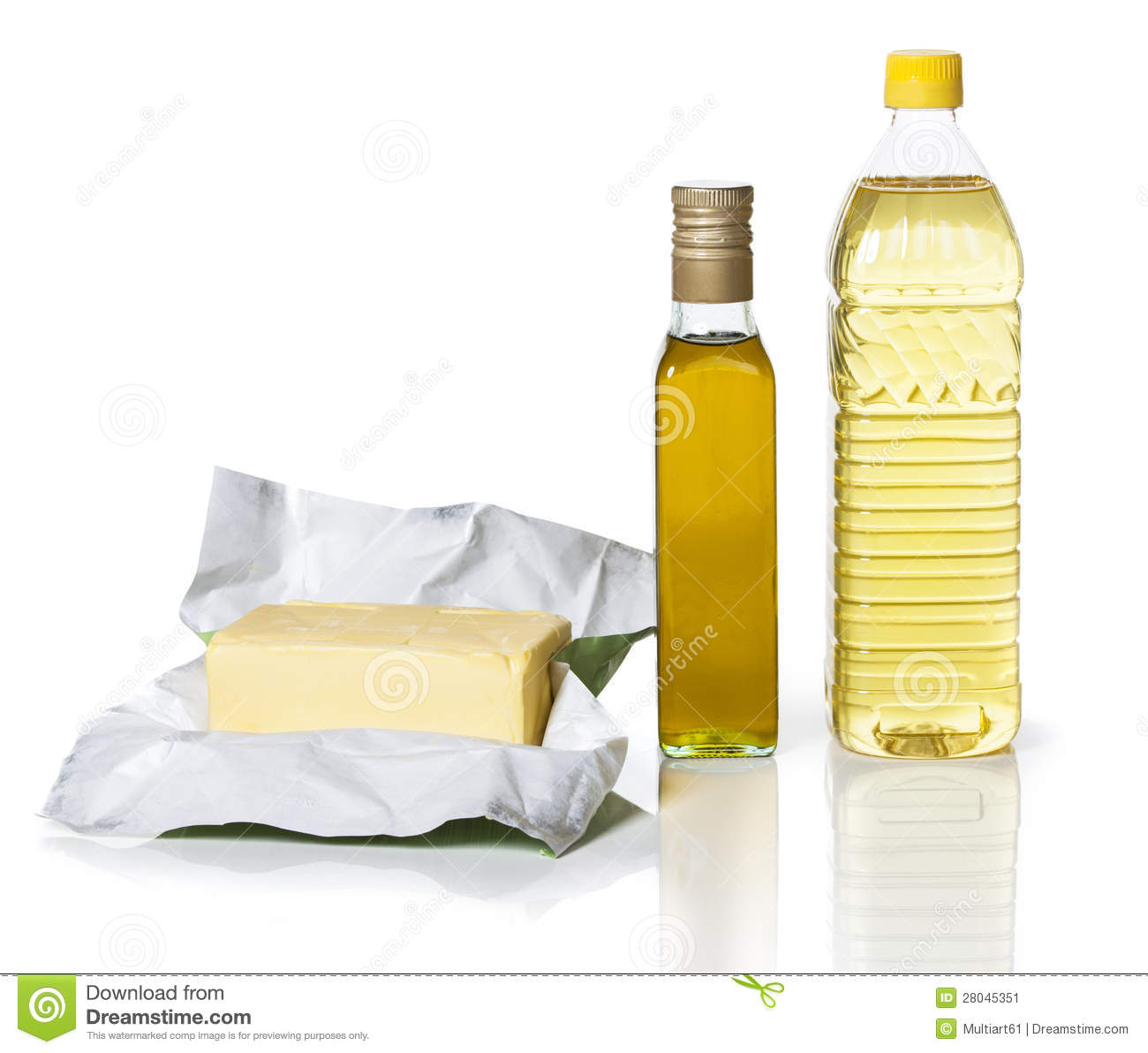
Which biomolecule is this a picture of?
a)
Protein
b)
Nucleic Acid
c)
Lipid
d)
Carbohydrate
8.
A monomer is ...
a)
a single atom
b)
a building block for polymers
c)
a single element
d)
is an inorganic molecule
9.

What are the monomers that make up carbohydrates?

a)

monosaccharides

b)

glycerols and fatty acids

c)

amino acids

d)

nucleotides

10.

A fat that is solid at room temperature. (ex. Animal fat)

a)

Saturated Fat

b)

Supersaturated Fat

c)

Unsaturated Fat

d)

I haven't answered a question since the first one

11.
When water is added to split a molecule, the reaction is known as a(n) __ reaction.
a)
dehydration synthesis
b)
condensation
c)
hydrolysis
d)
super magical 
12.
Which biomolecule is mainly hydrocarbons and therefore very hydrophobic?
a)
carbohydrate
b)
nucleic acid
c)
protein
d)
lipid
13.
How many molecules are required to hydrolyze a polymer that is 10 monomers long?
a)
10
b)
9
c)
5
d)
1
14.
Amylase breaks down alpha-glycosidic linkages. Which of the following could amylase break down?
a)
glycogen and starch
b)
glycogen and cellolose
c)
starch and chitin
d)
cellulose and chitin
15.
Which of these describes a saturated fatty acid?
a)
All C-H bonds are full
b)
They form straight chains
c)
They are solids at room temp.
d)
All of the above
16.
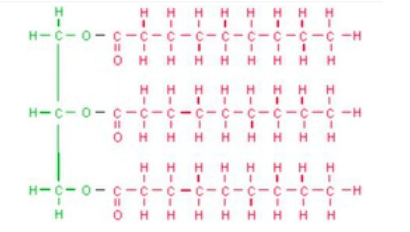
What molecule is this?
a)
this is a monosaccharide
b)
this is a polysaccharide
c)
this is a protein
d)
this is a lipid
17.
What are the building blocks of a lipid?
a)
3 gylcerols and 1 fatty acid
b)
1 glycerol and 3 fatty acids
c)
3 amino acids
d)
3 simple sugars
18.
What macromolecule makes up the cell membrane's lining?
a)
Saturated Fatty acid chains
b)
Phospholipids
c)
Polypeptide chains
d)
Cellulose polysaccharide Chains
19.
The property of water that allows water molecules to stick to another substance is
a)
adhesion
b)
cohesion
c)
density
d)
specific heat
20.
Water is polar because...
a)
The unequal sharing of electrons gives the water molecule a slight negative charge near its oxygen atom and a slight positive charge near its hydrogen atoms.
b)
The molecule has two poles, at which the it is colder than other regions of the molecule.
c)
The unequal sharing of electrons gives the water molecule a slight negative charge near its hydrogen atoms and a slight positive charge near its oxygen atom.
d)
The water molecule is neutral.