Wayground logo

Free Printable Worksheets

Font size

S
M
L
XL
Worksheets

Cells Test Review

Total questions: 40

Worksheet time: 40mins

Name
Class
Date
1.

How many of these cells are Eukaryotic?

a)

1 of them

b)

2 of them

c)

3 of them

d)

All of them

2.
All living things are made up of _____. 
a)
Cells 
b)
Bacteria 
c)
Virus 
d)
ATP
3.

Which one of these cells is prokaryotic?

a)

Cell1

b)

Cell 2

c)

Both of them

d)

Neither of them

4.
Prokaryotic cells do NOT have a nucleus. 
a)
True 
b)
False 
5.

Which of the cells are Eukaryotic?

a)

Cells 1 and 2

b)

Cells 3 and 4

c)

Cells 2 and 3

d)

Cells 1 and 4

e)

All of them

6.
Which of the following is an example of a prokaryotic cell? 
a)
Virus 
b)
Plant Cell 
c)
Bacteria 
d)
Animal Cell 
7.
Eukaryotic cells do NOT have a nucleus. 
a)
True 
b)
False 
8.

Which organism is most likely a bacteria?

a)

Organism 1

b)

Organism 2

c)

Organism 3

d)

Organism 4

9.
Which of the following is a Eukaryotic cell?
a)
Bacteria 
b)
Virus 
c)
Animal/Plant Cell 
d)
All of the above. 
10.

Which organelle directs all cell activities through the DNA located there.

a)

Lysosomes

b)

Nucleus

c)

ribosomes

d)

Mitochondria

11.
Where are proteins made?
a)
Golgi body
b)
Mitoichondria
c)
Chromosomes
d)
Ribosomes
12.
I am the outer most layer of an animal cell. What am I?
a)
cell wall
b)
nucleus
c)
cell membrane 
d)
cell skin
13.
What are tiny organelles that convert glucose into ATP?
a)
Ribosomes
b)
Vesicles
c)
Cytoskeleton
d)
Mitochondria
14.
The site of photosynthesis
a)
ribosome
b)
mitochondria
c)
chloroplast
d)
nucleus
15.
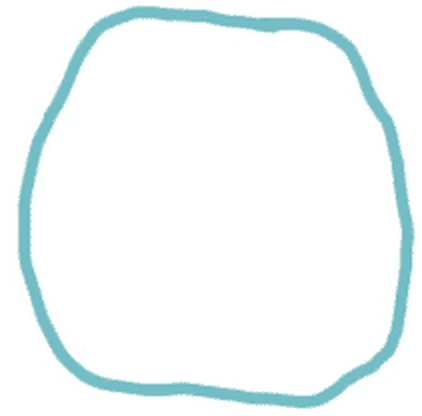
What kind of cell is this?
a)
Eukaryotic
b)
Prokaryotic
16.
Plants and animal cells are examples of ___ cells 
a)
prokaryotic cells 
b)
eukaryotic cells 
17.
Eukaryotic cells are complex.
a)
true
b)
false
18.

Which of the following would be found in both eukaryotic AND prokaryotic cells?

a)

chloroplast

b)

DNA

c)

nucleus

d)

endoplasmic reticulum

19.
Which of the following is the smallest unit of life that can carry out all life functions?
a)
the mitochondria
b)
the vacuoles
c)
the nucleus
d)
the cell
20.
Which structures are found in every living cell?
a)
cell membrane and cytoplasm
b)
chloroplasts and mitochondria
c)
a cell wall and nucleus
d)
chloroplasts and cell wall
21.
Which cell structure is found in plant and animals cells and controls what can come into or leave a cell?
a)
cell membrane
b)
cytoplasm
c)
nucleus
d)
vacuole
22.
What is the function of the cell nucleus found in both plant and animal cells?
a)
to produce energy
b)
to control cell activity
c)
to remove waste products
d)
to allow molecules to enter the cell
23.
Cell organelles that are responsible for digesting food, worn out organelles and other cellular wastes are called ___________________.
a)
Mitochondria
b)
Vacuoles
c)
Lysosomes
d)
Chlororplasts
24.
What is one basic function of the vacuoles?
a)
circulating oxygen
b)
producing food
c)
controlling cell processes
d)
storing water
25.
Chloroplasts in plant cells allow the plant to perform a function that animal cells cannot do.  What is the main function of the chloroplasts found in plant cells?
a)
to absorb light energy and manufacture food
b)
to remove waste materials by active transport
c)
to manufacture chemical energy from food
d)
to control the shape of the cell
26.

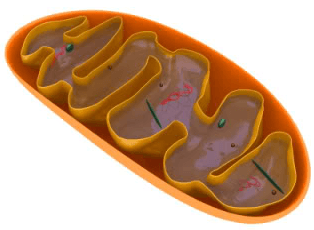
What kind of cell is this?

a)

Prokaryotic

b)

Eukaryotic

c)

Both

27.
All cells need energy to function.  Which cell organelle is responsible for producing energy in the cell?
a)
chloroplasts
b)
mitochondria
c)
nucleus
d)
vacuoles
28.
In what part of the plant cell does the process of photosynthesis take place?
a)
nucleus
b)
mitochondria
c)
chloroplasts
d)
vacuoles
29.
Cells with a nucleus and membrane-bound organelles are called ____________________.
a)
prokaryotes
b)
eukaryotes
c)
bacteria
d)
protists
30.

Which of the following is not part of the cell theory?

a)

cells must contain a nucleus

b)

all living things are made from cells

c)

cells can only come from other cells

d)

cells are the basic unit of life

31.

The basic unit of structure and function in all living things.

a)

chloroplast

b)

nucleus

c)

cell

d)

cell membrane

32.

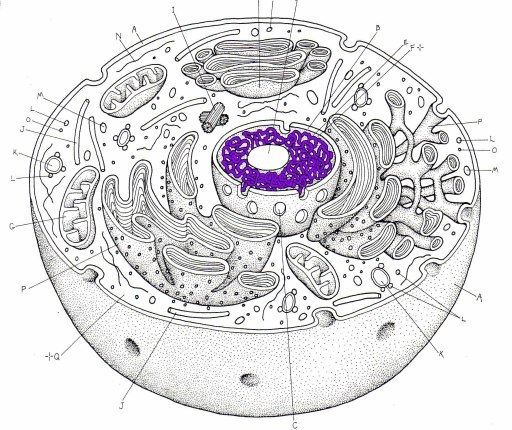
What kind of cell is this?

a)

Prokaryotic

b)

Eukaryotic

c)

Neither

33.
Which statement is true about bacterial cells?
a)
The cells are very large
b)
The cells have no nucleus
c)
The are eukaryotes
d)
They have organelles
34.
Which is present only in eukaryotic cells?
a)
cell membrane
b)
cytoplasm
c)
DNA
d)
nucleus
35.
Which organelle converts sugars into energy?
a)
lysosome
b)
mitochondria
c)
nucleus
d)
ribsome
36.

A scientist at the polar ice cap was studying an ice sample from 100 meters below the surface. He noticed the cell structures of cytoskeleton, mitochondria, nucleus, chloroplasts, cell wall and ribosomes. What kind of organism did he find?

a)

animal

b)

bacteria

c)

plant

d)

not enough info

37.
Some cells, such as human nerve and muscle cells, contain many more mitochondria than do other cells, such as skin cells.  Why do some cells have more mitochondria than others?
a)
The cells use more energy
b)
The cells store more nutrients
c)
The cells degrade more proteins
d)
The cells divide more frequently
38.

What type of cell is this?

a)

Prokaryotic

b)

Eukaryotic

39.
A cell with numerous ribosomes is probably specialized for 
a)
enzyme storage
b)
energy production
c)

cell division

d)
protein synthesis
40.
All cells must have a
a)
cell wall
b)
cell membrane
c)
nucleus
d)
nucleoli