
 Worksheets
Personal Fitness Unit 3 Review
Total questions: 15
Worksheet time: 9mins
A muscle is...
transported throughout the body via veins
always voluntary
a bundle of fibrous tissue that contracts and produces movement
a fixed size throughout life
The stomach is a...
Smooth muscle
Cardiac muscle
Skeletal muscle
External muscle

As your bicep pulls weight towards your body the shortening of those bicep muscles is called:
Concentric contraction
Eccentric contraction
Isometric contraction

Lowering the weight during bicep curls lengthens the bicep muscle which is an example of
Concentric contraction
Eccentric contraction
isometric contraction
What is the endocrine system?
A system of vessels that circulates blood around the body.
A group of bones and tissue that provides support and structure for the body.
A group of glands that work together with the nervous system to coordinate all body functions
A group of organs that is responsible for eliminating wastes.
The response to stress is called
Stay or Stray Response
Fight or Stay Response
Flee or Stray Response
Fight or Flight Response
Which term refers to the body's use of energy for energy and growth?
Excretion
Metabolism
Digestion
Respiration
What's the trick to remembering eccentric and concentric contractions?
E to the ears, C to the chin
E to the earth, C to the ceiling
E to the elbow, C to the calf
E in Europe, C in Canada
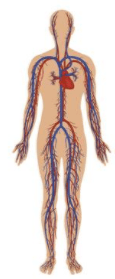
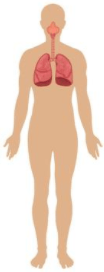
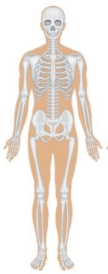
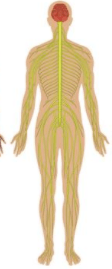
What diagram shows the central nervous system?
One's body size determines their health.
True
False
Goals ARE NOT achieved overnight.
True
False

