Wayground logo

Free Printable Worksheets

Font size

S
M
L
XL
Worksheets

Physio Unit 1 Terms and Molecules Test

Total questions: 40

Worksheet time: 40mins

Name
Class
Date
1.
The image below shows a polymer of glucose molecules. What type of macromolecule is this?
a)
carbohydrate
b)
protein
c)
lipid
d)
nucleic acid
2.

What type of macromolecule is shown in the image above?

a)

Carbohydrate

b)

Nucleic Acid

c)

Lipid

d)

Protein

3.
An unknown molecule contains a sugar and a phosphate group. It is likely what?
a)
carbohydrate
b)
protein
c)
lipid
d)
nucleic acid
4.
Larger polymers are formed when monomers are joined together by a _______ reaction.
a)
dehydration synthesis
b)
digestion
c)
hydrolysis
d)
redox
5.
What is the monomer of proteins?
a)
monosaccharides
b)
amino acids
c)
phospholipids
d)
nucleotide
6.
What is the ratio carbon:hydrogen:oxygen in carbohydrates?
a)
1:1:1
b)
1:2:1
c)
2:1:1
d)
2:1:2
7.
Identify the macromolecule in the image below.
a)
carbohydrate
b)
nucleic acid
c)
protein
d)
lipid
8.
Which 4 elements make up most of all living matter?
a)
Carbon, Hydrogen, Nitrogen, Oxygen
b)
Carbon, Oxygen, Sodium, Potassium
c)
Carbon, Hydrogen, Calcium, Nitrogen
d)
Carbon, Oxygen, Nitrogen, Sulfur
9.
Which type of lipid forms the primary structure of the cell membrane?
a)
triglycerides
b)
wax
c)
cholesterol
d)
phospholipid
10.

This is an image of

a)

DNA

b)

Protein

c)

Nucleic Acid

d)

Lipid

11.

C6H12O6 + C6H12O6 --> C12H22O11 + H2O

The equation above represents an example of

a)

Dehydration Synthesis

b)

Hydrolysis

12.

Which of the following elements is most abundant in Humans.

a)

phosphorus

b)

sulfur

c)

carbon

d)

calcium

13.
Enzymes are...
a)
nucleic acids
b)
proteins
c)
lipids
d)
carbohydrates
14.
What is the function of an enzyme?
a)
enzymes break themselves into small pieces
b)
enzymes slow down chemical reactions
c)
enzymes speed up chemical reactions
d)
enzymes combine products to form reactants 
15.

What happens when enzymes are heated to a high temperature?

a)

The enzymes die.

b)

The shapes of the enzyme are altered or denatured

c)

The enzymes' amino acid sequence changes.

d)

The enzymes remain the same

16.
Enzymes are capable of increasing the rate of a chemical reaction within a living cell.  Enzymes accomplish this through which of the following means?
a)
reducing the number of products   
b)
reducing the activation energy
c)
increasing the temperature of the cell
d)
increasing the concentration of reactants 
17.
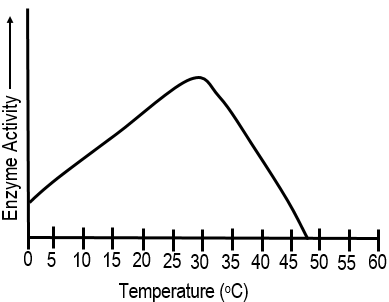
Based on the graph, what is the optimal temperature for this enzyme? 
a)
15oC
b)
40oC
c)
30oC
d)
35oC
18.
The head is ______ to the chest.
a)
superior
b)
dorsal
c)
inferior
d)
ventral
19.
The knee is _______ to the ankle.
a)
proximal
b)
lateral
c)
distal
d)
medial
20.

Towards the Front.

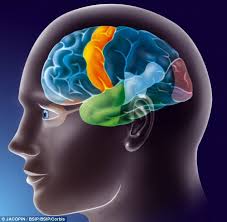
[The eyes are _______ to the brain].

a)

Inferior

b)

Distal

c)

Lateral

d)

Anterior

21.
My nose is ______________ to my shoulders
a)
inferior
b)
superior
22.

My toes are _________________ to my thigh.

a)

proximal

b)

distal

23.
My ear is more _____________ than my nose
a)
Medial 
b)
lateral
24.

In passive transport, the concentration gradient goes from..

a)

Low to low

b)

High to low

c)

Low to high

d)

High to high

25.
Part of the plasma membrane responsible for cell recognition... 
a)
C
b)
E
c)
B
d)
D
26.

The yellow and brown portion of this image is:

a)

protein

b)

phopholipid

c)

carbohydrate

d)

cholesterol

27.

The purple regions of the image represent:

a)

phospholipid

b)

cholesterol

c)

proteins

d)

carbohydrates

28.

Examples of particles that can diffuse across through the phospholipid bilayer include:

a)

oxygen and carbon dioxide

b)

sugar

c)

sodium ions

d)

calcium ions

29.

What would happen to an animal cell placed into pure water?

a)

It would shrink

b)

It would increase and burst

c)

Plasmolysis

d)

It would not change shape

30.

Which molecules found in the cell membrane aid in cell recognition and identification?

a)

Glycoproteins

b)

Cholesteral

c)

Integral proteins

d)

Phospholipid bilayer

31.
What is one major difference between passive and active transport?
a)
Passive transport uses energy; active transport does not.
b)
Both types of transport use energy.
c)
Active transport uses energy; passive transport does not.
d)
No difference. They are both the same.
32.

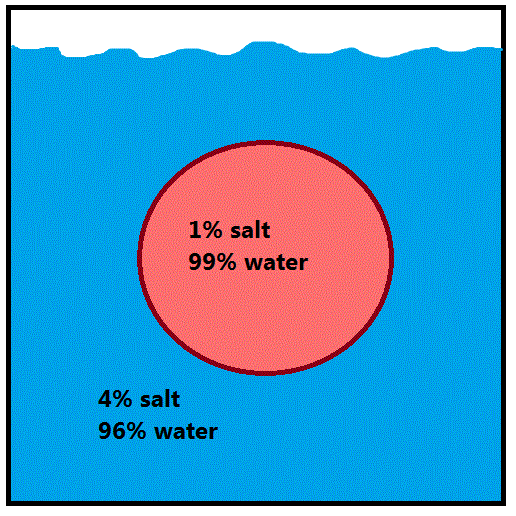
Where will the water go?

a)

Into the cell

b)

Out of the cell

c)

Equally in & out - it's isotonic

d)

There is no water

33.

The diagram shows two chambers with different concentration of molecules separated by a selectively permeable membrane. Predict what will happen to the water molecules ?

a)

move from A to B due to osmosis

b)

move from B to A due to osmosis

34.

Which organelle is responsible for production of ATP (energy) through cellular respiration?

a)

Nucleus

b)

Mitochondria

c)

Ribosomes

d)

Vacuole

35.

Which is NOT an example of Active Transport

a)

Phagocytosis

b)

Endocytosis

c)

Facilitated Diffusion

d)

Sodium Potassium Pump

36.

The major function of the integral proteins in the cell membrane is

a)

to provide a barrier

b)

to provide stability

c)

to provide channels

d)

All of the above

37.

The function of the ribosomes in a cell is to

a)

synthesize proteins

b)

make energy

c)

store waste

d)

transport proteins

38.

Which of the following is NOT an element found in the Human body.

a)

Calcium

b)

Potassium

c)

Beryllium

d)

Magnesium

39.

Is this model showing an active or passive transport process?

a)

Active

b)

Passive

40.

The wrist would be ____________ to the elbow.

a)

Distal

b)

Proximal