wayground logo

Free Printable Worksheets

Font size

S
M
L
XL
Worksheets

Mid-term Review

Total questions: 50

Worksheet time: 43mins

Name
Class
Date
1.
What word describes when water is attracted to other substances?
a)
cohesion
b)
adhesion
c)
capillary action
d)
surface tension
2.
What two elements make up water?
a)
Helium and oxygen
b)
Hydrogen and oxygen
c)
helium and carbon
d)
oxygen and carbon
3.

When water and other liquids stick together to form drops or thin films called ________________.

a)

adhesion

b)

capillary action

c)

cohesion

d)

surface tension

4.
molecule in which opposite ends have opposite electric charges
a)
cohesion
b)
polar molecule
c)
hydrogen bond
d)
solution
5.
Why does ice float?
a)
As water freezes, it expands and its density decreases.
b)
As water freezes, it takes up more hydrogen from the atmosphere, causing it to have a greater buoyancy.
c)
As water freezes, air becomes trapped between the hydrogen bonds of water molecules.
d)
As water freezes, it takes up more oxygen from the atmosphere, causing it to have a greater buoyancy.
6.
Water is a universal solvent because it...
a)
It can be found anywhere
b)
It freezes when it gets cold
c)
floats when frozen
d)
Dissolves most substances
7.
The fact that ice floats on liquid water is due to the fact that water's solid is ___________ than it's liquid form
a)
less polar
b)
more polar
c)
less dense
d)
more dense
8.
A general definition of cohesion is the attraction of:
a)
particles of the same substance
b)
particles of a different substance
c)
particles of both the same and different substances
d)
particles of neither the same or different substances
9.
Which term refers to water having partial positive and a partial negative charge?
a)
cohesion
b)
surface tension
c)
polarity
d)
adhesion
10.
A high specific heat means...
a)
It heats up quickly with energy added
b)
It requires more energy to change temperature
11.

What do you call any substance that dissolves another substance?

a)

Solvent

b)

Height

c)

Atoms

d)

Oxygen

12.

What property of water allows water to flow against gravity?

a)

Polarity

b)

Cohesion

c)

Capillary Action

d)

Adhesion

13.

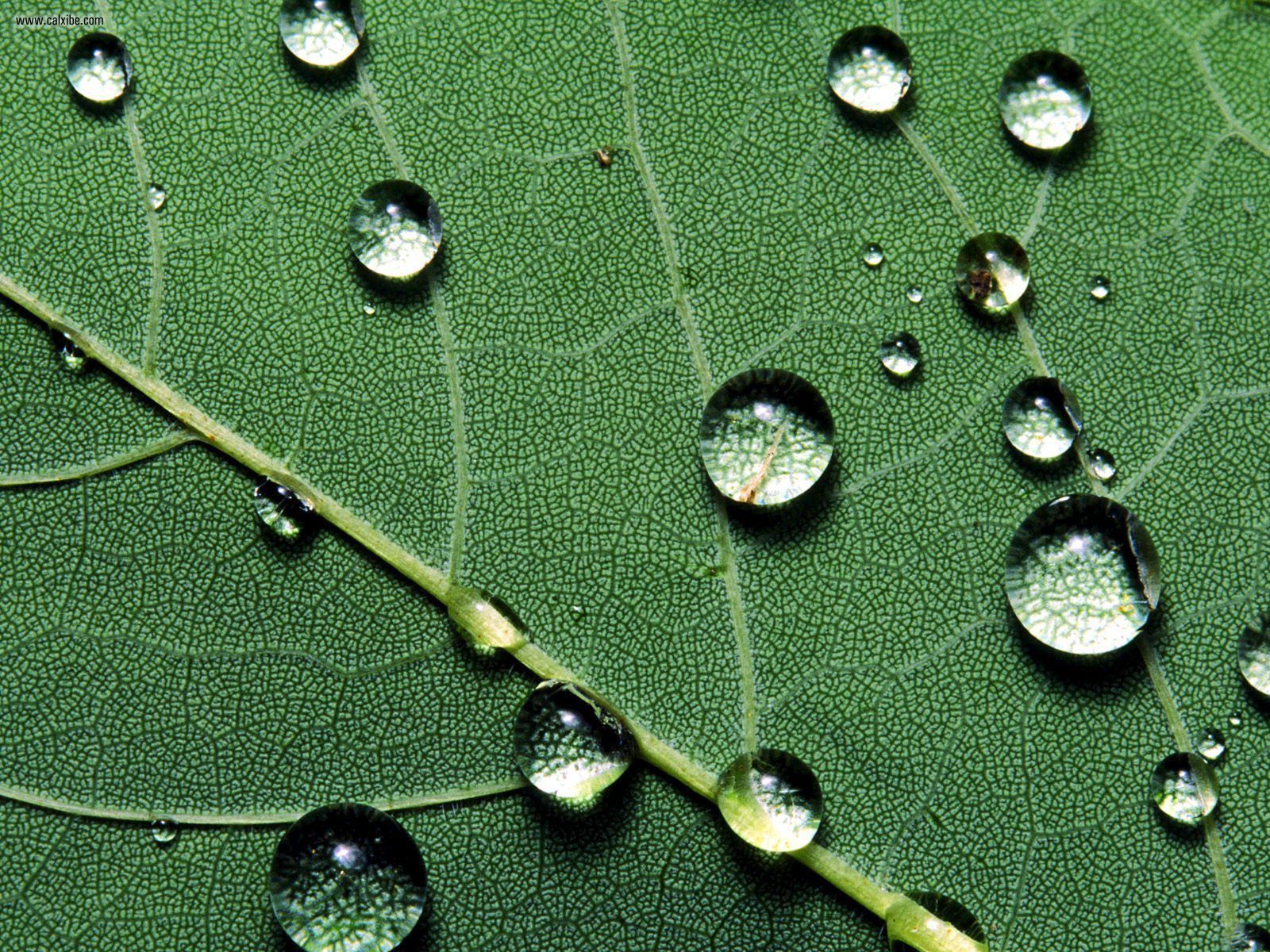
Refer to the picture of water sticking to a leaf; this is occurring because of:

a)

Adhesion

b)

Cohesion

14.
Water droplets take a spherical shape (as pictured) because of ____________
a)
adhesion
b)
cohesion
c)
capillary action
d)
solubility
15.
How does capillary action happen?
a)
water is polar
b)
it drags other water molecules up the tubes
c)
it sticks to the tubes
d)
ALL OF THESE REASONS
16.

a piece of equipment that accurately measures the salinity and water temperature at different depths.

a)

Multibeam Sonar

b)

CTD

c)

Buoy

d)

Sail frone

17.

reflects sound waves off of the bottom to map the ocean floor.

a)

Multibeam Sonar

b)

CTD

c)

Buoy

d)

Sail drone

18.

anchored to the bottom, continuous data collection

a)

Multibeam Sonar

b)

CTD

c)

Buoy

d)

Sail drone

19.

a type of autonomous vehicle

a)

Multibeam Sonar

b)

CTD

c)

Buoy

d)

Sail drone

20.

a type of autonomous vehicle

a)

Multibeam Sonar

b)

CTD

c)

Buoy

d)

Sail drone

21.

What phrase is an expression that describes mapping the ocean floor in strips?

(a)  

22.

How much of the world's ocean floor has been mapped by multi-beam sonar?

a)

Less than 5%

b)

Around 8-10%

c)

Around 20%

d)

Around 35%

23.

Fixed buoys can track

a)

wave height

b)

wind speed

c)

temperature

d)

animal migrations

24.

Aerial drones can track

a)

wave height

b)

wind speed

c)

temperature

d)

animal behavior

25.
What can an ROV be compared to?
a)
submarine
b)
remote control car with a cord
c)
remote control car with NO cord
d)
an island
26.
The large, flat part of the ocean floor is called the _____________. 
a)
trench
b)
continental shelf
c)
continental slope
d)
abyssal plain
27.
What do you call an underwater mountain?
a)
trench
b)
abyssal plain
c)
seamount
d)
volcanic island
28.
A volcanic mountain that rises above the surface of the water is called ____________
a)
trench
b)
island
c)
mid-ocean ridge
d)
seamount
29.
What is a deep, underwater valley or canyon on the ocean floor?
a)
seamount
b)
trench
c)
continental rise
d)
continental slope
30.
The shallowest(least deep) part of the ocean is the ____________________
a)
trench
b)
abyssal plain
c)
continental shelf
d)
continental slope
31.
A trench is _______________
a)
cold and shallow
b)
deep and warm
c)
 deep and cold
d)
warm and shallow
32.
If you are on the beach, laying on a beach towel and playing in the sand, you are on the _______________________
a)
continent
b)
continental slope
c)
abyssal plain
d)
continental shelf
33.
As you go from the continental shelf to the abyssal plain, the water temperature gets _____________
a)
warmer
b)
colder
34.
mountain ranges in the ocean
a)
mid -ocean ridge
b)
trenches
c)
rift
d)
ocean basin
35.
Which process adds more crust to the ocean floor?
a)
earthquakes
b)
sea floor spreading 
c)
subduction
d)
convection
36.
This boundary is also called a colliding boundary.
a)
transform
b)
convergent
c)
divergent
37.
This boundary moves away from another boundary.
a)
divergent
b)
convergent
c)
transform
38.
Coral reefs are found on...
a)
continental slopes
b)
continental shelves
c)
abyssal plains
d)
trenches
39.
What is the difference between a volcanic island & a seamount?
a)
A volcanic island rises above the water & a seamount does not
b)
A seamount rises above the water & a volcanic island does not
c)
Both the seamount & volcanic island are underwater
d)
Both the seamount & the volcanic island rise above the water
40.

The Mariana __________ is the deepest known place on Earth

a)

Volcanoe

b)

Seamount

c)

Ridge

d)

Trench

41.
Which best represents the order of seafloor features as you move from the shoreline to the deep ocean?
a)
 Continental slope – continental shelf- continental rise – mid-ocean ridge
b)
 Continental rise – continental shelf – mid-ocean ridge -  continental slope
c)
 Continental shelf – continental slope – continental rise – mid-ocean ridge
d)
   Mid-ocean ridge – continental rise – continental shelf- continental slope
42.
Scientists use ______ to determine the oceans depth.
a)
Submarines
b)
Sonar
c)
Helicopters
d)
Radiowaves
43.

The interactions between biotic + abiotic + an energy source is defined as a(n) _________________.

a)

community

b)

ecosystem

c)

succession

d)

organisms

44.

The Largest Ocean is ________________?

a)

Pacific

b)

Atlantic

c)

Indian

d)

Arctic

45.

Vertical lines that help us locate places on Earth are called?

a)

X, Y Axis

b)

Longitude

c)

Equator

d)

latitude

46.
How did the Polynesians navigate around the world?
a)
They used the stars and birds.
b)
They used sea animals.
c)
They used canoes.
d)
They used stars and moon
47.

Which group of people are known as the world's greatest navigators?

a)

Ancient Greeks

b)

Ancient Romans

c)

Pacific Islanders

d)

Vikings

48.

Which of the following went on the first completely scientific oceanographic expedition?

a)

HMS Challenger

b)

Captain Cook

c)

Charles Darwin

d)

Aristotle

49.

What animal is this?

a)

a dolphin

b)

a whale

c)

a hippo

d)

a shark

50.

What animals are these?

a)

whales

b)

dolphins

c)

sharks

d)

fish