Wayground logo

Free Printable Worksheets

Font size

S
M
L
XL
Worksheets

P1 Final Quiz Before Test STC

Total questions: 58

Worksheet time: 2hrs 42mins
Name
Class
Date
1.
The central region of an atom where its neutrons and protons are is its 
a)
nucleus 
b)
electron cloud
c)
core 
d)
center 
2.
An atom with atomic number 6 would have how many protons 
a)
6
b)
12
c)
3
d)
cannot be determined 
3.
True or False? Neutrons have a negative charge
a)
True
b)
False
4.
What is the atomic number for an element with three protons?
a)
2
b)
1
c)
3
d)
6
5.
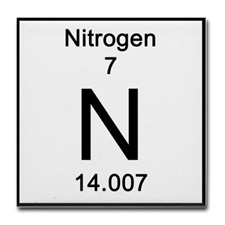
What is the number of protons that the element in this image contain?
a)
14
b)
7
c)
15
d)
18
6.
The positive particles of an atom are 
a)
electrons 
b)
positrons 
c)
neutrons 
d)
protons 
7.
all matter is made of what 
a)
energy 
b)
atoms 
c)
electrons 
d)
compounds 
8.
electrons have this type of charge?
a)
negative
b)
positive
c)
neutral
9.
Most of the mass in an atom is concentrated in the...
a)
electrons
b)
nucleus
c)
protons
d)
empty space
10.
What does the nucleus consist of?
a)
Protons + Electrons
b)
Neutrons + Electrons
c)
Atoms
d)
Protons + Neutrons
11.
Atoms make up, what?
a)
Everything living and nonliving
b)
Energy
12.
A part of the atom that has a negative charge is?
a)
Proton
b)
electron
c)
neutron
13.
The part of the atom that is moving around the nucleus is called?
a)
electron
b)
neutron
c)
proton
14.
Atoms are mostly filled with?
a)
electrons
b)
empty space
c)
protons
15.
What is the mass of an atom if it has 11 protons, 12 neutrons, and 11 electrons?
a)
22
b)
11
c)
34
d)
23
16.
If an atom has 10 protons, 10 neutrons, and 10 electrons, what is the mass of the atom?
a)
10
b)
20
c)
30
17.
What are the 3 particles that make-up the atom?
a)
protons, neutrons, and isotopes
b)
neutrons, isotopes, and electrons
c)
positives, negatives, and electrons
d)
protons, neutrons, and electrons
18.

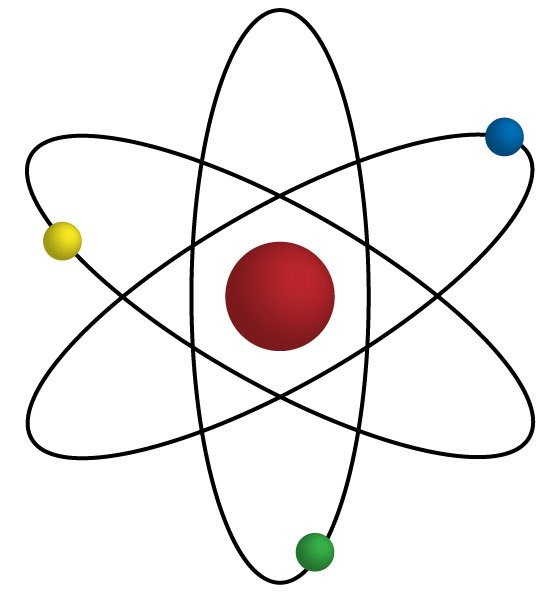
Which of the labeled structures is a neutron?

a)

a

b)

b

c)

c

19.

He believed that matter is made of small solid objects that cannot be divided, created, or destroyed called atomos.

a)

Aristotle

b)

Democritus

c)

Dalton

d)

Bohr

20.

Which of the labeled structures is an electron?

a)

a

b)

b

c)

c

21.

Scientist that proposed that electrons move in energy levels around the nucleus.

a)

Dalton

b)

Rutherford

c)

Thomson

d)

Bohr

22.

What is the chemical symbol of this element?

a)

79

b)

Au

c)

AU

d)

gold

23.

How many neutrons does nitrogen have?

a)

7

b)

14

c)

0

d)

6

24.

Why is the overall charge of an atom neutral (0)?

a)

They have the same number of protons and neutrons.

b)

They have the same number of protons and electrons.

c)

They have the same number of electrons and neutrons.

25.

Why can't atoms be seen?

a)

They move too fast

b)

They are too dense

c)

They are hidden under the surface of the object

d)

They are too small

26.

Zinnia looks at the Periodic Table in her Agenda and notices number 1 hydrogen (H), number 6 carbon(C), and number 106 Seaborgium (Sg). What do these names and letters represent?

a)

elements

b)

molecules

c)

compounds

d)

isotopes

27.
Elements are made of 
a)
many types of atoms 
b)
the periodic table
c)
one type of atom 
d)
molecules 
28.
How many neutrons does the isotope of lithium have?
a)
8
b)
3
c)
4
d)
5
29.
An element is defined by its number of 
a)
protons
b)
electrons
c)
neutrons
d)
protons + electrons
30.

Isotopes of an element have a different number of...

a)

Protons

b)

Neutrons

c)

Electrons

d)

Mass

31.

An atom's atomic number is equal to

a)

The number of protons in the atom's nucleus

b)

The number of neutrons in the atom's nucleus

c)

The number of electrons in the atom

d)

The total of protons + neutrons

32.
What is an isotope? 
a)
A charged atom
b)
An atom with different amounts of neutrons
c)
An atom with different amounts of protons
d)
A neutral atom
33.
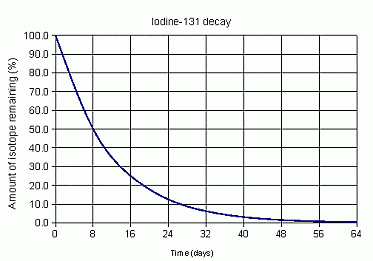
If 10 mg of iodine 131 is given to a patient, how much is left after 24 days? The half-life of iodine-131 is 8 days.
a)
1.25mg
b)
1.25g
c)
10g
d)
10mg
34.
The half-life of strontium-90 is 25 years. How much strontium-90 will remain after 100 years if the initial amount is 4.0 g?
a)
3.0g
b)
0.25mg
c)
0.3g
d)
0.25g
35.
You have 100 grams of radioactive C-14. The half life of C-14 is 5730 years. 
How many grams are left after 1 half life? 
a)
100 grams
b)
25 grams
c)
2 grams
d)
50 grams
36.
What is Half-life?
a)
The amount of time it takes for some of the nuclei in a sample of the isotope to decay
b)
The amount of time it takes for half the electrons in a sample of the isotope to decay
c)
The amount of time it takes for half the nuclei in a sample of the isotope to decay
d)
the amount of time it takes to double the nuclei in a sample of the isotope to decay
37.
When nuclei decay, massive amounts of __________ is released.
a)
energy
b)
jello
c)
protons
d)
neutrons
38.
What is the half-life of iodine-131?
a)
32 days
b)
8 days
c)
16 days
d)
24 days
39.

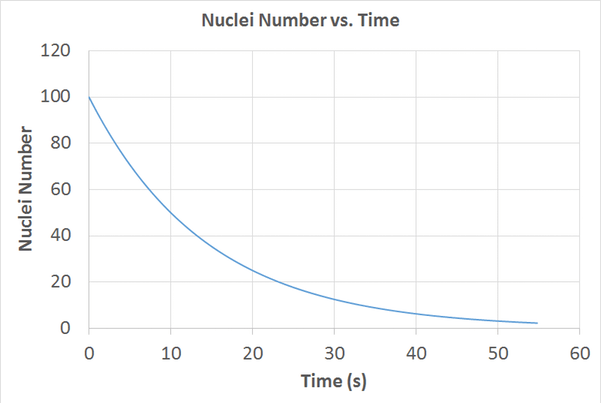
What is the Half life of this isotope?

a)

5 seconds

b)

10 seconds

c)

15 seconds

d)

20 seconds

40.

Radioactive carbon-14 is often useful in determining the absolute age of geologic samples because radioactive isotopes

a)

decay at a regular rate

b)

become less stable during decay

c)

remain unchanged over time

d)

stabilize after four half-lives

41.
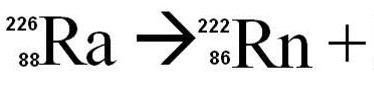
What particle completes this reaction?
a)
alpha particle
b)
beta particle
c)
gamma particle
d)
neutron
42.
Complete the nuclear equation and determine the type of decay that is occurring in this reaction. 
a)
alpha
b)
beta
c)
gamma
d)
none
43.
Solve this equation for alpha decay.
20985At = ___ + 42He
a)
20583Bi
b)
20986Rn
c)
20781Tl
d)
20885At
44.
Solve this equation for alpha decay.
22688Ra = ___ + 42He
a)
22286Rn
b)
22689Ac
c)
22484Po
d)
22588Ra
45.
Solve this equation for beta decay.
6027Co = ___ + 0-1e
a)
5625Mn
b)
6028Ni
c)
5823V
d)
5927Co
46.
Solve this equation for beta decay.
146C = ___ + 0-1e
a)
104Be
b)
147N
c)
102He
d)
136C
47.
The following is an example of what type of reaction?
24395Am  →  23993Np + 42He 
a)
alpha decay
b)
beta decay
c)
gamma decay
48.
If we start off with element 5024X after an alpha decay we get another element Y that looks like
a)
5022Y
b)
4622Y
c)
4820Y
d)
5426Y
49.
What is the missing isotope that will balance the following nuclear equation?
94Be  +  11H →  _____  +  42He
a)
105B
b)
105Ne
c)
63Li
d)
63C
50.

What decay product has an atomic number of -1

a)

alpha

b)

beta

c)

gamma

d)

none of them

51.

What type of radiation is the most penetrating?

a)

alpha

b)

beta

c)

gamma

d)

none of them

52.
What type of radiation is the least penetrating?
a)
alpha
b)
beta
c)
gamma
d)
none of them
53.
What type of radiation is the most ionising?
a)
alpha
b)
beta
c)
gamma
d)
none of them
54.

What type of radiation is the least ionising?

a)

alpha

b)

beta

c)

gamma

d)

none of them

55.

What types of radiation are affected by magnetic fields?

a)

all of them

b)

alpha and beta

c)

beta and gamma

d)

alpha and gamma

56.
What decay product is also a helium nucleus?
a)
alpha
b)
beta
c)
gamma
d)
none of them
57.

What decay product is an electron?

a)

alpha

b)

beta

c)

gamma

d)

none of them

58.

What decay product is a high energy electromagnetic wave?

a)

alpha

b)

beta

c)

gamma

d)

none of them