
NEW
Font size
S
M
L
XL
 Worksheets
Enlightenment
Total questions: 20
Worksheet time: 12mins
Name
Class
Date
1.
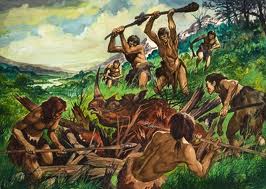
How did Hobbes sum up people's quality of life in a state of nature?
a)
life, liberty, and the pursuit of happiness
b)
poor, nasty, brutish, and short
c)
fulfilling, long-lived, philosophical, and introspective
d)
scared, hungry, lonely, and cold
2.
This was an 18th century philosophical movement of intellectuals, aiming to apply reason to all endeavors.
a)
Reformation
b)
Renaissance
c)
Enlightenment
d)
Scientific Revolution
3.

According to Locke, all humans share a set of __________.
a)
internal organs
b)
natural rights
c)
hopes and dreams
d)
traits and motivations
4.

Locke's inalienable rights include...
a)
life, liberty, and property
b)
pizza, chips, and soda
c)
life, property, and travel
d)
freedom of speech, freedom to bear arms, and freedom of assemble
5.
Which Enlightenment philosopher believed government works best when there is separation of powers?
a)
Hobbes
b)
Locke
c)
Montesquieu
d)
Rousseau
6.

Rousseau, Montesquieu, and Locke would all support:
a)
A dictatorship
b)
A democracy
c)
An absolute monarchy
d)
All of these
7.
Which of the following would NOT be an Enlightenment ideal?
a)
one ruler should make laws
b)
the government should represent the people
c)
the government should be limited
d)
citizens should have their natural rights
8.

Which Enlightenment thinker believed in the "social contract"?
a)
Charles-Louis Montesquieu
b)
Jean-Jacques Rousseau
c)
Adam Smith
d)
John Locke
9.
Why did Montesquieu believe that checks and balances were needed in governments?
a)
To make sure that each branch of government is correct
b)
Keep the different branches of government from getting too much power
10.
Rousseau would be most likley to support . . .
a)
a return to feudalism in europe
b)
a government ruled by an absolute monarch
c)
society ruled by the Catholic Church
d)
a society in which the people choose their leaders
11.
The Enlightenment is considered a turning point in history because . . .
a)
Europeans changed their ways of thinking about the role of government
b)
Martin Luther broke away from the Catholic Church
c)
The Columbian Exchange occured
d)
The factory system was used to mass-produce goods
12.

Enlightenment philosopher who believed men and women should be equal
a)
Voltaire
b)
Denis Diderot
c)
Mary Wollstonecraft
d)
Adam Smith
13.

Enlightenment philosopher who believed people give the government to ability to rule and in return the government should protect will of the people.
a)
John Locke
b)
Montesquieu
c)
Rousseau
d)
Voltaire
14.
Social Contract
a)
Government protect people, people follow(give power) to the government
b)
Government protects people and people don't complain.
c)
People cannot trust a government.
d)
People must trust the government and in return they cannot have a say in government.
15.

Which philosopher taught: Instead of trusting God to improve human happiness, humans could improve their own lives and existence
a)
Voltaire
b)
Mary Wollstonecraft
c)
Montesquieu
d)
Rousseau
e)
John Locke
16.

How are Montesquieu’s ideas reflected in the U.S. Constitution?
a)
Laws were created to allow destruction of British Tea in Boston.
b)
The idea of separation of powers was used to create 3
branches of government.
c)
The President claims authority by Divine right
d)
The first ten amendments are known as the Magna Carta.
17.
What did Hobbes describe people as?
a)
kindhearted
b)
mean
c)
generous
d)
selfish
18.
Hobbes thought that a _ would be the best form of unitary, absolute government.
a)
republic
b)
monarchy
c)
democracy
d)
oligrachy
19.
For both Hobbes and Locke, the social contract is an agreement between...
a)
plaintiff and defendant
b)
sovereign states
c)
companies and shareholders
d)
citizens and government
20.
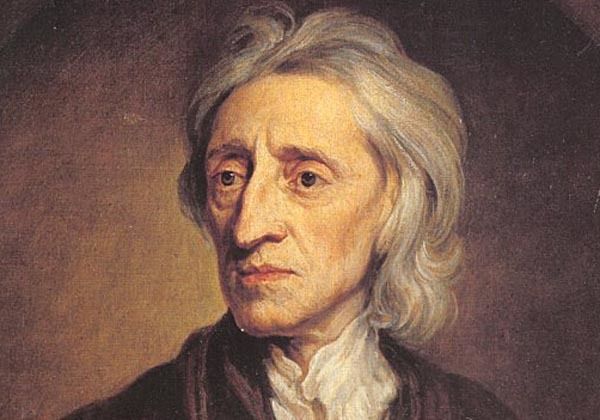
How did Locke view human nature?
a)
We are a born a 'blank slate', and we develop differently according to our life's experiences..
b)
We are naturally altruistic and usually willing to compromise.
c)
We are inquisitive and industrious.
d)
We are naturally selfish and quick to fight.
Reset

