
 Worksheets
Land, soil, water, natural vegetation and wildlife resources
Total questions: 113
Worksheet time: 2hrs 30mins
Water is a what type of resource?
renewable resource
non-renewable resource
continuous resource
Why is fresh water a limited resource?
It isn't because it is a renewable resource
97% of water is in the oceans and too salty to drink.
Only 2.5% is drinkable and is stored in icecaps, rivers, and lakes.
Which of the following is NOT one of the ways in which humans directly can change water resources?
Irrigation (diverting water away from original water source to farm lands)
Building dams
Droughts
Pollution
It was in the primitive oceans that life began almost 3.5 billion years back.
True
False
The ocean water is however saline and not fit for human consumption
True
False
A renewable resource is a natural resource that is replaced over...
A long period of time.
Eons
A short period of time
Decades
What is the definition for resource?
Anything human and natural that can be used by people to satisfy a need.
Anything made by humans to use in their everyday life.
Anything that is only supplied by the environment.
What are environment resources?
Those resources from the environment which humans have based their lifestyles on.
Those resources from business which humans use in everyday life.
Neither
Identify environmental resources from the below list.
Water, plants, Minerals.
Plastic, steel and Computers
Houses, Forests, Roads.
True or False: A renewable resource is one that DOES NOT replenish itself themselves overtime.
True
False
True or False: Non-renewable resources are only available in limited amounts. Overuse will see them run out.
True
False
True or False: Non-renewable resources are only available in limited amounts. Overuse will see them run out.
True
False
Oil is an example of which type of resource
renewable
non-renewable
continual resource.
Water is a what type of resource?
renewable resource
non-renewable resource
continuous resource
Oxygen is what type of resource.
renewable resource
non renewable resource
continuous resource.

Which example is a form of precipitation?
Dew
Fog
Frost
Hail
In which area would the rate of evaporation be the lowest?
Over the ocean
Over the mountains
Over the rainforest
Over the desert
As a part of the water cycle, water from Earth's surface enters the clouds and finally falls back to the ground in the form of rain. What is the correct sequence of processes water undergoes?
Evaporation, Condensation, Precipitation
Precipitation, Condensation, Evaporation
Condensation, Evaporation, Precipitation
Evaporation, Precipitation, Condensation
What would happen if the Sun is removed from the water cycle?
The water cycle would not include precipitation but would continue with groundwater flow.
The water cycle would no longer occur because the Sun provides the energy for evaporation and transpiration.
The water cycle would no longer occur because the Sun provides energy for the formation of clouds.
The water cycle would not include evaporation and transpiration but would continue with condensation.

A student draws a model to represent the precesses involved in the water cycle, as shown. To which process is the formation of clouds related?
Condensation
Evaporation
Freezing
Melting
On Earth, what process generates most of the water vapor?
Condensation
Evaporation
Precipitation
Transpiration
Rain and snow are two different forms of precipitation that fall on Earth's surface. Which factor is responsible for there being different forms of precipitation?
Evaporation
Run-off
Temperature
Transpiration
Human beings need to drink at least ………… of water every day.
2 litres
2 glasses
2 bottles
1 litre
……………….. water is fit for human consumption.
Sea
Ocean
Fresh
Salt
……….. % of fresh water is frozen in glaciers and ice caps.
97.4
71
2.6
2
Which out of the following is a source of fresh water?
Sea
River
Ocean
All the above
5 In which of the following is water used for transport?
Tourism
Shipping
Washing
Cooking
……….. % of fresh water is available as in liquid form.
1
2.6
0.6
3.4

Most of the world's freshwater is found here?
ocean
lakes
rivers
glaciers

How much of the world's surface water is drinkable?
Less than 1%
5%
25%
99%

Most of our drinkable water is found where?
ponds
ocean
groundwater
pool

Water that is stored in pores, soil, sediments and rocks is known as_____________?
salt water
freshwater
soil water
groundwater

Groundwater accumulates very quickly.
True
False

The main source of water for most people is ___________.
ocean
lake
groundwater
glaciers

What are the two main problems with water?
overuse and pollution
frozen and too salty to drink
too many fish and pollution
color and taste

How do humans affect the availability of water? (Select more than one answer.)
Building dams
Changing (modifying) lakes and streams
Overuse of water for power and agriculture
Melting glaciers

This substance from sewage, agriculture, and industries lowers the quality of water and kills fish and other living things in it.
ocean water
groundwater
smog
runoff

Mercury and Lead are examples of what?
types of rocks
heavy metals
sea life
types of trees

How can we help prevent water pollution? (There is more than one answer.)
Use less detergents
Do not pour grease down the drain
Allow farm waste to wash off into the lakes.
Use less fertilizers on yards and crops
Most of Africa, West Asia, South Asia, parts of western USA, north-west Mexico, parts of South America and entire Australia are facing shortages in fresh water supply.
True
False
Countries located in climatic zones most susceptible to droughts face great problems of water scarcity.
True
False
Water shortage may be a consequence of:
variation in seasonal or annual precipitation
or the scarcity is caused by overexploitation
contamination of water sources.
tilt of the earth
A scientist studies a sample of swamp water. She finds that there are many dead plants and fish in the water. ________ in the water could be the main cause of this.
oxygen
litter and pollution
mud and silt
pebbles and sand
what is the main cause of water pollution?
invasive species
animals
plants and insects
human impact and decision making


What percentage of the earth's water is salt water?
3%
25%
71%
97%
Why is clean water important?
All life on Earth depends on clean water to live and grow.
We need clean water for recreational activities.
We need bodies of water for transportation
We need water to regulate the temperature on Earth.
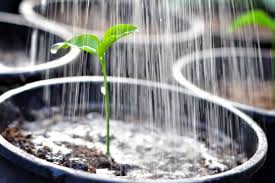
Why does plant need water?
To make food through photosynthesis
To reproduce
To grow
All of the above
Forest and other vegetation cover slow the surface runoff
True
False
Forest and other vegetation cover replenish underground water.
True
False
why do we harvest water
to save water
to buy a sofa
to run
to play
what is the correct spelling
harvesting
harlesting
harsesting
harsesting
should we harvest water
(a)
what does rainwater mean
the water used by our bath
the water of rain
Fresh water is used for
irrigation
drinking
domestic
throwing away
Identify if the following statement is true or false:
Dams and artificial lakes are built to serves as reservoir of fresh water.
true
false
Identify if the statement is true or false
We can not save water on individual level.
true
false
We can save rain water by (a)

Which of the following situation are saving water:
Alina went for brushing teeth. She turned on the tap and washed her brush and started brushing. While water kept running
It was raining, Sarah and Ali kept buckets outside so they will wash their car from the collected water
Shaheer was playing outside he felt thirsty due to heat in weather. He pour cold water in a glass and drank half of it.
Nadia collects all the dishes and cutlery and wash them at one time.
Can save rain water?
yes
no
Water is used for irrigating fields.
True
False
The canals should be properly lined to minimise losses by water (a)
Sprikler acts as an .... Fire protection system.
Active
Passive
Lateral
Colateral
Sprikler system consist of ... Supply system.
Fire extinguisher
Water
Liquid Nitrogen
Dry CO2
How does a sprikler get activated?
When a desired temperature is reached.
When smoke is detected.
When heat around the area is increased.
Surface and sprinkler irrigation involves wetting the whole soil.
True
False
In drip irrigation water is applied close to plants.
True
False
Drip irrigation is not suitable for most soils.
True
False
Sprinklers effectively irrigate the area by checking water losses through seepage and evaporation
True
False

Which sentence tells how drip tips help a plant?
Drip tips help rain soak the leaf.
Drip tips are pointy ends of the leaf.
Drip tips help water fall off the leaf.
Irrigation means..........................
growing new plants in the desert.
using the date palm trees to build houses.
putting water on to dry land so that crops will grow well.
One of the advantages for irrigation is:
crops grow quickly
water evaporates quickly
a layer of salt may form on the surface of the soil can be toxic to plants
Scavengers keep the environment clean. Opt the correct answer to support the statement
Their remains get mixed into the earth and form food for the plants.
They keep the environment clean
Both a and b are correct
None of the above

Natural vegetation and wildlife exist in the
lithosphere
hydrosphere
biosphere
atmosphere
is the part of Earth where life exists
Biosphere
Biota
Geosphere
Hydrosphere
The system that contains all living things on Earth.
Biosphere
Atmoshpere
Hydrosphere
Geosphere
The effects of people and their actions on the biosphere is called
human impact
biome
environmental change
Regions of the planet with similar types of life and climates are called
biomes
kingdoms
spheres
systems


Vegetation and wildlife are valuable resources.
True
False
There are innumerable uses of plants
True
False
What percentage of total number of species discovered in the world are found in India ?
3 %
8%
15%
30%
Black Buck belongs to which of the following categories of fauna ?
Extinct category
Rare Category
Endemic Category
Endangered Category
Gangetic dolphin belongs to which of the following categories of fauna ?
Endangered
Vulnerable
Rare
Extinct
Assertion (A) - A bird like Vulture is important for the ecosystem.
Reason (R) - A vulture feeds on the dead livestock and so it cleanses the environment.
Only A is corrrect
Only R is correct
Both A and R are correct and R is the correct explanation of A
Both A and R are correct and R is not the correct explanation of A
Vultures in the Indian subcontinent were dying of kidney failure because :
after scavenging livestock treated with diclofenac, a painkiller that is similar to aspirin or ibuprofen
because there is nothing to scavenge
because the environment is getting cleaner
because they are cruel and have been counted out of the food chain

