
Font size
 Worksheets
Microorganisms friend and foe
Total questions: 20
Worksheet time: 13mins
Question 1: Penicillin was discovered by
Edward Jenner
Louis Pasteur
Alexander Fleming
Robert Brown
Question 2: Cold, influenza and most cough are caused by ___?
Bacteria
Viruses
Fungi
None of these
Question 3: Antibiotics
kill disease-causing microorganisms
slow down the growth of disease-causing microorganisms
convert sugar into alcohol
speed up the growth of micoorganisms
Question 5: The process of conversion of sugar into alcohol is known as ...
Budding
Fusion
Fermentation
Fixation
Question 6: Consumption of food spoiled by some micro-organisms causes ____.
Food-poisoning
Cancer
Lungs
None of these
Question 8: Conversion of nitrogen to ammonia is
nitrification
phosphorylation
denitrification
nitrogen fixation
Question 9: The microorganisms that cause diseases in human beings, plants and animals are called _
Carriers
Spirogyra
Pathogens
Antibodies
Question 10: Who discovered Fermentation ?
Edward Jenner
Alexander Fleming
Louis Pasteur
Selman Waksman
Food preservation can not be done by
adding salt
adding sugar
drying under the sun
adding kerosene
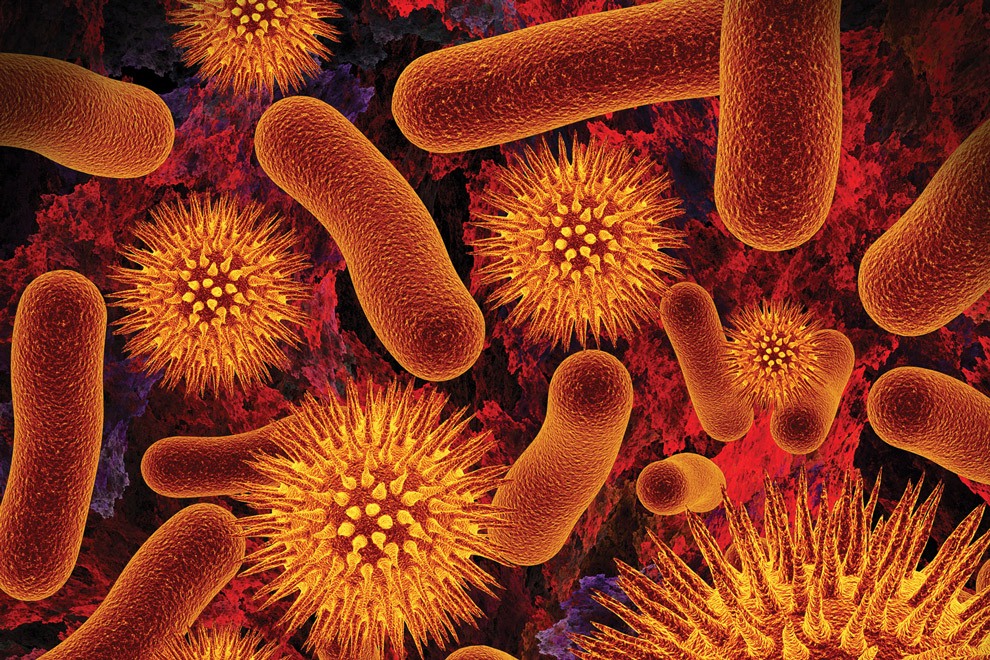

What do you think microbe means ?
A microorganism, or microbe, is a microscopic organism, which may exist in its single-celled form or in a colony of cells.
It is a thing that enters the human body or an animal .
It is an insect
It is something that we found it in the ocean

What science tool is used to view organisms too small to see with a magnifying lens?
telescope
binoculars
microscope
netherscope
A bacteria responsible for curdling of milk is:
(a)
The algae that fixes atmospheric nitrogen from air and thus enriches the soil with nitrogenous compound for plants is
Blue green algae
Chlorella
Diatoms
Chlamydomonas
Mushroom belongs to
Algae
Virus
Fungi
None of the above

