
NEW
Font size
 Worksheets
Circular motion
Total questions: 19
Worksheet time: 12mins

_________ moving or tending to move toward a center.
centripetal force
centrifugal force
speed
velocity
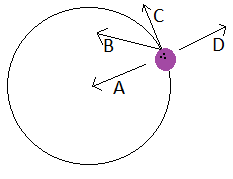
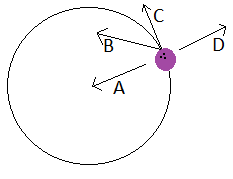
Which of the following represent the possible direction for speed of the moving ball in a circular motion?
A
B
C
D
Which of the following is not true about origin of centripetal forces?
When a aircraft banks to move in a horizontal circle, the vertical component of lift provides the centripetal foce.
A bicycle tilts to side when cornering so that the horizontal component of normal reaction provides the centripetal force.
Gravitation force by the Sun on Mars causes Mars to orbit about the Sun.
In a conical pendulum, the horizontal component of the tension in string provides the centripetal focre.
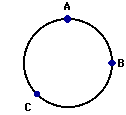

What is the angular speed of the hour hand in a clock?
(π/12) rad h−1
(π/24) rad h−1
(2π/12) rad h−1
(2π/60) rad h−1

Why do objects experience centripetal acceleration even though they can have a constant speed?
Because they are speeding up as they move in a circle
Because they are constantly changing direction and hence, velocity changes, and that net change is directed inward.
Because they are constantly changing both speed and direction
Because when you have 100 people pedaling, you can speed up more easily.

What is the best approximation for the shape of orbit of planets in the Solar System?
Circle
Ellipse
Hyperbola
Parabola
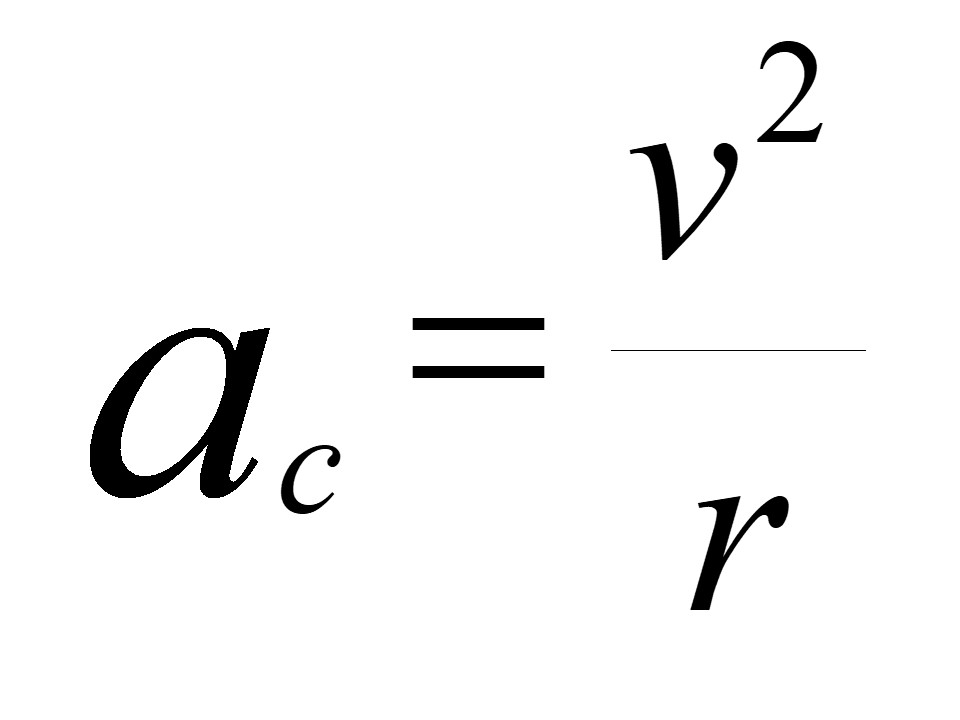
What's the centripetal acceleration of an object traveling 2.3 m/s around a circle of diameter 0.6 m?
5 m/s2
17.63 m/s2
10 m/s2
8.81 m/s2
The Earth has a radius of 6400 km and rotate once every 24 hours. Calculate the centripetal acceleration of a body on the equator of the Earth.
9.81 m s-2
0.034 m s-2
0.34 m s-2
4.4 × 10⁵ m s-2
Which of the following definitions is correct?
Angular displacement is the rate of change of velocity.
Angular displacement is the rate of change of angular velocity.
Angular velocity is the rate of change of displacement.
Angular velocity is the rate of change of angular displacement.
The drum of a washing machine rotates 600 times in 1 minute. What is the frequency of the drum?
600 Hz
10 Hz
0.1 Hz
0.002 Hz

