wayground logo

Free Printable Worksheets

Font size

S
M
L
XL
Worksheets

The Cell and its Organelles

Total questions: 35

Worksheet time: 1hrs 11mins

Name
Class
Date
1.
Which organelle is nicknamed the "border patrol" because it controls what enters and exits the cell?
a)
Cell Membrane
b)
Nucleus
c)
Cytoplasm
d)
Vacuole
2.
Which organelle is nicknamed the "control center" or "brain" of the cell because it controls of the cell's activities?
a)
Nucleus
b)
Vacuole
c)
Mitochondria
d)
Chloroplast
3.

What is the gel-like liquid that supports all of the cell's structures and holds them in place?

a)

Cytoplasm

b)

Cell Wall

c)

Mitochondria

d)

Vacuole

4.
Which organelle is sometimes called the "powerhouse" of the cell because it supplies the cell with energy?
a)
Mitochondria
b)
Vacuole
c)
Nucleus
d)
Cell Membrane
5.
Which organelle is sometimes called the "vacuum" or "storage container" of the cell because it holds the cell's food, water, and waste?
a)
Vacuole
b)
Mitochondria
c)
Chloroplast
d)
Cytoplasm
6.

What is the outermost layer of an animal cell?

a)

Cell Wall

b)

Cell Membrane

c)

Nucleus

d)

Mitochondria

7.

What is the outermost layer of a plant cell?

a)

Cell Wall

b)

Cell Membrane

c)

Nucleus

d)

Mitochondria

8.
Which organelle provides the plant cell with extra support and protection? 
a)
Cell Wall
b)
Chloroplast
c)
Cytoplasm
d)
Nucleus
9.

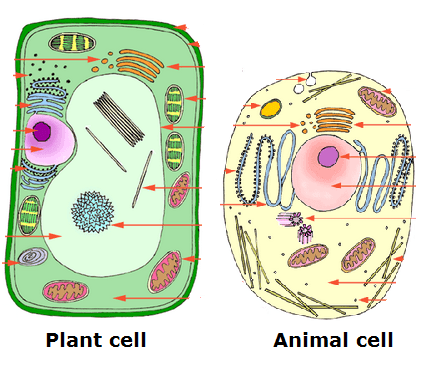
Which organelle is the labeled "1" in this picture?

a)

Nucleus

b)

Cell Wall

c)

Chloroplast

d)

Mitochondria

10.

Which organelle is the labeled "4" in this picture?

a)

Nucleus

b)

Cell Wall

c)

Cytoplasm

d)

Cell Membrane

11.

Which organelle is the labeled "3" in this picture?

a)

Cytoplasm

b)

Chloroplast

c)

Vacuole

d)

Cell Membrane

12.
Using this image, what organelle is C?
a)
Cell Wall
b)
Mitochondria
c)
Large Cell Vacuole
d)
Chloroplast
13.
An organelle that captures energy from the sunlight in order to use it to produce food in plant cells is ______________.
a)
Chromatin
b)
Chloroplast
c)
Cytoplasm
d)
Cell Membrane
14.
Which is a plant cell? 
a)
a
b)
b
c)
c
d)
d
15.
State Function
a)
contains DNA
b)
digests worn out cell parts
c)
produces energy
16.
State Function
a)
produces energy a cell needs
b)
where ribosomes are made
c)
packages amino acids and moves them out of the cell
17.
State Function
a)
control center of the cell
b)
captures energy from sunlight
c)
found in plant and animal cells
18.

What is the structure that contains DNA and directs the cell?

a)

endoplasmic reticulum

b)

central vacuole

c)

cell wall

d)

nucleus

19.

Identify the structure that is indicated by the arrow in the image. It also stores water for plants

a)

cell wall

b)

central vacuole

c)

chloroplast

d)

nucleus

20.

Identify the structure that is indicated by the arrow in the image. (Its the outside layer for plant cells)

a)

cell wall

b)

central vacuole

c)

chloroplast

d)

cell membrane

21.

What type of cell is being shown in the image?

a)

plant

b)

animal

22.

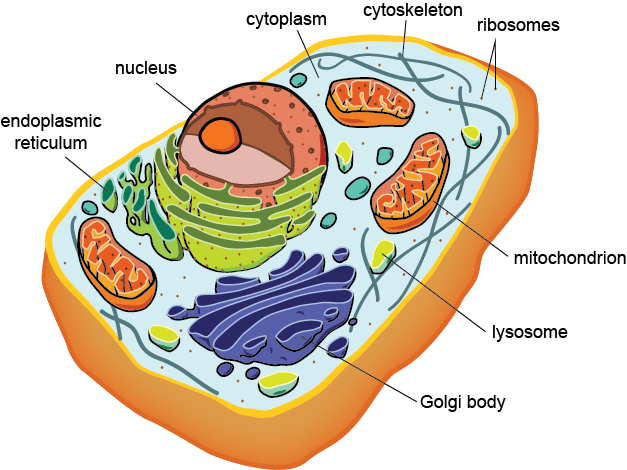
Identify the structure that is labeled "H" in the image.

a)

cell wall

b)

chloroplast

c)

mitochondria

d)

nucleus

e)

cell membrane

23.

What is part A

a)

Cell Membrane

b)

Cell Wall

c)

Mitochondria

d)

Chloroplast

24.

What is part E

a)

Cell Membrane

b)

Nucleus

c)

Vacuole

d)

Chloroplast

25.

Ridged outer layer of a plant cell

a)

chloroplast

b)

cell membrane

c)

chlorophyll

d)

cell wall

26.

Produces the energy a cell needs to carry out its functions

a)

mitochondria

b)

ER

c)

Golgi bodies

d)

vacuoles

27.

Bacteria are unicellular organisms found in the environment. How do you know a bacteria are living things?

a)

They have a cell membrane and DNA

b)

They are not living

c)

They are made of at least one cell

d)

none of the above

28.

What distinguishes a plant cell from an animal cell? (How do you tell them apart) Hint: There's 3 ways (Check all 3)

a)

Central Vacuole

b)

Mitochondria

c)

Cell Wall

d)

Ribosomes

e)

Chloroplasts

29.

The 3 parts of the Cell Theory are...?

a)

All living things are composed of cells

Cells are the basic units of structure and function in living things

All cells are produced from other cells

b)

All living things are composed of cells

Cells are the basic units of dance and vibes in living things

All cells are destroyed from other aliens

c)

All living things are composed of Jell-O

Cells are the basic units of structure and function in living things

All cells are produced from factories in Canada

d)

All living things are composed of cells

Cells do karate and practice eating whole pies in their free time

All cells are produced from other cells
30.
Which of the following statements is not part of the cell theory?
a)
Cells are the basic unit of structure and function in all living things.
b)
All cells are produced from other cells.
c)
Only animal cells are composed of cells.
d)
All living things are composed of cells.
31.
The ___ is the basic unit of sturucture and function of organisms
a)
atom
b)
cell
c)
matter
d)
all other answers are correct
32.
Rocks are not living because
a)
they never move
b)
they aren't needed for humans
c)
they are not made of cells
d)
they don't break down
33.
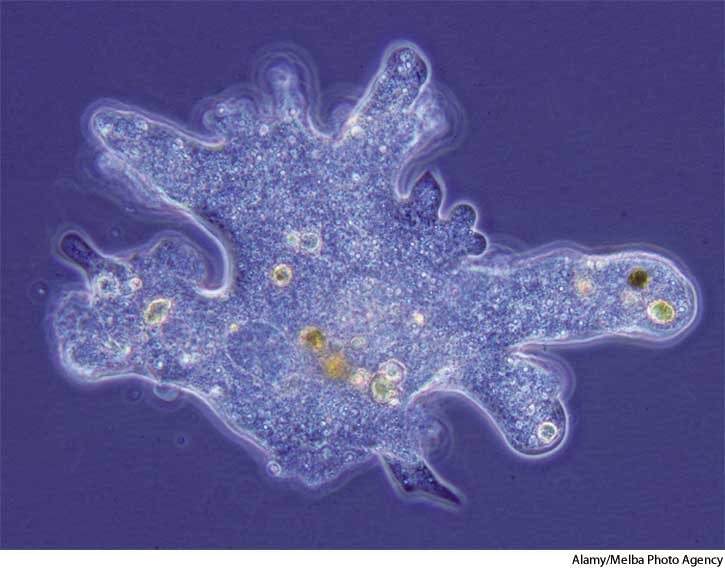
An Amoeba is a unicellular, animal-like protist that lives in ponds and streams. According to cell theory, where did this cell come from?
a)
another pre-existing amoeba cell.
b)
energy from sun that allowed the protist to reproduce.
c)
a multicellular organism.
d)
the nonliving environment.
34.
All cells are produced ____________.
a)
From pre-existing and deceased cells
b)
from other pre-existing cells
c)
Cells can come from anywhere, as long as there is the sun.
35.

What invention allowed scientists to look at cells and eventually develop the cell theory?

a)

hand lens

b)

telescope

c)

microscope

d)

spectrascope