
 Worksheets
Particle theory of matter
Total questions: 26
Worksheet time: 14mins
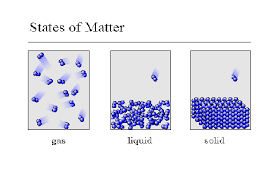
A gas
has a definite shape but no definite volume
has a definite volume but no definite shape
has fast-moving particles
What is MATTER?
Anything that has MASS
Anything that takes up SPACE
Anything that has MASS and takes up SPACE
Anything that DOES NOT have mass or take up space
All particles in a PURE SUBSTANCE are _________________
the same
different
Particles always ________________ each other, this gets stronger as the particles get ___________________.
attract, farther apart
attract, closer together
repel, farther apart
repel, closer together
Particles at a higher temperature, move _____________ than those at a lower temperature.
faster
slower

Solid
Liquid
Gass
These have a FIXED volume, but NOT a fixed shape, taking the shape of their container.
Solid
Liquid
Gas
In which state of matter will there be the LARGEST space between molecules?
Solid
Liquid
Gas
What is between atoms and molecules
Air
Empty space
Magic
Gas
Which image shows particles in a solid?


Which image shows particles in a liquid?
Which of the following statements about the particle of a gas is true?
The particles of a gas vibrate and are packed closely together.
The particles of a gas are far apart and move in all directions.
The particles of a gas do not move.


When we add heat to particles, we are adding:
Electricity
Energy
More Particles

When something goes from gas to liquid, it is called...
Evaporation
Condensation
Deposition
Freezing
What is the change of state that occurs when water at 10o C is heated 50o C ?
ice changes to water
water changes to ice
steam changes to water
water changes to water vapor
During the process of sublimation
a solid turns directly into a gas
a liquid turns to a gas
a solid turns into a liquid
a gas turns directly into a solid
Freezing is a heat ____________ process.
loss
lose
lost
gain
Melting is a heat __________ process.
loss
lose
lost
gain
Condensation occurs when _____________ water vapour comes into contact with a cooler surface, loses heat and condenses into water droplets.
warm
warmer
cold
colder
Condensation occurs when warmer water vapour comes into contact with a cooler surface, _____________ heat and condenses into water droplets.
loses
loss
lost
gains

