
 Worksheets
Trial UPS 2
Total questions: 43
Worksheet time: 32mins
A compressed spring possesses
Kinetic Energy.
Elastic Potential Energy.
Gravitational Potential Energy.
Sound Energy.
We can say that one watt is defined as
rate of work done or energy conversion of one joule per second.
rate of time of one second per joule.
rate of distance of one meter per joule.
rate of work done or energy conversion of one joule per meter.
Centripetal force has same direction as the
centripetal velocity.
centripetal acceleration.
angular acceleration.
angular speed.
A body is moving along a circular path with variable speed. It has
a radial acceleration.
a tangential acceleration.
zero acceleration.
both tangential and radial accelerations.
The acceleration due to gravity is zero at
sea level.
the equator.
poles.
the centre of the earth.
A feather and a coin released simultaneously from the same height do not reach the ground at the same time because of the
resistance of the air.
force of gravitation.
force of gravity.
difference in mass.
Potential energy and kinetic energy are types of
Electrical energy
Magnetic energy
Thermal energy
Mechanical energy
In order to do work, energy is
transferred or converted
used up
lost
lost or transferred
In symbols, one watt is equal to
1 J s-1
1 s J-1
1 m J-1
1 J m-1
A car moving on a horizontal road may be thrown out of the road is taking a turn
by the gravitational force
due to the lack of proper centripetal force
due to the lack of frictional force between the tire and the road
due to the reaction of the ground
The period of geostationary artificial satellite of earth is
6 hours
12 hours
24 hours
365 days
Rate at which angular velocity changes with time is called
angular displacement
angular velocity
angular acceleration
angular speed
Two quantities that have same SI unit are
Efficiency and Power
Efficiency and Work
Work and Energy
Energy and Power
Work done must have same unit as
Force
Power
Energy
Efficiency
In a circular motion, direction of motion
changes continuously
changes after time
never changes
remains constant
For an object to move in uniform circular motion, it must move with
constant speed
constant velocity
constant direction
constant momentum
Gravitational force acting on two point masses is directly proportional to
sum of masses
difference of masses
distance between masses
product of masses
On force versus displacement graph, what represents the work done?
the slope of the curve.
the length of the curve.
the area under the curve.
the point of the curve.
Power is defined as
rate of displacement.
rate of force.
rate of work done.
rate of acceleration.
The product of the net force on an object and the distance through which the object is moved
joule
power
work
energy
This theorem states, "Whenever work is done, energy changes.
Work-Energy Theorem
Paul-Newman Theorem
Action-Reaction Theorem
Study-Now Theorem
Energy can be transformed from one form into another, but the total amount of energy never changes.
Work-energy theorem
Law of conservation of energy
Newton's second law of motion
King's theorem of energy

The net work done by a net force acting on an object is equal to the change in the energy of the object.
Force-Work Theorem
Work-Energy Theorem
Force-Kinetic Energy Theorem
Work-Force Theorem
Which requires more work: a person walking up stairs or a person running up stairs?
walking
running
they require equal work
no work is required for either because the movement is vertical
On a force versus displacement graph, the area under the curve is a representation of:
Force
Kinetic Energy
Potential Energy
Work
Which situation is work not done?
lifting a 20 pound box off the floor
holding a 20 pound box above the floor
sliding a 20 pound box across the floor
sliding a 20 pound box up an inclined plane
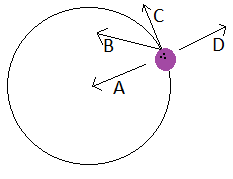
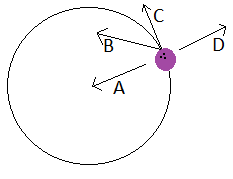
How does the gravitational force the Earth exerts on the sun compare to the gravitational force the sun exerts on the Earth?
The gravitational force the sun exerts on the Earth is larger
The gravitational force the Earth exerts on the sun is larger
Their gravitational forces are equal
There is not enough information
A ball on a string is spun around in a circle. Which of the following quantities is not constant?
mass
force
velocity
acceleration
As an astronaut travels far away from Earth, his weight
increases because gravity increases.
decreases because her mass decreases.
remains the same because her mass remains the same.
decreases because gravity decreases.
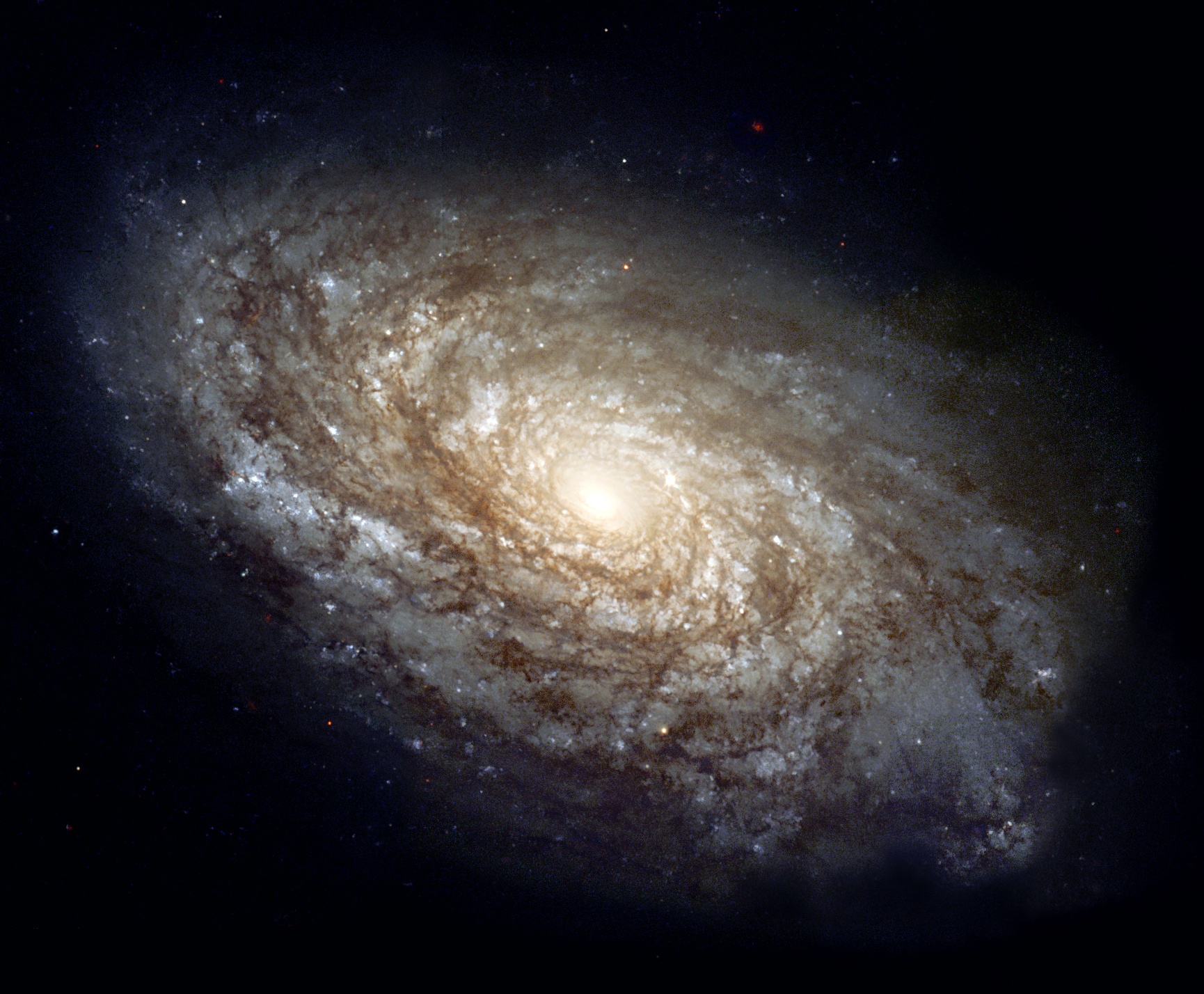
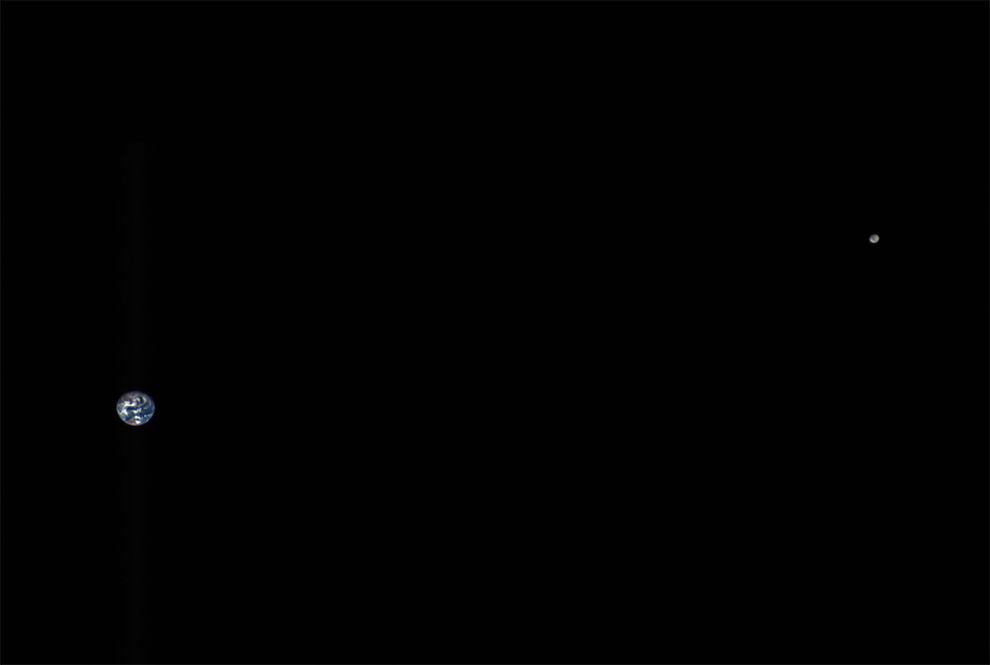
According to Newton's law of gravitation, the Earth and the Moon are gravitationally attracted to each other. The more massive Earth attracts the Moon with...
a stronger force than the Moon attracts the Earth.
a weaker force than the Moon attracts the Earth.
the same force as the Moon attracts the Earth.
a force that is sometimes stronger and other times weaker than the Moon attracts the Earth.

The picture shows two identical satellites, A and B, in circular orbits around the Earth. Upon which satellite does the Earth exert a stronger gravitational force?
Satellite A
Satellite B
Equal on both
Cannot be determined

The picture shows the gravitational field in the space surrounding the Earth. What is creating this gravitational field?
The gravitational force.
The mass of the Earth.
The distance of the Earth.
The universal gravitational constant.
Which of the following statements is correct with respect to G and g?
G is a fundamental constant, whereas g is a physical quantity and subject to change.
Both G and g can change, but g can only change if you go to a different planet.
G and g are both constant, but g is determined by the mass and radius of the Earth.
The strength of G is determined by g.
What happen to the gravitational acceleration to an object if the object is moving from surface of the planets to the outer space?
increases
decreases
unchanged
increase, then decrease

There is a car moves in a circle. Which of the following can explain the above situation?
There is a force acts in opposite direction with car's weight.
There is a force acts as centripetal force towards the centre of circle.
There is a force acts in the direction of movement.
There is a force acts away from the centre of circle.
Which of the following is true about geostationary satellite?
Above different geographical location.
The orbital period is longer than 24 hours.
It does not experience any gravitational pull
Its period of rotation is one day.

