
 Worksheets
Light and Relativity - Prefinal and Final Terms
Total questions: 40
Worksheet time: 20mins
Can you produce current in a wire with a magnet that is sitting still?
Yes; having a magnet near a wire is enough to excite the electrons
No; the magnetic field has to be changing to excite the electrons
No; magnets cannot create electricity
Every magnet has a north and a south pole.
True
False
There are two clocks one is stationary on the earth the other is traveling close to the speed of light around the earth. If we put the clocks back together after the second clock makes it back from its trip, the times are compared. What do you expect to occur?
More time elapsed on the stationary clock
More time elapsed on the traveling clock
No time has changed between them
Based on the concepts of Special Relativity time travel is...
not possible
possible only in the ability to travel into the past.
possible only in the ability to travel to the future.
possible to travel either forward or backward in time.

What are the invisible lines called around this model?
Electric Field Lines
Magnetic Field Lines
Lettuce Seeds
If you cut a bar magnet in half, each half would...
lose it's magnetic field
have it's own north and south poles
repel plastic objects
Cameron and Morgan are each holding a bar magnet with opposite poles facing each other. They walk in opposite directions until they stop feeling their magnet pull towards the other one. What can they conclude about the distance between them when they stop feeling their magnets pull?
They are outside the magnetic field of their magnets.
The distance made the magnets' force stronger.
The magnetic fields are far enough apart to change direction.
The magnetic field was weaker when they were close.

How could you increase the strength of a magnetic field in a coil?
use an iron core, decrease the number of turns of wire
increase the voltage and decrease the number of turns
use an iron core and increase the size of the current
increase the number of turns and decrease the current
in E=mc2 E means?
Centimeters
Energy
Mass
Light
E = mc2 means? ( Might be more than one answer)
Energy equals (mass times speed of light) x speed of light
Nothing
mc2 = E
Albert is famous
Electromagnetic waves vary in
the speed they travel in a vacuum.
wavelength and frequency.
the way they reflect.
the orientation of their electric and magnetic fields.
Light acts like
a wave.
a particle.
Both a wave and a particle
neither a wave nor a particle.
The full range of frequencies of electromagnetic radiation is called
visible light.
radio waves.
the electromagnetic spectrum.
invisible radiation.


Select the correct order of waves on the EMS from low to high energy
Radio, Micro, Infra, Visible, Ultra, X-ray, Gamma
Gamma, X-ray, Ultra, Vis, Infra, Micro, Radio
Vis, Micro, Infra, Ultra, X-ray, Gamma, Radio
Micro, Radio, Vis, Infra, Ultra, X-ray, Gamma
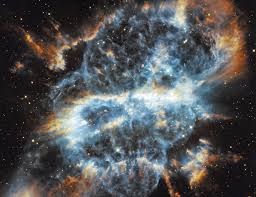
How are electromagnetic waves different from other waves?
They have very short wavelengths
They transmit energy instead of matter
They can travel through the vacuum of space (without particles)
They can change direction by reflection
Which of the following statements is not true according to the theory of relativity?
As an object increases speed its mass increases.
As an object increases speed its length increases.
As an object increases speed its kinetic energy increases.
As an object increases speed its momentum increases.
Why is Special Relativity "special"?
It's for all cases
It's only for objects moving at a constant velocity
It's only for accelerating objects
It's for objects rotating
What two things determine the gravity of an object?
mass & weight
mass & distance
density & mass
volume & distance
A brick and a pencil are dropped at the same time from the same height. Which one would hit the ground first?
brick
pencil
both would hit at the same time

