Worksheets
KM Cycling of matter and energy
Total questions: 52
Worksheet time: 50mins
Thermal energy is transferred throughout Earth by which of the following processes?
Nuclear fission and nuclear fusion
Photosynthesis and nitrogen fixation
Radiation, convection, and conduction
Weathering, erosion, and deposition
Which of the following is most responsible for the uneven distribution of solar energy on Earth and therefore the cause of the different seasons?
Earth's distribution of land and water
Earth's revolution
Earth's rotation
Earth's tilt
A student is making a bowl of soup on the stove. How does the soup heat?
The energy circulates in convection cells, warming the soup.
The heat from the surrounding air warms the soup.
The energy is released during a phase change, warming the soup.
The energy radiates from the cook-top, warming the soup.
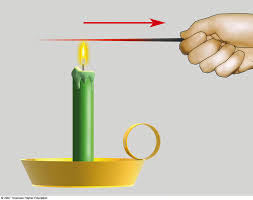
transfer of therma energy that occurs in solids, liquids, and gass when 2 different substances touch
thermal energy
conduction
convection
radiation
the total kinetic energy of tiny particles that make up matter.
convection
radiation
conduction
thermal energy
energy transferred between two objects of different temperatures, moves from warm to cool
heat
thermal energy
convection currents
conduction
the transfer of energy by electromagnetic rays, may occur in empty space
conduction
convection
radiation
thermal energy
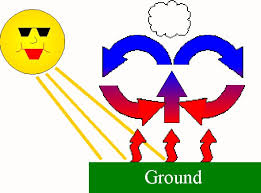
transfer of thermal energy from one place to another by the movement of fluids
convection currents
conduction
convection
Law of Conservation of Energy
a cycling motion occurs because the density of a fluid is related to its temperature
convection current
convection
conduction
radiation
energy can ceither be created nor destroyed, energy just changes form
convection
Law of Conservation of Energy
conduction
thermal energy
What is enegry in movement?
potential energy
kinetic energy
What does heat do?
rises
sinks
What does cold do?
rises
sinks

Where can you find carbon?
Only in the Earth's atmosphere
Inside all water molecules
Inside the sun
Inside every living thing on Earth

What is a convection current?
the transfer of energy by direct contact.
the transfer of energy by the movement of matter
the transfer of energy through a solid, such as Earth's crust
the transfer of energy from a region of lower temperature to a region of higher temperature.

What happens to magma that is heated by the core?
It rises.
It sinks.
Plate Tectonics
It becomes part of the inner core.
When matter loses energy (gets cooler), how does that affect density?
The matter becomes less dense.
The matter becomes more dense.
Density isn't affected.
Which of the following is considered a slow geologic change?
Tsunami
Weathering
Earthquake
Volcanic Eruption
Name the largest Earth layer.
crust
mantle
outer core
inner core
Which layer is the thinnest?
crust
mantle
outer core
inner core
Which layer of the crust is responsible for the Earth’s magnetic field?
crust
mantle
outer core
inner core
Which layer is solid and made of iron and nickel?
crust
mantle
outer core
inner core
Which layer has strong convection currents, which are responsible for the crust’s movement
crust
mantle
outer core
inner core
Which layer is made up of two different kinds of layers, oceanic and continental?
crust
mantle
outer core
inner core


How have scientists been able to infer the internal structure of Earth without being able to directly observe inside the Earth?
Scientists analyze how earthquake waves move throught Earth's interior.
Scientists use satellite radar and sonar technologies to map Earth's internal layers.
Scientists make educated guesses about Earth's internal structure based on previous hypothesis.
Scientists study different types of rocks from many different locations on Earth's surface.

Which layer is made of "flowing" solid rock (think clay or pudding)?
crust
mantle
outer core
inner core
The outer layer of the Earth where tectonic plates occur, made up of the crust and upper mantle, is called the
Lithosphere
Crust
Mantle
Plates
What is the Law of Conservation of Energy
Energy can not be created or destroyed, it can only be changed
Energy can be created or destroyed
Define Energy
the work of the earth system
the ability to do work
What of the one listed are forms of potential energy
Electrical Energy
Gravitational Energy
Chemical Energy
Elastic Energy
Mechanical Energy
What of the forms of energy listed or forms of kinetic energy
Mechanical Energy
Thermal Energy
Chemical Energy
Electrical Energy
Gravitational Energy
The smallest unit of an element that has all the basic properties of the element is called
molecule
compound
atoms


Why does the total energy stay the same?
The energy is not being created or destroyed: only transformed
Energy stays the same because the energy needs to stay the same
The total energy does not stay the same
Energy stays the same because it changes potential to kinetic energy