wayground logo

Free Printable Worksheets

NEW

Font size

S
M
L
XL
Worksheets

Chemistry Part 1 Test Review

Total questions: 50

Worksheet time: 1hrs 1mins

Name
Class
Date
1.

Where is the nucleus located in the atom

a)

around the atom

b)

in the center of the atom

c)

the electron shells

d)

where John Dalton lives

2.

The atomic number of an element is determined by the number of

a)

neutrons

b)

protons and neutrons

c)

protons

d)

electrons

3.

Which element on the periodic table contains 13 protons?

a)

copper

b)

aluminum

c)

sodium

d)

boron

4.

The majority of the elements on the periodic table are _______.

a)

gases

b)

metals

c)

liquids

d)

nonmetals

5.

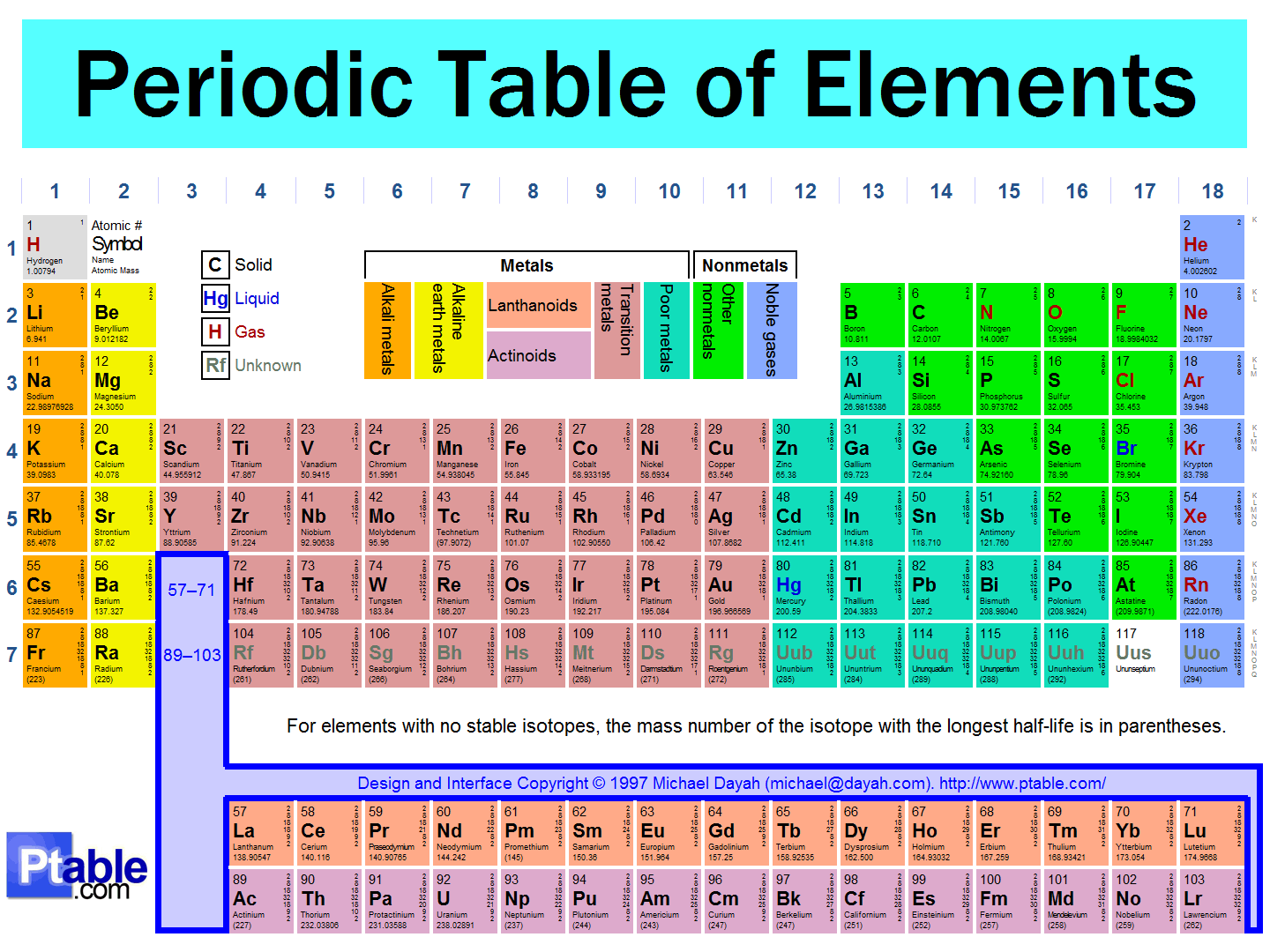
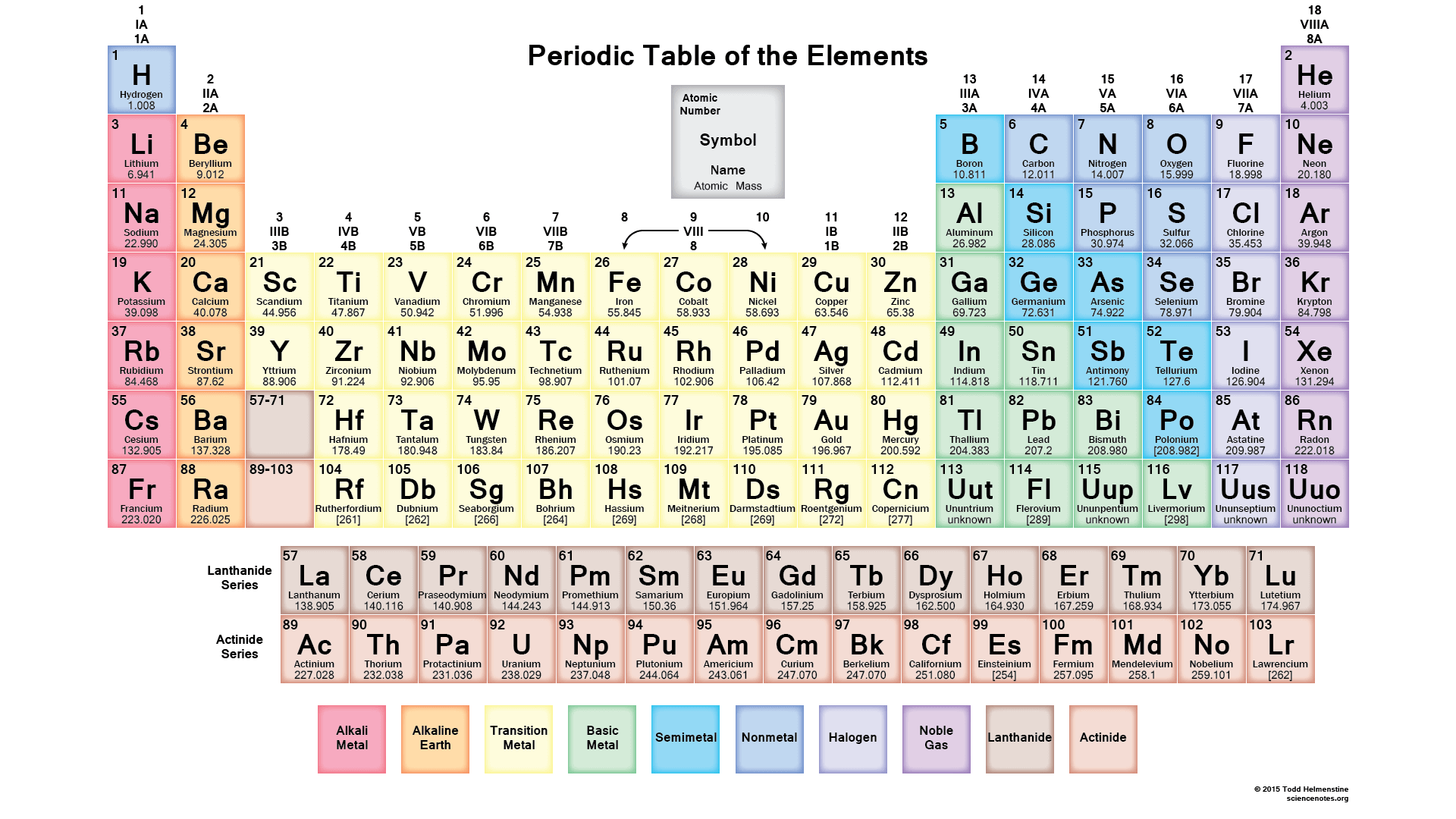
The diagram shows a portion of the periodic table of the elements with nitrogen magnified in size. What is nitrogen's atomic number?

a)

14.0067

b)

N

c)

7

d)

5A

6.
What subatomic particles would you find in the nucleus of an atom?
a)
Protons only
b)
Protons and Neutrons
c)
Neutrons and Electrons
d)
Protons and Electrons 
7.
What subatomic particle is electrically neutral (no charge)?
a)
Proton
b)
Ion
c)
Neutron
d)
Electron
8.
What subatomic particle(s) would be found orbiting the nucleus?
a)
Neutrons only
b)
Electrons only
c)
Protons and Neutrons
d)
Protons and Electrons
9.
Which subatomic particles contribute the most to the mass of an atom?
a)
Protons, Neutrons, Electrons
b)
Protons only
c)
Protons and Electrons
d)
Protons and Neutrons
10.
The first energy level can hold up to how many electrons?
a)
8
b)
4
c)
2
d)
5
11.
The positive particles of an atom are 
a)
electrons 
b)
positrons 
c)
neutrons 
d)
protons 
12.
the central region of an atom where its neutrons and protons are is its 
a)
nucleus 
b)
electron cloud
c)
core 
d)
center 
13.
What are the 3 subatomic particles that make-up the atom?
a)
protons, neutrons, and isotopes
b)
neutrons, isotopes, and electrons
c)
positives, negatives, and electrons
d)
protons, neutrons, and electrons
14.

Parts of the atom that determine the identity of the atom (what kind of atom it is)

a)

Protons

b)

Neutrons

c)

Electrons

15.
An atom is made up mostly of
a)
protons
b)
gravity
c)
empty space
d)
electricity
16.

Which of the following is/are conclusions based on Rutherford’s gold foil experiment?

a)

Atom is mostly empty space

b)

The nucleus is positively charged

c)

The atom has a small dense nucleus

d)

All answers are correct

17.
SILVER
a)
Au
b)
Ag
c)
Al
d)
Ar
18.

the basic structural unit of matter

a)

atom

b)

matter

c)

element

d)

nucleus

19.

a row on the Periodic Table of Elements

a)

family

b)

period

c)

row

d)

isotope

20.

an atom or group of atoms that has gained or lost one or more electrons and is now either positively or negatively charged

a)

isotope

b)

ion

c)

orbital

d)

nucleus

21.

The vertical (up and down) columns in the Periodic Table are called

a)

groups

b)

towers

c)

periods

d)

atomic numbers

22.
The Modern Periodic Table of Elements is arranged by
a)
atomic mass
b)
atomic number
c)
valence electrons
d)
number of isotopes
23.
Sodium (Na) is found in period 
a)
3
b)
2
c)
4
d)
1
24.
Sodium (Na) is found in group 
a)
1
b)
2
c)
3
d)
4
25.
The atomic number tells you what?  READ THE ANSWERS CAREFULLY
a)
only the number of electrons
b)
 only the number of protons
c)
only the number of neutrons
d)
the number of both electrons and protons in an atom.
26.
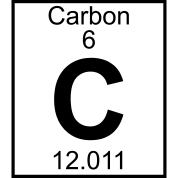
What does 12.011 represent?
a)
atomic mass
b)
atomic number
c)
element name
d)
chemical symbol 
27.
Which group of the periodic table is composed of inert (not reactive)  gases?
a)
alkali metals
b)
alkaline earth metals
c)
halogens
d)
noble gases
28.
Elements which are shiny, conduct electricity and heat are called
a)
metal
b)
nonmetal
c)
metalloid
d)
nonexistent
29.
The atoms along the staircase are called 
a)
metals
b)
nonmetals
c)
metalloids
d)
noble gases
30.
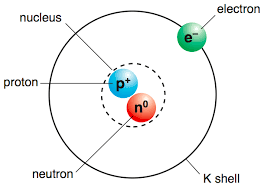
What element is represented in this Bohr Model? 
a)
Carbon
b)
Hydrogen
c)
Aluminum
d)
Lithium
31.
What's a valence electron?
a)
electrons in the second energy level
b)
electrons in the outermost energy level
c)
the atomic number
d)
electrons in the first level
32.
What element is this?
a)
Helium
b)
Hydrogen
c)
Argon
d)
Silver
33.
?
a)
Beryllium
b)
Boron
c)
Barium
d)
Bromine
34.
How are covalent bonds formed?
a)
Sharing of electrons
b)
Transfer of electrons
35.
Why do elements bond?
a)
To be friends
b)
To create a new element
c)
To become stable
36.
Same repel, opposites
a)
avoid
b)
attract
c)
push
d)
pull
37.
What is a valence electron?
a)
The sum of neutrons and protons.
b)
The # of electrons in the last shell.
c)
A type of bond.
d)
A popular compound.
38.
Group numbers on the periodic table help us determine 
a)
The number of valence electrons
b)
Color of the elements
39.
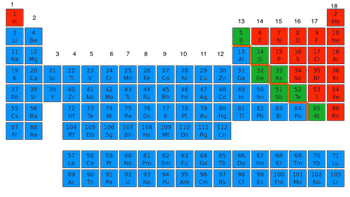
Where are metals located on the periodic table?
a)
Blue
b)
Green
c)
Red
40.
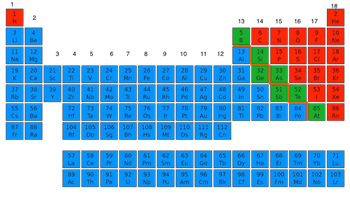
Where are the nonmetals located on the periodic table? 
a)
Blue
b)
Red
c)
Green
41.
Where are the metalloids located on the periodic table?
a)
Blue
b)
Red
c)
Green
42.

Covalent Bonds ______________ valence electrons.

a)

give

b)

take

c)

keep

d)

share

43.
What kind of chemical bond forms between a metal and a nonmetal?
a)
ionic
b)
covalent
c)
fake
d)
metallic
44.
Covalent bonds are between...
a)
two or more nonmetals
b)
sodium and chlorine
c)
metals and metals
d)
metals and nonmetals
45.
What is the name for an ion with a negative charge?
a)
cation
b)
anion
c)
onion
d)
union
46.
If an atom gains two electrons what charge will it have?
a)
-2
b)
-1
c)
+1
d)
+2
47.
Predict the bond that will form between Be and F.
a)
Ionic
b)
Covalent
48.
Predict the bond that will form between Se and Cl.
a)
Ionic
b)
Covalent
49.
Predict the bond that will form between Sr and S.
a)
Ionic
b)
Covalent
50.
What type of diagram is this?
a)
Electron Dot Diagram
b)
Bohr Model
c)
Alkali Diagram
d)
Chemical Diagram