Wayground logo

Free Printable Worksheets

Font size

S
M
L
XL
Worksheets

ISOC Games

Total questions: 15

Worksheet time: 13mins

Name
Class
Date
1.

What does a represent?

a)

Proton

b)

Neutron

c)

Electron

2.
Burning is always a chemical reaction.
a)
True
b)
false
3.
A catalyst  
a)
is added to a reaction to make it slow down 
b)
breaks apart and is changed 
c)
provides an energetic short cut to the products 
4.
Chemical Formulas ...
a)
are written in alphabetical order 
b)
represent the destruction or creation of atoms 
c)
represent how atoms are arranged in a chemical reaction 
5.
According to the Bohr model of the atom, the single electron of a hydrogen atom circles the nucleus
a)
in specific, allowed orbits.
b)
in one fixed orbit at all times.
c)
at any of an infinite number of distances, depending on its energy.
d)
counterclockwise.
6.

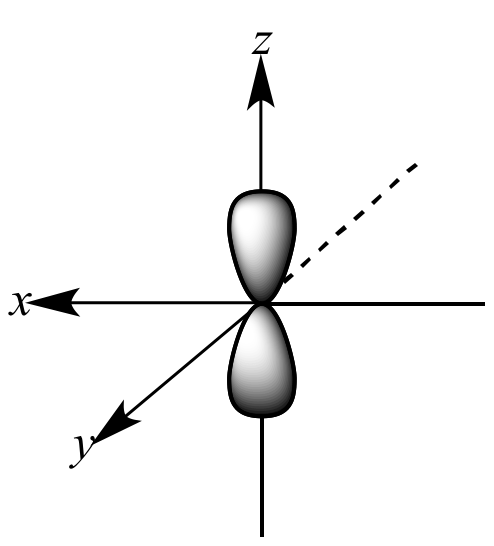
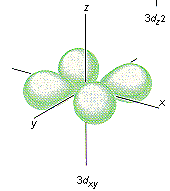
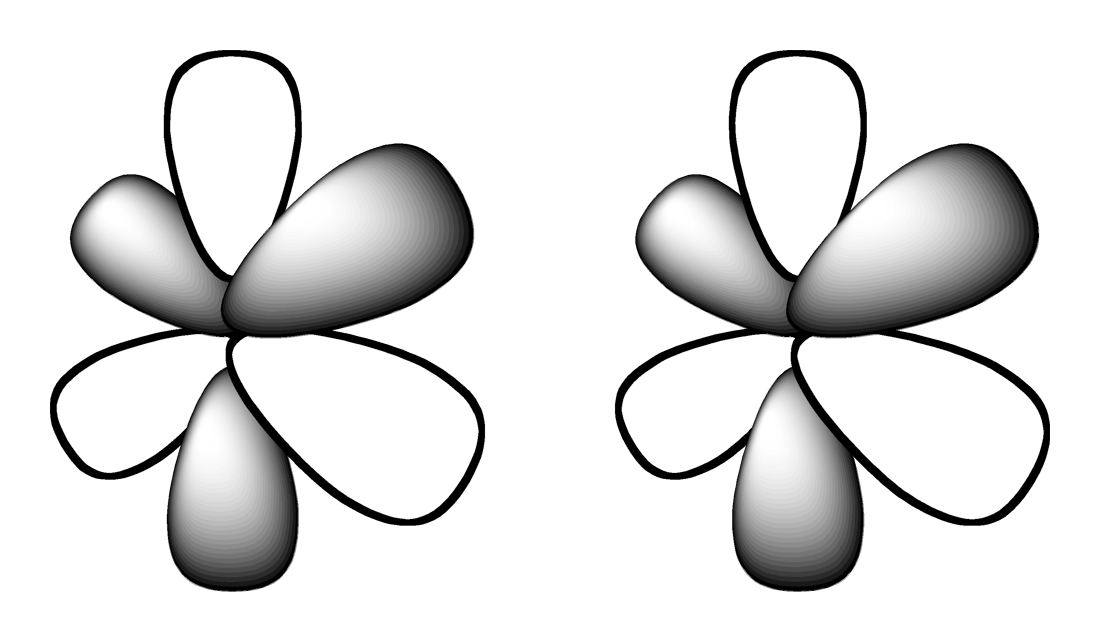
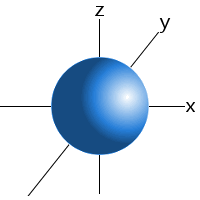
Which shape represents the shape of an "s" orbital?
a)
b)
c)
d)
7.

ISOC stand for

a)

Indonesian Seminar on Chemistry

b)

International Seminar on Chemical

c)

Indonesian Seminar of Chemical

d)

International Seminar Chemistry

8.

Who is the ISOC 4th Keynote Speaker from USA?

a)

Prof. James Ketudat Cairns

b)

Prof. Geraldine Richmond

c)

Prof. Hamzah Fansuri

d)

Prof. Muhammad Iqbal Choudhary

9.

What is the theme on the ISOC 4th 2020?

a)

Chemistry for Prosperity

b)

Hold The Hand With Chemical

c)

Hold The World with Chemistry

d)

Hold The World with Chemical

10.
what kind of molecule is this?
a)
alkane
b)
alkene
c)
alkyne
d)
cycloalkane
11.
All organic compounds contain the element
a)
carbon
b)
nitrogen
c)
phosphorus
d)
sulfur
12.
Which of the following is LEAST likely to dissolve in water?
a)
nonpolar fats and oils
b)
polar sugar molecules
c)
salt made of a positive sodium ion and a negative chloride ion
d)
all of the substances will dissolve easily in water
13.
Attractions between water molecules are called
a)
Covalent bonds
b)
Ionic bonds
c)
Polar bonds
d)
Hydrogen bonds
14.

1. How are electrons different from protons and electrons?

a)

They are more massive than protons and electrons

b)

They have no electrical charge

c)

They are less massive than protons and electrons

d)

Protons and electrons exist in atomic nuclei; neutrons orbit the nuclei in a “cloud”

15.

What is atomic number?

a)

Number of protons in an atom.

b)

Number of neutron in an atom.

c)

Mass of an atom.

d)

Charge on an atom