wayground logo

Free Printable Worksheets

Font size

S
M
L
XL
Worksheets

Form 3 revision lesson

Total questions: 114

Worksheet time: 1hrs 15mins

Name
Class
Date
1.
Who invented the Bunsen Burner?
a)
Albert Einstein
b)
Robert Bunsen
c)
George Burner
d)
Charles Darwin
2.
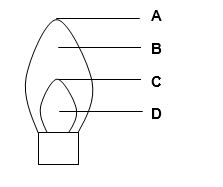
Which part of the Bunsen flame is the hottest?
a)
A
b)
B
c)
C
d)
D
3.

When the air hole is closed, what color is the flame?

a)

Blue/Yellow/Orange

b)

Dark and Light Blue

4.
Where is the flame the hottest?
a)
Top (Yellow)
b)
Middle (Blue)
c)
Bottom (light blue)
5.
What direction must the handle for the gas valve be to have gas flow into the burner?
a)
parallel
b)
perdendicular
6.

Name this part of the Bunsen Burner: A

a)

Chimney

b)

Collar

c)

Air Hole

d)

Base

7.

The gas should be turned on ____________ lighting the match.

a)

Before

b)

After

8.
When should you tie back long hair or baggy clothing?
a)
When working with chemicals
b)
When working with a Bunsen burner
c)
When doing dissections.
d)
Any time you are working in the lab.
9.
When is it OK to eat or drink in the lab?
a)
Always
b)
Never
10.
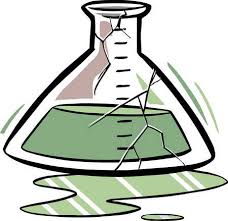
If you break glassware in the lab, you should...
a)
Tell the teacher
b)
Clean it up quickly before the teacher notices
c)
Scream at the top of your lungs
11.
Before leaving the lab you should always wash your hands.
a)
True 
b)
False
12.
You should never ______ chemicals in the lab. 
a)
taste
b)
touch
c)
smell
d)
all of the above
13.
If you are not sure what to do during a lab activity:
a)
guess
b)
change lab partners
c)
ask a teacher
d)
just sit quietly and do nothing
14.
I can perform my own experiments with lab materials ___.
a)
I am sure it is safe to do so.
b)
Whenever I want to.
c)
When all of my group is ready.
d)
Never.
15.
What is the CORRECT procedure for students to follow if a chemical is spilled?
a)
Stand back and advise the teacher of the spill.
b)
Run madly out of the room.
c)
Splash large amounts of water onto the spill.
d)
Immediately ask to go to the restroom.
16.

What do you do if a fire breaks out during a lab?

a)

Run!

b)

Tell the teacher

c)

Just watch it burn

17.

why do we use goggles/eye protection?

a)

to stop our eyes from hurting

b)

to help you see the board

c)

to look cool

d)

to protect your eyes from chemicals, heat, or broken glassware

18.
A particle that moves around the nucleus is a(n)...
a)
Proton
b)
Neutron
c)
Electron
d)
Quark
19.
the central region of an atom where its neutrons and protons are is its 
a)
nucleus 
b)
electron cloud
c)
core 
d)
center 
20.
What does the nucleus of an atom contain?
a)
Electrons and neutrons
b)
Protons and neutrons
c)
Neutrinos and positrons
d)
DNA and RN
21.
all matter is made of what 
a)
energy 
b)
atoms 
c)
electrons 
d)
compounds 
22.
Everything is made up of little tiny things called _____
a)
compounds
b)
molecules
c)
atoms
d)
solids
23.
From the diagram, which particles are indicated with the arrow?
a)
electrons and protons
b)
protons and neutrons
c)
electrons and neutrons
d)
photons and nucleons
24.

Carbon

a)

CA

b)

C

c)

Ca

d)

Cn

25.

Sn

a)

tin

b)

sulfur

c)

iron

d)

sodium

26.

Zinc

a)

Z

b)

Zi

c)

ZN

d)

Zn

27.

Sulfur

a)

Sf

b)

Su

c)

Sr

d)

S

28.

Neon

a)

N

b)

No

c)

Ne

d)

Nn

29.

Calcium

a)

Cl

b)

Ca

c)

C

d)

Cm

30.

Copper

a)

CU

b)

Cp

c)

Cu

d)

Cr

31.

Helium

a)

He

b)

Hl

c)

HE

d)

Hm

32.

Hydrogen

a)

Hy

b)

H

c)

Hr

d)

Hn

33.

N

a)

Sodium

b)

Nitrogon

c)

Nonium

d)

Nitrogen

34.

Gold

a)

Go

b)

Gl

c)

AU

d)

Au

35.

Pb

a)

Gold

b)

Lead

c)

peanut butter

d)

Paribium

36.

Iron

a)

Ir

b)

In

c)

Fe

d)

FE

37.

Nickel

a)

Ni

b)

N

c)

Nl

d)

Nc

38.

Mercury

a)

Me

b)

Hg

c)

HG

d)

ME

39.

Iodine

a)

Ie

b)

I

c)

Id

d)

Io

40.

Potassium

a)

P

b)

K

c)

Pt

d)

k

41.

Aluminum

a)

A

b)

Al

c)

Am

d)

Au

42.

Mg

a)

Manganese

b)

Mangium

c)

Magnesium

d)

Manzanium

43.

Xenon

a)

Xe

b)

X

c)

Xn

d)

Xo

44.
The center of an atom is called the______________.
a)
middle
b)
top
c)
nucleus
d)
electron
45.
Which of the following is not a compound?
a)
HCl
b)
Cl
c)
NaCl
d)
CO2
46.
Which of the substances below is a compound?
a)
ink
b)
air
c)
oxygen
d)
salt
47.
Can compounds be found in the periodic table?
a)
Yes
b)
No
48.
How many carbon atom/s are present in the compounds CaCO3?
a)
1
b)
2
c)
3
d)
4
49.
Which of these is not a mixture? 
a)
oil and water
b)
sand and soda
c)
diet soda
d)
all are mixtures
50.

Stay seated unless otherwise directed.

a)

Safe

b)

Unsafe

51.

Wear safety goggles at all times.

a)

Safe

b)

Unsafe

52.

Always run to where you are going

a)

Safe

b)

Unsafe

53.

Throw the materials across the lab whenever you can.

a)

Unsafe

b)

Safe

54.

Talk to you friends loudly.

a)

Unsafe

b)

Safe

55.

Walk where you are going.

a)

Unsafe

b)

Safe

56.

Taste all of your materials.

a)

Safe

b)

Unsafe

57.

Talk loudly while teacher gives instructions.

a)

Safe

b)

Unsafe

58.

Handle the necessary lab materials carefully.

a)

Safe

b)

Unsafe

59.

Get out lab materials without permission.

a)

Unsafe

b)

Safe

60.
When should you report any accidents (spill, breakage etc) or injuries to the teacher?
a)
Only if someone gets hurt
b)
Immediately - when they happen
c)
After you have cleaned everything up.
d)
Never.
61.

Complete the word equation below:

Acid + alkali --> ............... + water

a)

water

b)

salt

c)

gold

d)

metal

62.

.............................. + sodium hydroxide --> sodium chloride + water

a)

Nitric acid

b)

Sulphuric acid

c)

Hydrochloric acid

d)

Ethanoic acid

63.

Sulphuric acid + kalium hydroxide --> ........................ + water

a)

kalium sulphate

b)

kalium sulphurate

c)

potassium nitrate

d)

magnesium hydroxide

64.
What products are produced when we react an acid with an alkali?
a)
salt + carbon dioxide + water
b)
salt + hydrogen
c)
salt + water
d)
salt + water + hydrogen
65.
What salt is produced if you react sodium hydroxide with hydrochloric acid?
a)
sodium hydroxide
b)
sodium sulfate
c)
sodium nitrate
d)
sodium chloride
66.
A salt is formed when nitric acid combines with sodium hydroxide. What is the name of the salt?
a)
Sodium chloride
b)
Sodium nitrate
c)
Hydrogen Nitrate
d)
Nirate
67.
The products of a neutralisation reaction are lithium sulfate and water. What is the name of the acid used to neutralise the alkali lithium hydroxide?
a)
hydrochloric acid
b)
sulfuric acid
c)
nitric acid
d)
phosphoric acid
68.
Which reactants are used to produce sodium chloride (salt and water)
a)
sodium hydroxide and nitric acid
b)
sodium hydroxide and sulfuric acid
c)
sodium hydroxide and phosphoric acid 
d)
sodium hydroxide and hydrochloric acid
69.

Which reactants are used to produce sodium chloride and water?

a)

sodium hydroxide and nitric acid

b)

sodium hydroxide and sulfuric acid

c)

sodium hydroxide and phosphoric acid

d)

sodium hydroxide and hydrochloric acid

70.
Salts that are made with hydrochloric acid are called ______________.
a)
chlorides
b)
sulfates
c)
nitrates
d)
carbonates
71.
Salts that are made with sulfuric acid are called ______________.
a)
chlorides
b)
sulfates
c)
nitrates
d)
carbonates
72.
Salts that are made with nitric acid are called ______________.
a)
chlorides
b)
sulfates
c)
nitrates
d)
carbonates
73.
A salt is formed when nitric acid combines with sodium hydroxide. What is the name of the salt?
a)
Sodium chloride
b)
Sodium nitrate
c)
Hydrogen Nitrate
d)
Nirate
74.

Name the salt produced when reacting Magnesium and Hydrochloric acid?

a)

Magnesium phosphate

b)

Magnesium chloride

c)

Magnesium nitrate

d)

Magnesium sulfate

75.

A salt is formed when Zinc oxide reacts with nitric acid. What is the name of the salt?

a)

Zinc nitrate

b)

Zinc sulfate

c)

Zinc carbonate

d)

Zinc hydroxide

76.

What salt is produced if you react Copper oxide with Sulfuric acid?

a)

Copper nitrate

b)

Copper sulfate

c)

Copper chloride

d)

Copper phosphate

77.

What is the name of the salt produced between the reaction of Iron (II) oxide and sulfuric acid?

a)

Iron (II) sulfate

b)

Iron (II) carbonate

c)

Iron (II) nitrate

d)

Iron (II) chloride

78.

Name the salt produced between the reaction of Zinc and hydrochloric acid.

a)

Zinc hydroxide

b)

Zinc oxide

c)

Zinc sulfate

d)

Zinc chloride

79.
An acid reacts with a metal carbonate to produce 
a)
Salt, water and hydrogen gas
b)
Salt, water and carbon dioxide
c)
Limewater
d)
Salt and water 
80.
A neutralisation reaction produces 
a)
An acid 
b)
A neutral substance 
c)
Only water 
d)
Salt and water 
81.
A neutralisation reaction is a reaction between 
a)
Acid and a Base 
b)
Acid and water 
c)
Base and water 
d)
None of the above 
82.
Complete the following reaction:
Sulphuric acid + sodium carbonate
--> 
a)
Carbon dioxide + water 
b)
calcium carbonate + water + carbon dioxide 
c)
Sodium sulphate + water + carbon dioxide 
d)
Sodium chloride + water + carbon dioxide 
83.
Complete the following reaction:
Hydrochloric acid + magnesium hydroxide --> 
a)
Magnesium chloride + water 
b)
Magnesium + water
c)
Magnesium chloride + hydrogen gas 
d)
Magnesium chloride + water + carbon dioxide 
84.

The reaction between an acid and an alkali

produces salt and water. This reaction is called

a)

acidication

b)

neutralisation

c)

alkalisation

85.
DIFFERENT kinds of atoms chemically combined to form a substance are
a)
Mixture
b)
Element
c)
Compound
d)
Substance
86.
This contains a variety elements and compounds that ARE NOT chemically combined.
a)
Water
b)
Mixture
c)
Elements
d)
Compounds
87.
Which of the following is an element?
a)
Sugar
b)
Salt
c)
Water
d)
Oxygen
88.

This is made up of one or more of the SAME kind of atom

a)

Element

b)

Mixture

c)

Compound

d)

Matter

89.
A pure substance...
a)
is an element or a compound
b)
is an element or a mixture
c)
is a compound or a mixture
d)
is a mixture
90.

What is filtration?

a)

A method used to separate a solid from a liquid that dissolves in the liquid

b)

A separating technique used to separate a mixture of a solid and liquid where the solid does not dissolve in the liquid

91.

Which separation technique is this instrument for?

a)

Distillation

b)

Filtering

c)

Magnetic separation

d)

Sieving

92.

What separation technique does the picture show?

a)

Sieving

b)

filtering

c)

magnetic separation

d)

Distillation

93.

Ethanol and water have different boiling point. What would be the suitable separation technique for a mixture of both substances?

a)

Distillation

b)

Chromatography paper

c)

Sieving

94.

You want to separate the components of a felt tip pen. What is the suitable separation technique?

a)

distillation

b)

chromatography paper

c)

decanting

d)

sieving

95.

What is the suitable separation technique for a mixture of iron filings and salt?

a)

sieving

b)

filtering

c)

magnetic separation

96.

You've got copper sulfate pentahydrate dissolved in water and you want to get rid of the water and get crystals. What's the suitable separation technique?

a)

sieving

b)

decanting

c)

crystallization

d)

distillation

97.
Everything is made up of little tiny things called _____
a)
compounds
b)
molecules
c)
atoms
d)
solids
98.
From the diagram, which particles are indicated with the arrow?
a)
electrons and protons
b)
protons and neutrons
c)
electrons and neutrons
d)
photons and nucleons
99.
These particles orbit around the nucleus of an atom.  What are they called?
a)
electrons
b)
protons
c)
neutrons
d)
photons
100.

The pH scale goes from 1-14. everything under 7 is considered _______________

a)

an acid

b)

a base

c)

neutral

d)

poisonous

101.

A student added purple cabbage juice to a small amount of liquid cleaner and it turned greenish-yellow. What is the likely pH of that liquid cleaner?

a)

pH6

b)

pH 13

c)

pH 14

d)

You cannot tell pH using cabbage juice

102.
Bases will turn litmus paper __________, while acids will turn litmus paper __________.
a)
blue.....red
b)
red.....blue
c)
pink.........colourless
d)
colourless..........pink
103.
An indicator will ______________ when it is in contact with an acid or base
a)
Bubble
b)
Form a new substance
c)
Change color
d)
Stay the same color
104.
What is a substance that is one color in an acid and another color in a base? 
a)
Oxidizer
b)
Indicator
105.
What color does litmus paper turn in the presence of an acid?
a)
Red
b)
Blue
106.
The pH of a strong acid would be:
a)
1-2
b)
5-6
c)
8-9
d)
12-13
107.
The pH of a strong base would be:
a)
1-2
b)
5-6
c)
8-9
d)
13-14
108.
The pH of a weak base would be:
a)
1-2
b)
5-6
c)
8-9
d)
12-13
109.
The pH of a weak acid would be:
a)
1-2
b)
5-6
c)
8-9
d)
12-13
110.
According to the image, the substance tested is a...
a)
Acid
b)
Base
c)
Neutral
d)
Strong Acid
111.
Examine the results (color change) of the pH paper shown in the picture.  What type of substance was tested?
a)
an acid
b)
a base
c)
a neutral substance
d)
none of the above
112.
One benefit of Red Cabbage Juice Indicator is that it...
a)
Tells you the exact pH 
b)
Is very accurate
c)
It is very expensive
d)
It can be made from materials you have at home
113.
One drawback of litmus paper is that it
a)
Only tells you if a substance is an acid or a base
b)
is very expensive
c)
is messy
d)
has to be connected to a computer
114.
What is the pH of the substance being tested?
a)
2
b)
4
c)
6
d)
8