wayground logo

Free Printable Worksheets

Font size

S
M
L
XL
Worksheets

Review micro-organism and cells

Total questions: 125

Worksheet time: 1hrs 2mins

Name
Class
Date
1.
Most microorganisms cannot be seen without a...
a)
microscope
b)
magnifying lens
c)
telescope
d)
x-ray machine
2.
Which is a true statement?
a)
All microorganisms are harmful.
b)
All microorganisms are beneficial.
c)
Some microorganisms are harmful while others are beneficial.
d)
Microorganisms are beneficial only to humans.
3.
Yeast is used to make...
a)
rolls
b)
cakes
c)
pizza crust
d)
all of the above
4.
What is the cause of the common cold?
a)
bacteria
b)
cold temperatures
c)
sneezing and coughing
d)
viruses
5.
What is a way that you can protect yourself from microorganisms that can live on food?
a)
Store uncooked meats in a refrigerator or freezer. 
b)
Wash hands with soap and water before and after handling food.
c)
Cook chicken and other raw meats thoroughly.
d)
All of the above
6.
Which best describes where you would find microorganisms?
a)
in ponds, lakes, and oceans.
b)
in animals, plants, and humans.
c)
on food that has rotted.
d)
everywhere around us.
7.
______________ helps us  digest our food and they produce needed vitamins.
a)
Bacteria
b)
Fungi
c)
Protozoa
d)
Algae
8.
Yogurt and cheese  can be produced from ___________.
a)
Bacteria
b)
Virus
c)
Protozoa
d)
Algae
9.
The smallest microorganism on earth is known as  _____________
a)
a virus
b)
bacteria
c)
algae
d)
fungi
10.
Algae and plankton are helpful microorganisms.
a)
True
b)
False
11.
Harmful bacteria produces cheese.
a)
True
b)
False
12.
Some fungus can provide food.
a)
True
b)
False
13.
Mold helps dead things (plants, animals)...
a)
Grow
b)
Decay
c)
Sleep
d)
Reproduce
14.
What is Penicillin (medicine) made from?
a)
Water
b)
Sugar
c)
Mold
d)
Algae
15.
Salmonella and E. Coli can be found on ________________ and ________________ so it is important to cook all meat to kill bacteria.
a)
Waffles and scrambled eggs
b)
Broccoli and steamed corn
c)
Eggs and raw chicken
d)
Sushi and Toaster Strudel 
16.
Helpful bacteria can sometimes cause Strep Throat.
a)
True
b)
False
17.
Fungi can cause skin diseases and kill crops.
a)
True
b)
False
18.
Examples of fungi can include:
a)
Warts and zits
b)
Sneezing and itching
c)
Headaches and hand cramps
d)
Ringworm and athlete's foot
19.
Toxic algae is:
a)
Helpful
b)
Harmful
c)
Both
d)
Neither
20.
Anti-bacterial means:
a)
active against bacteria.
b)
feeds bacteria and helps it grow.
c)
has no effect on bacteria.
d)
sometimes works against bacteria, but not always.
21.
Anti-bacterial agents can include:
a)
creams, lotions, water
b)
hot water, soap, 
c)
lotion, soap, cold water
d)
tissues, hand sanitizer, soap
22.

All animal and plant cells are surrounded by a thin:

a)

nucleus

b)

vacuole

c)

cell membrane

d)

cell wall

23.

Cells are the building blocks of:

a)

living things

b)

matter

c)

energy

d)

rocks

24.

Nutrients and oxygen enter cells through the

a)

cell membrane

b)

mitochondria

c)

ribosomes

d)

nucleus

25.

The simplest structures that can carry out all of the activities characteristic of life are:

a)

cells

b)

molecules

c)

atoms

d)

crystals

26.

The simplest structures that can carry out all of the activities characteristic of life are:

a)

cells

b)

molecules

c)

atoms

d)

crystals

27.

The process by which plant cells produce glucose is:

a)

photosynthesis

b)

respiration

c)

protein synthesis

d)

diffusion

28.

The process by which plant cells produce glucose is:

a)

photosynthesis

b)

respiration

c)

protein synthesis

d)

diffusion

29.

Which of the following structures is most likely to be found in both a spinach cell and a muscle cell?

a)

nucleus

b)

chloroplast

c)

large, water-filled vacuole

d)

cell wall

30.

The brain of a large animal is like the ____ of a cell:

a)

cytoplasm

b)

nucleus

c)

mitochondria

d)

cell membrane

31.

Cells store water and other substances in which organelles?

a)

mitochondria

b)

ribosomes

c)

vacuoles

d)

chloroplasts

32.

Cell theory states that all ____ are made of cells.

a)

atoms

b)

molecules

c)

non-living things

d)

living things

33.

Which of the following structures is found in both plant and animal cells?

a)

cell membrane

b)

cell wall

c)

large, water-filled vacuole

d)

chloroplast

34.

Excretion is the process of:

a)

breaking down glucose.

b)

synthesizing proteins.

c)

obtaining oxygen.

d)

getting rid of wastes

35.

Which of the following is likely to be found in a cell from a maple leaf but not in a human nerve cell?

a)

cell wall

b)

mitochondria

c)

cell membrane

d)

cytoplasm

36.

Which part of a plant cell provides rigid support for the plant?

a)

cell wall

b)

chloroplasts

c)

ribosomes

d)

cell membrane

37.
What tool do you use to view the cells?
a)
metric ruler
b)
centrifuge
c)
microscope
d)
telescope
38.
All living things are made up of...
a)
cells
b)
cell tissues
c)
organ
d)
organ systems
39.
All cells come from___________ cells.
a)
pregnant
b)
pre-existing
c)
paternal
d)
pin size
40.
Rocks are not living because
a)
they never move
b)
they aren't needed for humans
c)
they are not made of cells
d)
they don't break down
41.
What is the basic structural and functional unit of all living things? 
a)
atom
b)
cell
c)
molecule
d)
human
42.
All cells are produced ____________.
a)
From pre-existing and deceased cells
b)
from other pre-existing cells
c)
Cells can come from anywhere, as long as there is the sun.
43.
An organism made of one cell is called
a)
unicellular organism
b)
multicellular organism
44.

Plants and animal cells have...

a)

Mitochondria and chloroplasts

b)

Nucleus and chloroplast

c)

Cell wall and chloroplast

d)

Mitchochodria and cytoplasm

45.

Which organelle is the command center for eukaryotic (plant and animal) cells?

a)

Cell wall

b)

Nucleus

c)

Mitochondria

d)

Lysosome

46.

what is the function of a lysosome?

a)

To create energy for the cell

b)

To command the cell what to do

c)

To remove waste using digestive enzymes from the cell

d)

To protect the cell

47.

Which of the following are prokaryotic cells?

a)

Plant

b)

Animal

c)

Bacteria

d)

Plant and Animal

48.

What is the difference between a prokaryotic cell and a eukaryotic cell?

a)

Prokaryotes do not have a nucleus or organelles, but a eukaryotic cell does

b)

Eukaryotic cells do not have a nucleus or organelles, but prokaryotes do

49.

Which of the following is a eukaryotic cell?

a)

Bacteria

b)

Plant

c)

Plant and animal

d)

Animal

50.

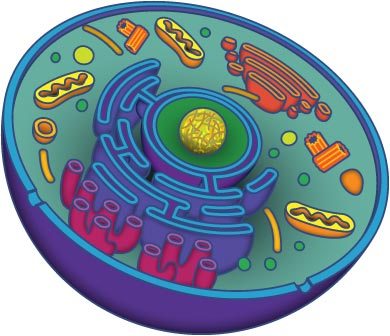
How can you tell that this is a prokaryote or eukaryote cell?

a)

It is a prokaryote because it doesn't have a nucleus

b)

It is a eukaryotic cell because it has a cell wall and a nucleus

c)

It is eukaryotic because it does not a nucleus nor a cell membrane

d)

It is prokaryote because it has a cell wall

51.

What is the purpose of the nucleus?

a)

It is the command center, contains DNA, and cell division

b)

It protects the cell

c)

It stores energy for the cell

d)

It gets rid of waste in the cell

52.

What is the difference between mitochondria and chloroplast?

a)

Mitochondria produces energy and chloroplasts breaks down energy

b)

There is no difference. They are the same.

c)

Mitochondria breaks down energy from food and chloroplasts produce energy from sunlight.

d)

Mitochondria contains DNA and chloroplasts are green

53.

What is the difference between mitochondria and chloroplast?

a)

Mitochondria produces energy and chloroplasts breaks down energy

b)

There is no difference. They are the same.

c)

Mitochondria breaks down energy from food and chloroplasts produce energy from sunlight.

d)

Mitochondria contains DNA and chloroplasts are green

54.

The outermost layer of a plant cell and animal cell is...

a)

Plant cell - cell membrane, animal cell - cell wall

b)

Plant cell - cell wall; animal cell - cell membrane

c)

Plant and animal cell - cell wall

d)

Plant and animal cell - cell membrane

55.

"Post office" of the cell that packages proteins and fats:

a)

ER

b)

Golgi Body

c)

Nucleus

d)

Cytoplasm

56.

"Envelopes" of the cell, used for transporting material:

a)

ER

b)

Golgi Body

c)

Mitochondria

d)

Chloroplast

57.

What does a plant cell have that an animal cell doesn't have?

a)

Cell Membrane and Cell Wall

b)

Cell Wall and Mitochondria

c)

Cell Wall and Nucleus

d)

Cell Wall and Chloroplast

58.

What is the jelly-like substance that keeps the organelles floating?

a)

Cell Membrane

b)

Nucleus

c)

ER

d)

Cytoplasm

59.

Which organelle holds the cell together? (found in both an animal and plant cell)

a)

Cell Wall

b)

Nucleus

c)

Cell Membrane

d)

Ribosome

60.

What are the "protein-makers" of a cell?

a)

Ribosomes

b)

Mitochondria

c)

ER

d)

Golgi Body

61.
In cells a large oval organelle that contains the cells genetic material in the form of DNA and controls many of the cells activities
a)
organelle
b)
ribosome
c)
cell wall
d)
nucleus
62.
the thick fluid region of a cell located inside the cell membrane or between the cell membrane and nucleus
a)
cytoplasm
b)
cell wall
c)
organelle
d)
golgi apparatus
63.
an organelle in a cell that receives proteins and other newly formed materials from the endoplasmic retiulum packages them and distributes them to other parts of the cell
a)
vacuole
b)
chloroplast 
c)
ribosome
d)
golgi apparatus
64.
a sac like organelle that stores water, food, and other matter
a)
vacuole
b)
lysosome
c)
cytoplasm
d)
cell wall
65.
an organelle in the cells of plants and some other organisms that captures energy from sunlight and changes it to an energy from that cells can use in making food
a)
vacuole
b)
chloroplasts
c)
cytoplasm
d)
mitochondria
66.
What is found in both plant and animal cells but is much larger in plant cells?
a)
Nucleus
b)
Mitochondrion
c)
Chloroplast
d)
Vacuole
67.
Which of the following is found in eukaryotic cells but NOT prokaryotic cells?
a)
Cell membrane
b)
Mitochondria
c)
Ribosomes
d)
DNA
68.
What is the name of the genetic material that is inside the nucleus?
a)
ER
b)
ATP
c)
YOLO
d)
DNA
69.

A group of similar cells working together is called...

a)

cell

b)

tissue

c)

organ

d)

organ system

e)

multicellular organism

70.

A group of similar cells working together is called...

a)

cell

b)

tissue

c)

organ

d)

organ system

e)

multicellular organism

71.

The basic unit of structure and function in any living thing is:

a)

cell

b)

tissue

c)

organ

d)

organ system

e)

organism

72.

A living thing composed of different organ systems working together is called a(n)

a)

cell

b)

tissue

c)

organ

d)

organ system

e)

multicellular organism

73.

The heart is an example of different tissues working together to perform a specific job. This is an example of a(n):

a)

cell

b)

tissue

c)

organ

d)

organ system

e)

organism

74.

Which level of organization should letter C represent?

a)

organ

b)

cell

c)

organ system

d)

multicellular organism

e)

tissue

75.

Which level of organization should letter A represent?

a)

organ

b)

cell

c)

organ system

d)

multicellular organism

e)

tissue

76.

Which level of organization should letter B represent?

a)

organ

b)

cell

c)

organ system

d)

multicellular organism

e)

tissue

77.

Which level of organization should letter E represent?

a)

organ

b)

cell

c)

organ system

d)

multicellular organism

e)

tissue

78.

You are studying an organism under the microscope. You notice that it has many cells working together to digest food that it just consumed. Is this organism multicellular or unicellular?

a)

Unicellular

b)

Multicellular

79.

What makes plant vacuole different from an animal vacuole?

a)

plant vacuoles are small and animal vacuoles are large

b)

Plant vacuoles are large and and animal vacuoles are small

c)

plant vacuoles are specialized, such as contractile vacuoles

d)

Animal vacuoles store large amounts of water. Plant vacuoles store food.

80.
The green pigment in plants is due to the presence of 
a)
chlorophyll
b)
Chlorine
c)
Chlorophyta
d)
chromatophores
81.
What two molecules are needed for photosynthesis to occur?
a)
oxygen and water
b)
CO2 and water
c)
glucose and water
d)
CO2 and glucose
82.

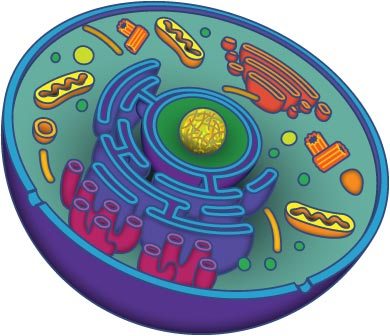
What kind of cell is this?

a)

animal cell

b)

bell bell

c)

plant cell

d)

vacuole

83.
What does a nucleus do to help the plant cell?
a)
it controls  the plant cell
b)
it controls the animal cell
c)
controls body
d)
controls bald people
84.

What is a cell membrane ?

a)

it protects the cell

b)

it protects the box

c)

it protects the bees

d)

it protects the animal

85.
Why doesn't a animal cell have a chloroplast?
a)
because it doesn't make its own food
b)
because it eats other people
86.
What is the function of the Stomata?
a)
Gas exchange 
b)
Transpiration
c)
Water regulation
d)
all of these 
87.

What do you call the additional layer around the outside of plant cells that is made from cellulose that protect and give shape?

a)

Cell Wall

b)

Chloroplast

c)

Cell Membrane

d)

Golgi Complex

88.
Storage of food, water, wastes, and enzymes.
a)
Vacuole
b)
Mitochondria
c)
Cell Membrane
d)
Cytoplasm
89.
Converts stored food into energy.
a)
Mitochondria
b)
Cell Wall
c)
Chloroplast
d)
Ribosome
90.
Produces proteins
a)
Ribosome
b)
Nucleus
c)
Cytoplasm
d)
Endoplasmic Reticulum
91.
Controls what enters and leaves the cell
a)
Cell Membrane
b)
Ribosome
c)
Chloroplast
d)
Vacuole
92.
Package and transport proteins from the cell
a)
Golgi Complex (body)
b)
Endoplasmic Reticulum
c)
Ribosome
d)
Mitochondria
93.
Transport system within the cell
a)
Endoplasmic Reticulum
b)
Nucleolus
c)
Cytoplasm
d)
Vacuole
94.
Plant cell structures that turn energy from sunlight into food.
a)
Cell Wall
b)
Mitochondria
c)
Chloroplast
d)
Cytoplasm
95.
All living things are made up of...
a)
cells
b)
cell tissues
c)
organ
d)
organ systems
96.
All existing cells are produced by other
a)
living cells
b)
dead cells
c)
atom cells
d)
animal cells
97.
The basic unit of life is called a (n)
a)
atom
b)
compound
c)
cell
d)
energy
98.

Which organelle is unique to plant cells?

a)

a. cytoplasm

b)

b. cell membrane

c)

c. vacuole

d)

d. cell wall

99.

Which organelles are present in both plant and animal cells?

a)

lysosome

b)

ribosomes

c)

chloroplast

d)

nucleus

e)

golgi body

100.

Thin covering that surrounds the cell

a)

cytoplasm

b)

cell membrane

c)

mitochondria

d)

ribosomes

101.

How does the cell get most of its energy?

a)

plants

b)

the sun

c)

cellular respiration

d)

nucleus

102.

Which two plant cell structures work together, like security guards, for the cell?

a)

cytoplasm and nucleus

b)

cell membrane and cell wall

c)

nucleus and oxygen

d)

oxygen and cell membrane

103.

What is the function of the nucleus of an animal cell?

a)

It is the place where energy is produced.

b)

It stores the genetic information, the DNA (chromosomes).

c)

It defends the cell from infections.

d)

It captures sunlight to produce food.

104.

Which organelle makes food for the cell?

a)

cell wall

b)

mitochondria

c)

chloroplast

d)

chlorophyll

105.

Select a statement that best completes the phrase: In a plant cell...

a)

there is one large vacuole that stores water and helps hold up the plant

b)

the vacuoles enter and leave through the cell membrane

c)

there are lots of small vacuoles

d)

there are not vacuoles

106.

The "brain" of the cell is:

a)

the mitochondria

b)

the cytoplasm

c)

the organelles

d)

the nucleus

107.

Name the outer structure of the plant that provides support that is found only in plant cells.

a)

cell wall

b)

cell membrane

c)

vacuole

d)

nucleus

108.

Which is an example of a multi-cellular organism?

a)

frog

b)

chlorella

c)

fungi

d)

bacteria

109.

Organisms made of one cell are known as

a)

multicellular

b)

unicellular

c)

epithelial

d)

epidermal

110.

What do all animals have in common?

a)

They all have legs.

b)

The all are made of animal cells.

c)

They all have no nucleus.

111.

A cell is like a ______________

a)

House

b)

School

c)

City

d)

Road

112.

What does the cell membrane monitor?

a)

What comes in and out of the cell.

b)

What leaves the cell.

c)

What is inside the cell.

d)

What is outside the cell.

113.

Where are the ribosomes attached in a cell?

a)

Smooth ER

b)

Cell Membrane

c)

Mitochondria

d)

Rough ER

114.

What is the job of the golgi bodies?

a)

Protein processing & packaging

b)

Packaging

c)

It's the post office of the cell

115.

What two jobs does the nucleus have?

a)

Breaks down proteins

b)

Makes cell laws

c)

Animal cells don't have a nucleus

d)

Stores the cell's DNA

116.

How many chromosomes do humans have?

a)

9

b)

90

c)

46

d)

72

117.

What is the product of cellular respiration? Energy in the form of __________?

a)

ATP

b)

USD

c)

LPS

118.

assist in Movement

a)

Muscle Tissue

b)

Nerve Tissue

c)

Connective Tissue

119.
What cells carry electrical signals?
a)
Red Blood Cells
b)
Palisade Cells
c)
Sperm cells
d)
Nerve Cells
120.
This type of cell sends messages throughout the body in the form of electrical impulse.
a)
nerve cell
b)
sperm cell
c)
muscle cell
d)
skin cell
121.
The role of these specialized cells is to help fight off infection and foreign bodies.
a)
Palisade Cells
b)
Nerve Cells
c)
White Blood Cells
d)
Red Blood Cells
122.
This type of cell carries oxygen throughout the body.
a)
gamete
b)
platelet
c)
white blood cell
d)
red blood cell
123.
What is the correct order of organization
a)
tissues-cells-organs-organ systems-organism
b)
cell-tissue-organs-organ systems-organism
c)
organism-cells-tissues-organ systems-organism
d)
tissues-cells-organs-organ sytems-organism
124.
Which type of muscle tissue would line the intestines?
a)
Smooth
b)
Cardiac
c)
Skeletal
d)
Transitional
125.
What kind of tissue is shown here?
a)
cardiac tissue
b)
nervous tissue
c)
muscle tissue
d)
connective tissue