
 Worksheets
Bacteria, Fungi, Archaea // Levels of Complexity & Domains
Total questions: 58
Worksheet time: 43mins
Which of the following is the SMALLEST?
Atom
Cell
Organ
Organ System
Which of the following is an example of an ORGANELLE?
Chloroplast
Stomach
Liver
Human
Which of the following is an example of an ORGAN?
Mitochondria
Heart
Human
Nucleus
Which of the following is an example of an ORGANISM?
Chloroplast
Stomach
Human
Nucleus

What is Muscle Tissue made out of?
Cell walls
Muscle cells
Brain cells
Cheek cells
What's the correct order from SMALLEST to LARGEST?
Organ -> Organ system -> Cell
Cell -> Organelle -> Organ
Organelle -> Cell -> Organ
Organ system -> Tissue -> Organ

WATER (H2O) is an example of a(n):
Atom
Molecule
Organelle
Cell
What is the smallest part of the levels of complexity?
Organ
Organism
Atoms
Molecules
Which is the correct order of the levels of complexity, from largest to smallest?
Organism-Organ System-Organs-Tissues-Cells-Cell Structure-Molecules-Atoms
Organs-Cells-Cells Structure-Tissues-Organism
Atoms-Molecules-Cell Structure-Cells-Tissues-Organs-Organ System-Organism
Organism-Organs-Cells-Atoms
What is the largest part of the levels of complexity?
Atoms
Molecules
Organs
Organism
All organisms have molecules and atoms.
True
False
Organs and tissues that perform the same function are called _____________?
A group of tissues that perform a similar function is called_____. Examples include the heart, lungs, or stomach.
cells
tissues
organs
organ system
A group of cells that have similar functions?
Examples are brain and muscle.
cells
tissues
organs
atoms
When many organ systems work together, it can form...
organ
cells
organ system
organism
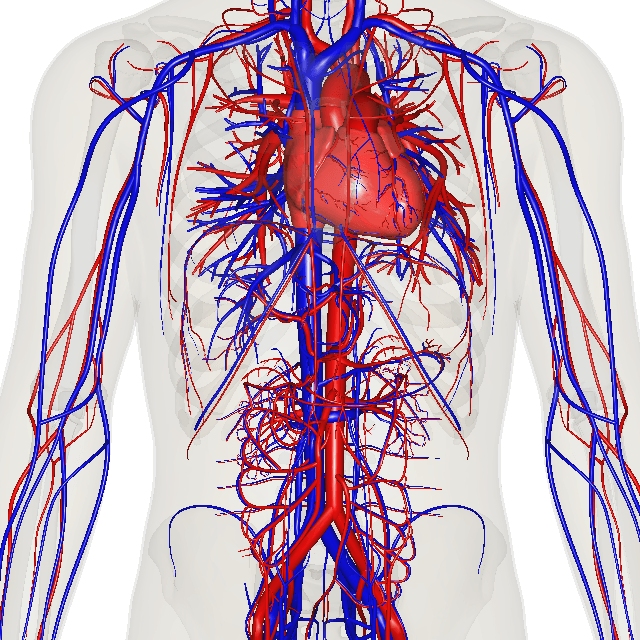
This is an example of ........
organ
organ system
tissue
cell
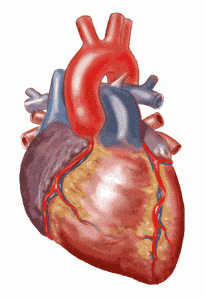
This is an example of ........
cell
organ system
organ
tissue
A redwood tree is an organism.
True
False
cell membranes and cytoplasm
a cell wall and nuclei
chloroplasts and a cell wall
Who was the first person to see cells under the microscope?
Mattias Schleiden
Yasmin Esmail
Albert Einstein
Anton van Leeuwenhoek
An organism that is made of a prokaryotic cell is called ....
mold
mushrooms
plants
bacteria
Tiny membrane-bound structures inside a cell that function like organs of a body are called...
cell wall
cell membrane
organelle
organ
A small piece of genetic material in the cell that can be passed to other bacteria is ________.
a nucleus
DNA
a plasmid
a ribosome
True or False: Bacteria reproduce by binary fission.
True
False
True or False: Organisms that thrive in volcanoes would be classified as archaea.
True
False
Bacteria can be used to make foods such as yogurt & cheese.
true
false
Bacteria are classified by...
shape
the disease they cause
color
some

What should a person do when infected by a bacteria such as streptococcus?
Wait it out
Freak out
Take antibiotics
Call 911
Which of the following is one of the 3 domains?
Animals
Bacteria
Prokaryote
Fungi
Which domain has organisms that live in harsh environments?
Bacteria
Archaea
Eukaryota
Prokaryota
Are archaea multicellular or unicellular?
Multicellular
Unicellular
Are bacteria multicellular or unicellular?
Multicellular
Unicellular
Are archaea prokaryotes or eukaryotes?
Prokaryotes
Eukaryotes
Where are bacteria located?
No where.
Every where!
Only in the restroom.
On my hands only.
What do you need to be able to see bacteria?
Microscope
Telescope
Sunglasses
3D Glasses
True or False? Food contamination is one way that bacteria are harmful.
True
False
Are there more helpful or harmful bacteria in the world?
Harmful
Helpful
Choose one way that bacteria can be helpful.
Bacteria can help me with my homework.
Bacteria can feed my dog.
Bacteria can help me digest food.
Bacteria can help me sleep.
Are bacteria living or nonliving?
Nonliving
Living
Seeds
Fungi are decomposers.
True
False
What are some examples of food made by fungi?
Bread
Cheese
Mushrooms
All of the above
Fungi are important to an ecosystem as
Producers
Controllers
Decomposers
Regulators
__________ are fungi that produce the gas that makes bread rise.
To be a member of the domain Eukarya, a cell has to have a(n):
Nucleus
Mitochondria
Cell Wall
Cell Membrane

Members of which domain would be found in this extreme environment?
Bacteria
Archaea
Eukaryota
Archaea, Bacteria, and Prokaryota
Archaea, Protist, and Bacteria
Archaea, Bacteria, and Eukaryota
Archaea, Fungi, Bacteria
Humans belong to which domain?
Eukaryota
Bacteria
Archaea
Prokaryota
True or False: ALL bacteria are bad and will make you sick.
True
False
How are archaea different from bacteria?
Archaea and bacteria have identical cell wall composition and genetic makeup.
Archaea have a different cell wall composition and genetic makeup compared to bacteria.
How are archaea different from bacteria?
Archaea cell wall and cell membrane are chemically designed
to withstand harsh environments.
Archaea have multiple nuclei and bacteria do not.
Archaea reproduce with spores and Bacteria reproduce
through binary fission.
Archaea are prokaryotes and bacteria are eukaryotes.
____________ are archaea that live in the gut (stomach) of humans to
help digest food.
E. coli
methanobrevibactar smithii
pyrococcus furiosus
staphylococcus
Masses of bacteria that can be seen by the human eye
are called ___________.
colonies
ribosomes
hyphae
viruses
The tangy flavor in sourdough bread is caused by ____________.
fungi
mushrooms
bacteria
paramecia

