
 Worksheets
Food Chem - Exercise Structure of Protein
Total questions: 25
Worksheet time: 32mins
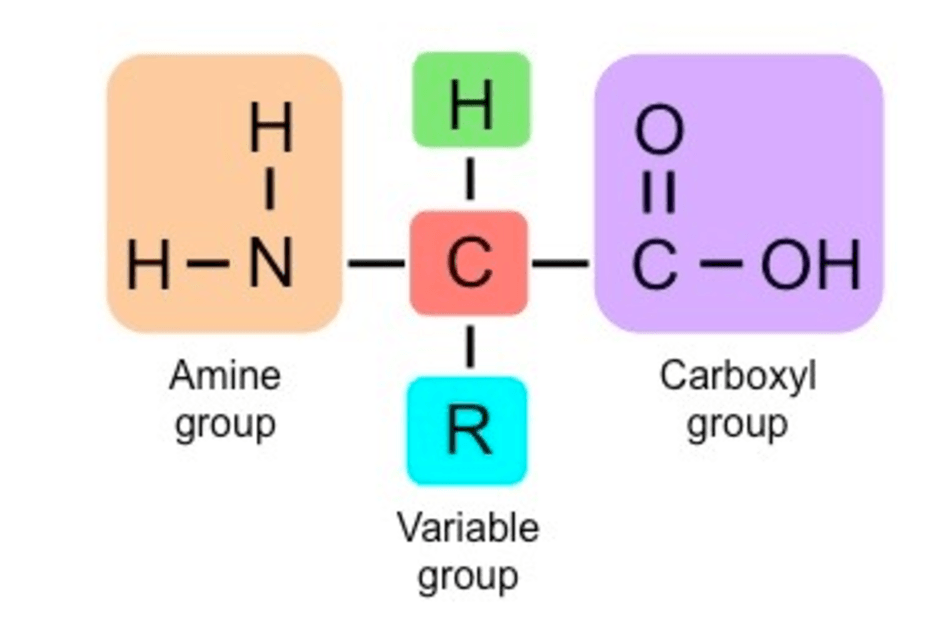

Which of the following describes the secondary structure of proteins?
The sequence of amino acids
The α-helix and β-pleated sheet folding
The folding of the polypeptide chain due to the 'R' groups
The joining of different protein molecules to make one big molecule
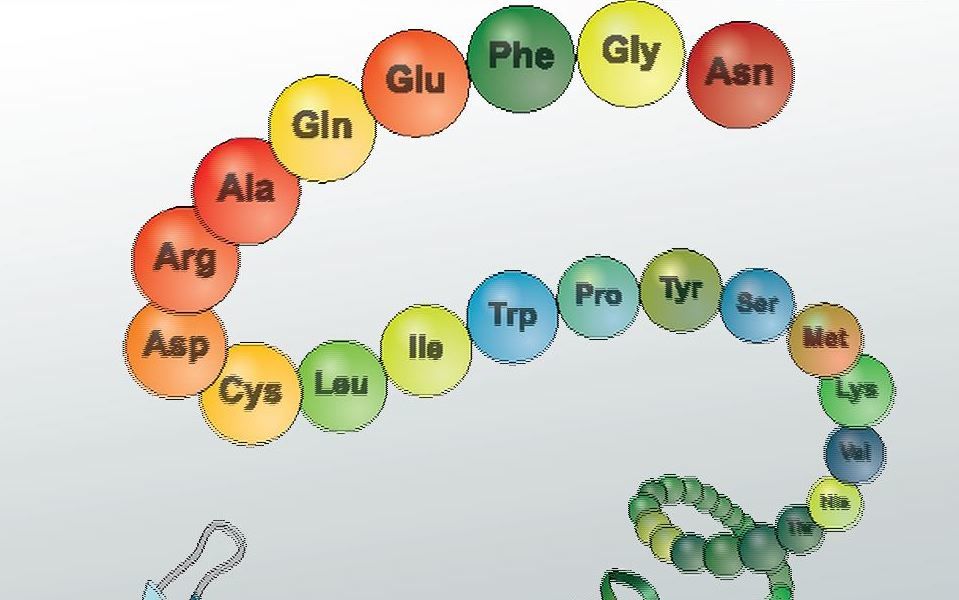

The main bonding in the secondary structure of a protein is due to.....
covalent bonding
ionic bonding
hydrogen bonding
polar bonding

What gives a protein its unique shape?
the unique sequence of amino acids in its polypeptide chain
the unique folding due to the sequence of amnio acids in the polypeptide chain
hydrogen bonding & unique interactions between the 'R' groups
all of these
The entire polypeptide forms a three-dimensional structure
Primary
Secondary
Tertiary
Quaternary
Two or more polypeptides attached together and work as one unit
Primary
Secondary
Tertiary
Quaternary
How many different essential amino acids are there?
15
20
25
30

The diagram shows a bond forming between two amino acids. What is the name of this reaction?
Condensation
Hydrolysis
Pepysis
Oxidation
A delicate coil held together by hydrogen bonding between every fourth amino acid
Alpha Helix
Beta Pleated Sheet
Hydrogen Bond
Peptide Bond
Two or more segments of the polypeptide chain lying side by side (called β strands) are connected by hydrogen bonds between parts of the two parallel segments of the polypeptide backbone.
Alpha Helix
Beta Pleated Sheet
Hydrogen Bond
Peptide Bond
Covalent bonds called disulfide bridges may further reinforce the shape of a protein. Disulfide bridges form where two cysteine monomers, which have sulfhydryl groups (¬SH) on their side chains, are brought close together by the folding of the protein.
Primary Structure
Secondary Structure
Tertiary structure
Quaternary Structure

Primary Structure
Secondary Structure
Tertiary structure
Quaternary Structure

Primary Structure
Secondary Structure
Tertiary structure
Quaternary Structure
which of the following terms refers to the order in which amino acids are linked together in a protein.
Primary
Secondary
Tertiary
Quaternary
Which of the following bond(s) do(es) NOT exist in a secondary structure?
Peptide bond
Hydrogen bond
Disulphide bond
Ionic bond
The difference between tertiary and quartenary structure is:
Tertiary structure has double bond whereas quartenary structure does not have double bond
Tertiary structure consists of one polypeptide chain whereas quartenary structure consists of more than one polypeptide chains
Tertiary structure is fibrous whereas quartenary structure is globular
Tertiary structure is water-soluble whereas quartenary structure is lipid soluble

The diagram shows the structure of collagen. Based on the diagram, what is the structural level of collagen?
Primary
Secondary
Tertiary
Quartenary
During the formation of the peptide bond which of the following takes place?
Hydroxyl group is lost from its carboxyl group of one amino acid and a hydrogen atom is lost from its amino group of another amino acid
Hydrogen atom is lost from its carboxyl group of one amino acid and a hydroxyl group is lost from its amino group of another amino acid
Hydroxyl group is lost from its carboxyl group of one amino acid and a hydroxyl group is lost from its amino group of another amino acid
Hydrogen atom is lost from its carboxyl group of one amino acid and a hydrogen atom is lost from its amino group of another amino acid
Which of the following bond(s) can be found in a tertiary structure?
hydrogen bond
disulphide bridge
hydrophobic interaction
all of the above

Based on the diagram, the side chain of amino acid alanine is;
NH2
COOH
H
CH3
The main bonding in the secondary structure of the protein is due to...
covalent bonding
ionic bonding
hydrogen bonding
polar bonding
The tertiary structure folding in proteins is primarily due to the interactions of
the 'R' group
the 'S' group
the 'P' group
the 'A' group

