wayground logo

Free Printable Worksheets

NEW

Font size

S
M
L
XL
Worksheets

Chemistry Pre-Assessment

Total questions: 52

Worksheet time: 52mins

Name
Class
Date
1.
What are the states of matter?
a)
solid, liquid, and juice
b)
solid and liquid
c)
solid and gas
d)
solid, liquid, and gas
2.
The amount of matter in an object is a measure of the object's ________________.
a)
volume
b)
density
c)
mass
d)
solubility
3.
In which state does matter completely fill its closed container?
a)
Gas
b)
Liquid
c)
Solid
d)
Ice
4.
Which state of matter has a fixed shape and volume and it's molecules move very slowly?
a)
Liquid
b)
Gas
c)
Solid
d)
Plasma
5.
Which part of an atom is POSITIVELY charged?
a)
protons
b)
neutrons
c)
electrons
d)
atoms
6.
What part of an atom is NEGATIVELY charged?
a)
protons
b)
neutrons
c)
electrons
d)
atoms
7.
Which part of an atom has no charge?
a)
protons
b)
neutrons
c)
electrons
d)
atoms
8.
What is the term for combining 2 or more DIFFERENT atoms together?
a)
atoms
b)
elements
c)
molecules
d)
compounds
9.
What is the picture displayed?
a)
Atom
b)
Element
c)
Molecule
d)
Compound
10.
What is the picture displayed?
a)
atom
b)
element
c)
molecule
d)
compound
11.
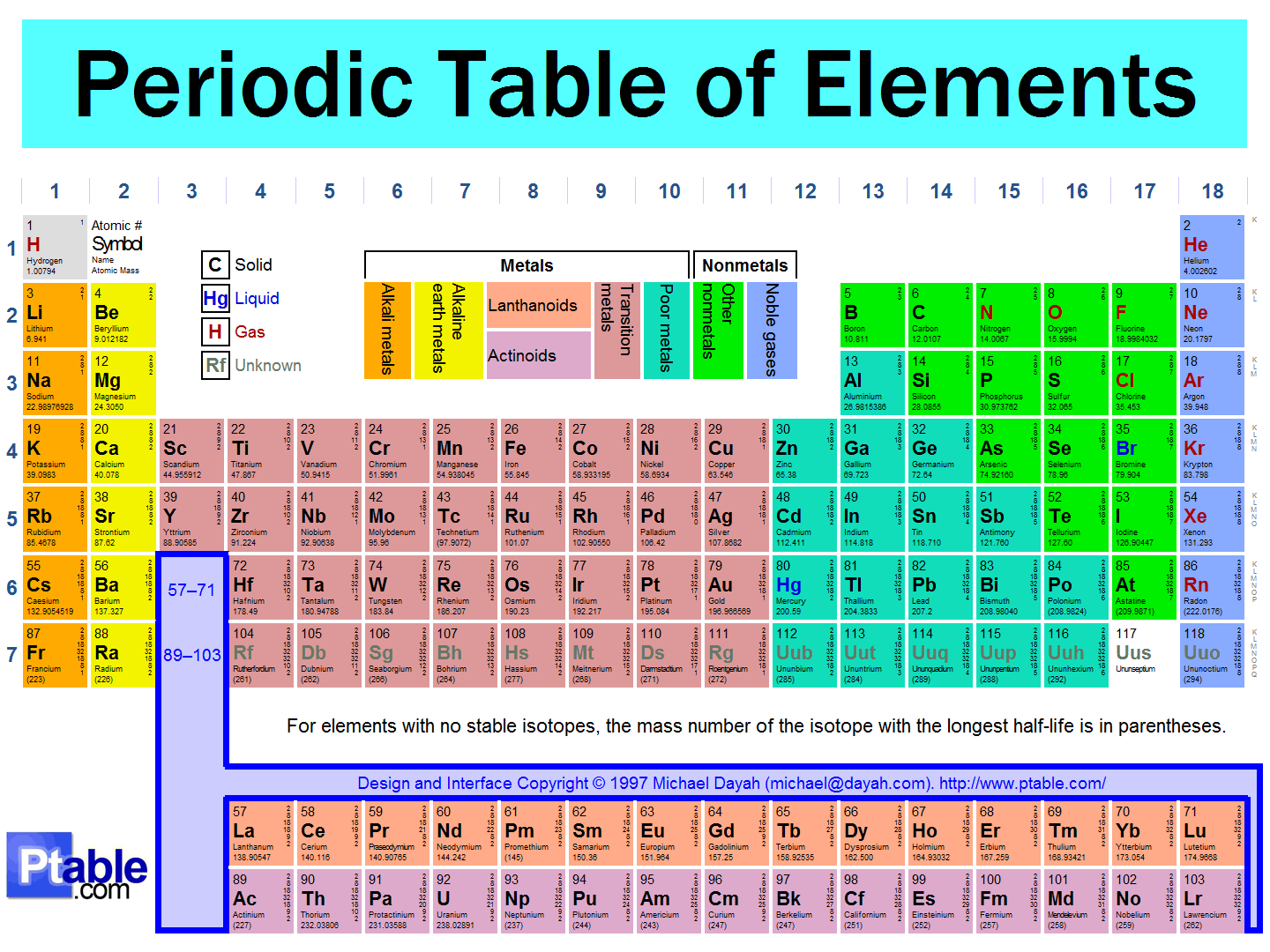
The horizontal row on the periodic table is called a
a)
group
b)
family
c)
period
d)
atomic number
12.
A vertical column is called...
a)
group
b)
tower
c)
period
d)
crew
13.
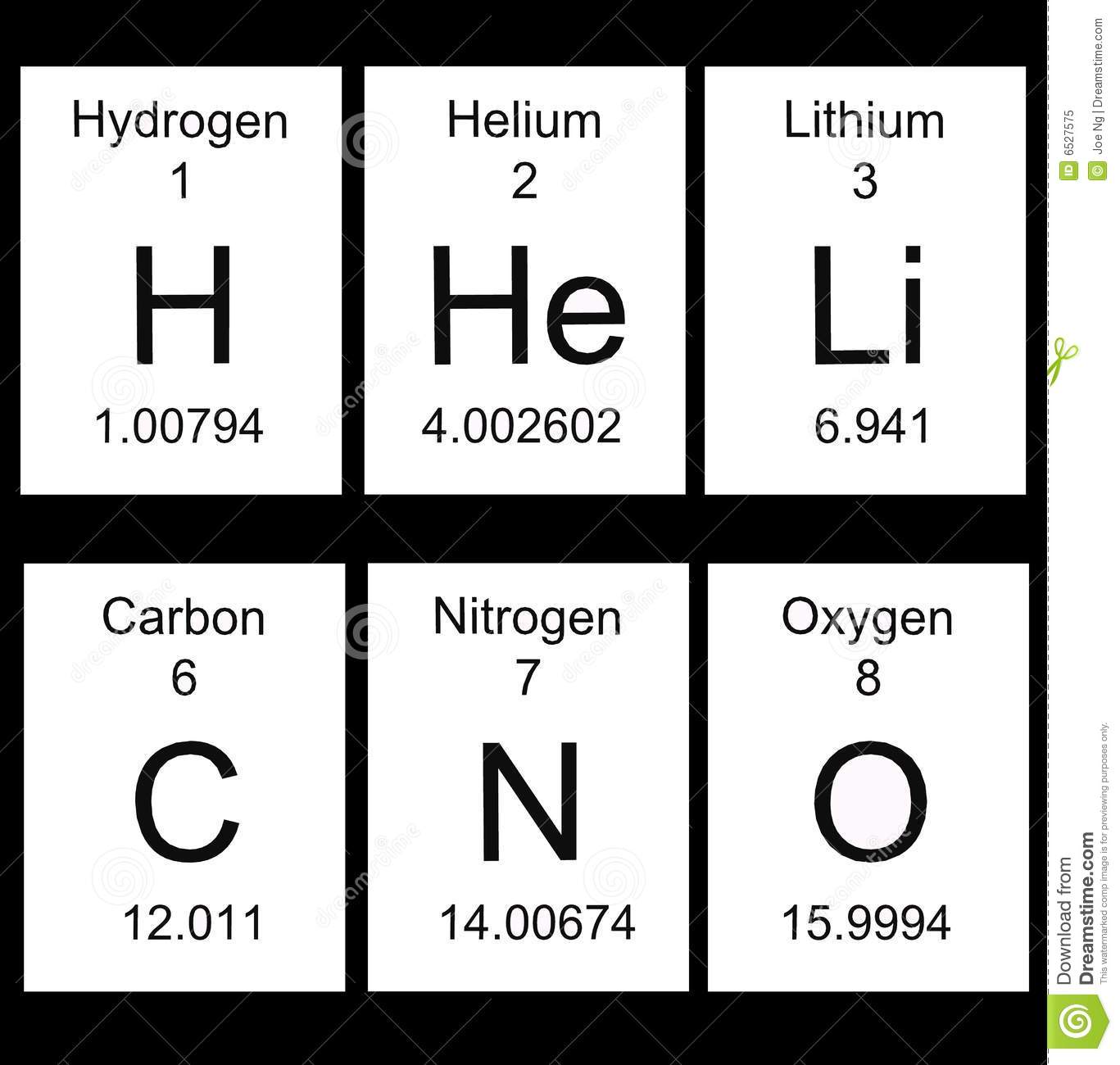
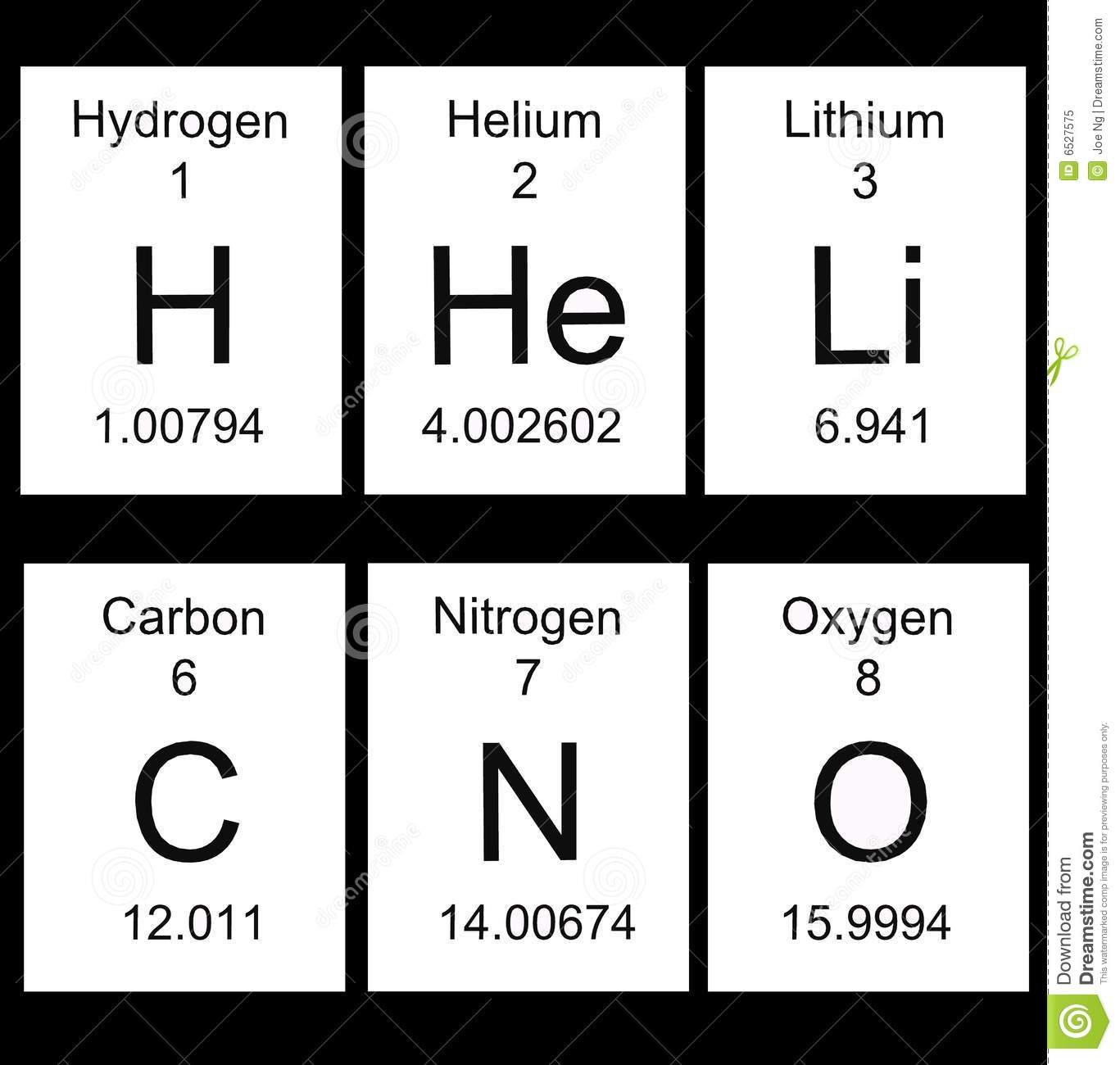
The number at the bottom of each square on the periodic table is the ...
a)
atomic number
b)
atomic mass
c)
chemical symbol
d)
element name
14.
The number at the top of each square on the periodic table is the ...
a)
atomic number
b)
atomic mass
c)
Chemical Symbol
d)
Element Name
15.
Which of the following is a chemical property?
a)
color
b)
tendency to rust
c)
mass
d)
malleability
16.
To convert from a gas to a liquid
a)
decrease pressure
b)
increase temperature
c)
decrease temperature
d)
none of these
17.
What is the law of Conservation of Mass?
a)
A measure of how much mass is created or destroyed. 
b)
Mass can neither be created nor destroyed during a chemical reaction. 
18.
What compound is magnesium chloride?
a)
MCl2
b)
MCl
c)
MgCl
d)
MgCl2
19.

What is the basic building block of all matter?

a)

Molecule

b)

Element

c)

Atom

d)

Cell

20.

True or false: Everything in the universe is made of atoms.

a)

True

b)

False

21.

_________ are made up of only one type of atom.

a)

Cells

b)

Molecules

c)

Elements

22.

In a ___________ particles are packed close together. They vibrate back and forth.

a)

Solid

b)

Liquid

c)

Gas

d)

Plasma

23.

•Liquids have an __________shape and a _______ volume.

a)

indefinite, indefinite

b)

indefinite, definite

c)

definite, definite

d)

definite, indefinite

24.

Gases have an _________ shape and an _________ volume.

a)

indefinite, indefinite

b)

indefinite, definite

c)

definite, definite

25.

This picture represents particles of a ______________.

a)

Liquids

b)

Solids

c)

Gases

26.

When heat increases, the particles move ________ and spread further apart.

a)

faster

b)

slower

c)

the same speed

27.

When heat decreases, the particles move _______ and get closer together.

a)

faster

b)

slower

c)

same speed

28.

Temperature is a measure of energy.

a)

True

b)

False

29.

All of the noble gasses do not bond because

a)

They are gasses

b)

They have 7 valence electrons

c)

They have their outer orbital filled

d)

They are ions.

30.

The atomic number tells you what?

a)

number of electrons

b)

number of protons

c)

number of neutrons

d)

both electrons and protons in an atom.

31.
Elements which are shiny, conduct electricity and heat are called
a)
metal
b)
nonmetal
c)
metalloid
d)
nonexistent
32.
A horizontal row of elements in the periodic table.
a)
column
b)
group
c)
period
33.
A vertical column in the periodic table.  Elements share similar properties.
a)
row
b)
group
c)
period
34.
Burning a piece of paper 
a)
Chemical Change 
b)
Physical Change 
35.
Milk turning sour
a)
Chemical Change
b)
Physical Change 
36.
These are the two particles located inside the nucleus of an atom 
a)
Protons and Electrons 
b)
Protons and Neutrons 
c)
Electrons and Neutrons 
d)
Neutrons and Molecules 
37.
Solution where more solute can still be dissolved at the given temperature. 
a)
Saturated
b)
Unsaturated
c)
Mixture
d)
Homogeneous solution
38.
How does a solution become supersaturated?
a)
dissolve lots of solute in it.
b)
dissolve a little solute in it. 
c)
dissolve more solute than you should be able to. 
d)
dissolve a solvent in it. 
39.
__________ are made up of solutes and solvents.
a)
Solutions
b)
Suspensions
c)
Heterogeneous Mixtures
d)
Pure Substances
40.
You can make a solution more concentrated by adding __________.
a)
solute
b)
solvent
c)
water
41.
What is able to dissolve other substances?
a)
Solute
b)
Salt
c)
Suspension
d)
Solvent
42.
If I dissolve sugar in water, what is the solute?
a)
Water
b)
Hydrogen
c)
Sugar
d)
Carbon
43.
If I dissolve carbon dioxide in water, what is my solvent?
a)
Carbon Dioxide
b)
There is no solvent
c)
Oxygen
d)
Water
44.

The ___ is the thing being dissolved.

a)

solute

b)

solvent

c)

mixture

d)

solution

45.
Solutions are composed of __________ .
a)
salts and solutes
b)
solvents and salts
c)
solutes and alloys
d)
solutes and solvents
46.
An indicator will ______________ when it is in contact with an acid or base
a)
Bubble
b)
Form a new substance
c)
Change color
d)
Stay the same color
47.
The pH of a strong acid would be:
a)
1-2
b)
5-6
c)
8-9
d)
12-13
48.
The pH of a strong base would be:
a)
1-2
b)
5-6
c)
8-9
d)
13-14
49.
Examine the results (color change) of the pH paper shown in the picture.  What type of substance was tested?
a)
an acid
b)
a base
c)
a neutral substance
d)
none of the above
50.
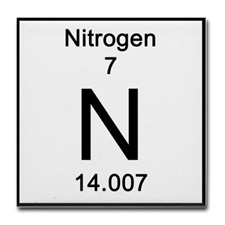
What is the number of protons that the element in this image contain?
a)
14
b)
7
c)
15
d)
18
51.
What does the nucleus of an atom contain?
a)
Electrons and neutrons
b)
Protons and neutrons
c)
Neutrinos and positrons
d)
Electrons and megatrons
52.

What goes in place of the question marks?

a)

Element name

b)

Atomic Mass

c)

Atomic Number

d)

Electrons