Wayground logo

Free Printable Worksheets

Font size

S
M
L
XL
Worksheets

IPC Chemistry Test #2 Review

Total questions: 36

Worksheet time: 32mins

Name
Class
Date
1.
If my charge becomes 2+ what does that say about me?
a)
I am stealing 2 electrons
b)
I am losing 2 electrons
c)
I am in period 2
d)
I have an atomic # of 2
2.
Metals tend to 
a)
gain electrons
b)
lose electrons
3.
If I gain electrons I become
a)
Positive because I've added to my atom
b)
negative because I've added electrons
c)
same because i'm balanced
d)
equal because now I have electrons
4.
When metals bond with non-metals they form what type of bonds
a)
covalent
b)
ionic
c)
cooperative
d)
lewis
5.
How do the following two elements bond together?
Na1+  F1-         
a)
NaF
b)
NaF3
c)
Na3F
d)
Na1F2
6.
When a nonmetal gains electrons, it becomes this type of ion.
a)
Anion
b)
Cation
7.
When a metal loses electrons, it becomes this type of ion.
a)
anion
b)
cation
8.
When an ionic compound is formed, its charge is 
a)
negative
b)
neutral (no charge)
c)
positive
9.
The first step in naming an ionic compound is always...
a)
Naming the anion
b)
Changing the ending to -ide
c)
Naming the cation
d)
Writing the cation charge
10.
How do covalent bonds form?
a)
Donating & receiving valence e- between atoms.
b)
Opposite slight charges attract each other between compounds.
c)
Scientists are still not sure how they form.
d)
Sharing valence e- between atoms.
11.

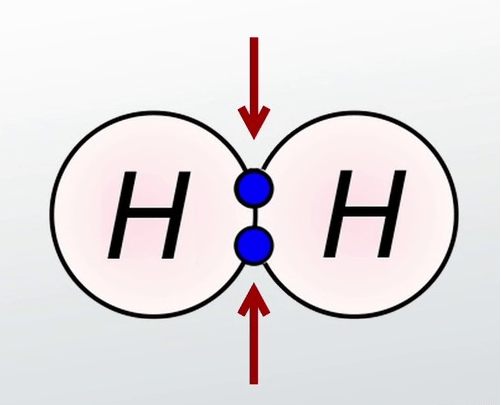
What type of bond is shown in this image?

a)

Ionic

b)

Covalent

12.
Why do elements bond?
a)
To be friends
b)
To create a new element
c)
To become stable
13.
Which is most likely to form an ion of -1?
a)
an element from group 17
b)
a metal
c)
an element from group 1
d)
an element with atoms that have eight valence electrons
14.

Is potassium a cation or an anion?

a)

cation

b)

anion

15.

How many electrons would beryllium lose when forming a cation?

a)

1

b)

2

c)

3

d)

4

16.
What is the left part of a chemical equation called?
2H2 + O2 --> 2H2O
a)
Reactants
b)
Products 
c)
Yields 
d)
Chemical Equation 
17.
What is the right part of a chemical equation called...
2H2 + O2 --> 2H2O
a)
Reactants
b)
Products 
c)
Yields 
d)
Chemical Equation 
18.
Is the following reaction balanced?
NaHCO3 --> Na2CO3 + H2O + CO2
a)
yes
b)
no
19.

Which best represents a balanced equation?

a)

120 grams of carbon plus 20 grams of oxygen → 200 grams of carbon dioxide

b)

120 grams of carbon plus 50 grams of oxygen → 200 grams of carbon dioxide

c)

120 grams of carbon plus 80 grams of oxygen → 200 grams of carbon dioxide

20.

When chemicals react in a closed container, which must be true?

a)

The mass both before and after the reaction is the same.

b)

The mass both before and after the reaction is variable.

c)

The same number of compounds is present both before and after the reaction.

21.
Is the equation balanced?: 2H2O + O2 --> 4MgO + 3Fe
a)
Yes
b)
No
22.


Based on the Law of Conservation of Mass, the missing coefficient for Hydrogen gas in the chemical equation below should be_____

 H2 + O2 ⟶  2 H2OH_2\ +\ O_2\ \longrightarrow\ \ 2\ H_2O  

a)

1

b)

3

c)

4

d)

2

23.
an atom or molecule which has gained or lost one or more of its valence electrons
a)
Covalent Bond
b)
Chemical Formula
c)
Ion
d)
Compound
24.
Which is the name of the kind of solid substance formed in this figure?  
a)
aqueous 
b)
precipitate
c)
acid
d)
synthesis 
25.
Describes the number of molecules in a compound and is used to balance a chemical reaction. 
a)
coefficient 
b)
subscript
c)
superscript
d)
SI unit
26.
Provides evidence that a chemical reaction has occurred. 
a)
dissolving 
b)
melting
c)
formation of a gas
d)
bending
27.
When a scientist mixed two chemicals, an exothermic reaction takes place. Which of the following would be proof that the reaction was exothermic?
a)
a change of color
b)
a change of state
c)
a temperature decrease
d)
a temperature increase
28.
Predict the bond that will form between Se and Cl.
a)
Ionic
b)
Covalent
29.
Predict the bond that will form between Sr and S.
a)
Ionic
b)
Covalent
30.
The octet rule means that all valence shells want to have the number...... 
a)
1
b)
9
c)
8
d)
16
31.

This could be the dot diagram of

a)

Mg

b)

Cl

c)

C

d)

O

32.
This could be the dot diagram of
a)
O
b)
B
c)
Li
d)
Ne
33.
Is this ionic bond drawn correctly?
a)
Yes
b)
No
34.
What is the correct formula for this molecule?
a)
NH
b)
N3H
c)
NH3
d)
NH4
35.

Name this element.

a)

Neon

b)

Magnesium

c)

Sodium

d)

Manganese

36.
Which group of the periodic table is composed of inert (not reactive)  gases?
a)
alkali metals
b)
alkaline earth metals
c)
halogens
d)
noble gases