
 Worksheets
Coevolution of Earth's Systems
Total questions: 24
Worksheet time: 32mins

All living things on earth are part of the....
Biosphere
Geosphere
Hydrosphere
Cryosphere

What is the hydrosphere's function?
a recycling planet powered by the flow of solar energy to support a network of life.
sustains various life forms and plays an important role in ecosystems and regulating heat on earth.
sustains life forms on the surface of the earth, absorbs and interacts with harmful solar rays.It protects the earth from natural and human-caused space debris.
controls the distribution of minerals, rocks and soils and generates natural hazards that shape the land and impact humans
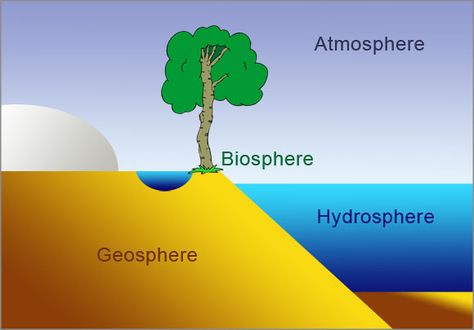
Earth is divided into four different spheres. Which statement is true about the interaction between two of these spheres?
Weather is an interaction between the hydrosphere and the geosphere.
A plant receiving water from precipitation is an interaction between the biosphere and the hydrosphere.
An ice cap providing shelter for an arctic animal is an interaction between the biosphere and the hydrosphere.
The formation of the Grand Canyon is an example of an interaction between the geosphere and the atmosphere.


What gas makes up 21% of Earth's Atmosphere today?
Nitrogen
Oxygen
Ozone
None of the Above
Approximately how many years ago did Earth form?
460 years
460,000 years
4.6 million years ago
4.6 billion years ago

What life forms were responsible for introducing oxygen to Earth's atmosphere?
the very first life forms
Cyanobacteria
the first multicellular organisms
the first land plants

The Primitive Earth is referred as the Purple Earth due to the presence of:
chlorophyll
carotenoids
retinol
xanthophyll
True or False: The Earth's early atmosphere contained little or no oxygen.
True
False
Which would be the correct order of evolution, beginning 3.5 billion years ago?
Ancient bacteria, photosynthetic bacteria, photosynthetic bacteria produced oxygen, oxygen accumulated in the atmosphere, rise in oxygen led to extinction in life forms while other life forms that depended on oxygen evolved
Photosynthetic bacteria, photosynthetic bacteria produce carbon dioxide, oxygen accumulated in the atmosphere, rise in oxygen led to extinction in life forms while other life forms that depended on oxygen evolved
The rise in photosynthetic bacteria led to extinction of life forms, modern bacteria took over the planet
How much oxygen do we have in earth’s atmosphere?
78%
20.9%
33%
40.2%

The atmosphere of the early Earth was poisonous to life the way we know it now. If that was the case, where did the oxygen in our atmosphere come from?
Everyone knows oxygen comes from trees!!
Oxygen formed as a by-product of cyanobacteria which lived 3.5 billion years ago in formations called stromatolites.
Oxygen is a by-product of volcanic activity.
Oxygen came from meteorites.

If you could travel back in time to the Earth when it was 1 billion years old, what would you need to survive the atmosphere.
You would need a protective suit and oxygen tank, so that you could survive the poisonous atmosphere.
You would not need anything special. By then there was plenty of oxygen to breathe. You would just need an insulated suit to protect you from volcanoes.
You would need a submarine because the Earth was all ocean.
You would need a friend there because no one would believe you when you said you traveled 3.5 billion years back in time.

Bacteria in the ocean produced oxygen that reacted with iron molecules. What was created from this chemical reaction?
Islands and continents
Banded iron formations
Early soil composition
Shells

What are stromatolites?
Modern bacteria
Cyanobacteria trapped in sediments
Aerobic bacteria
Advanced bacteria
Which molecule or product does cyanobacteria release from their cell?
Carbon dioxide
Oxygen molecule
Glucose
Water


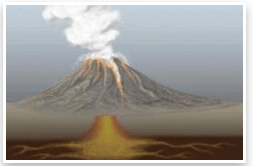

Glacier retreats is a common example of:
Positive Feedback
Negative Feedback

