wayground logo

Free Printable Worksheets

NEW

Font size

S
M
L
XL
Worksheets

EOBI: Replication

Total questions: 40

Worksheet time: 30mins

Name
Class
Date
1.

This enzyme is capable of breaking Hydrogen bonds found between the bases of DNA

a)

Topoisomerase

b)

DNA Helicase

c)

DNA Polymerase

d)

Exonuclease

2.
What is the purpose of DNA replication?
a)
Cut the DNA 
b)
Make more cells
c)
Apoptosis
d)
Duplicate the DNA
3.
Which enzyme seals okazaki fragments together on the lagging strand?
a)
Topoisomerase
b)
Helicase
c)
Polymerase
d)
Ligase
4.
What do we call DNA replication since new DNA has 1 parent strand and 1 new strand?
a)
Conservative 
b)
Semiconservative 
c)
Dispersive
5.
What is the backbone of DNA made of?
a)
Nitrogen bases
b)
Amino acids
c)
Double H
d)
Sugar & Phosphate
6.
Why is it crucial that living things are able to replicate their DNA?
a)
Each cell must have its own DNA
b)
Less copies of DNA are needed when a new cell is created
c)
A cell needs multiple copies of DNA
d)
Only muscle cells need DNA 
7.
Which enzyme is responsible for adding nucleotides?
a)
Topoisomerase
b)
DNA Polymerase
c)
Ligase
d)
Primase
8.

The separation of the two single strands of DNA creates a ‘Y’ shape?

a)

enzyme

b)

unzip

c)

A replication fork

9.

This enzyme helps helicase unzip DNA by relieving supercoiling

a)

Topoisomerase

b)

Exonuclease

c)

DNA Primase

d)

DNA Polymerase

10.

This enzyme synthesizes short RNA sequences to guide DNA Polymerase

a)

Primers

b)

DNA Primase

c)

DNA Polymerase

d)

Topoisomerase

11.

Okazaki fragments are unified into a single continuous strand by the use of this enzyme

a)

DNA Helicase

b)

DNA Ligase

c)

Topoisomerase

d)

Telomerase

12.
Which sequence of DNA bases would pair with this partial strand
CAT TCA CTG
a)
ATG TGA CAG
b)
TAC ACT GTC
c)
GTA AGT GAC
d)
CAT TCA CTG
13.
Which of the following units are repeatedly joined together to form a strand of DNA?
a)
amino acids
b)
nucleotides
c)
fatty acids
d)
polysaccharides
14.
order of replication
a)
3, 4, 2, 1
b)
3, 1, 4, 2
c)
2, 1, 4, 3
d)
3, 4, 1, 2
15.
In what phase of the cell cycle does DNA replication take place?
a)
G1
b)
S
c)
G2
d)
M
16.
Place the following in sequential order
1. Recoil
2. Straightens the double helix
3. Breaks Hydrogen bonds
4. Adds Free nucleotides
a)
1, 2, 3, 4
b)
3, 4, 2, 1
c)
3, 2, 4, 1
d)
2, 3, 4, 1
17.
Based on the diagram, the enzyme (represented in gray) is most likely...
a)
DNA polymerase
b)
DNA Ligase
c)
Nuclease
d)
Helicase
18.
What will the first four bases of the new DNA strand look like if copying the template strand?
a)
TGGT
b)
ACCA
c)
GTTG
d)
CAAC
19.

The fragments on the lagging strand that are made up of repeating segments of DNA and RNA Primers

a)

okazaki fragments

b)

Primase

c)

Polymerase

d)

unused DNA

20.

Which of the following best describes the arrangement of the sides of the DNA molecule

a)

Bonding

b)

Alternating

c)

Anitparallel

d)

Parallel

21.

DNA polymerase moves in the _________ to ____________ direction

a)

3' to 5'

b)

easiest

c)

5" to 3"

d)

9 to 5

22.

Enzyme that connects the DNA to the backbone (glues)

a)

Ligase

b)

Polymerase

c)

Helicase

d)

Primase

23.

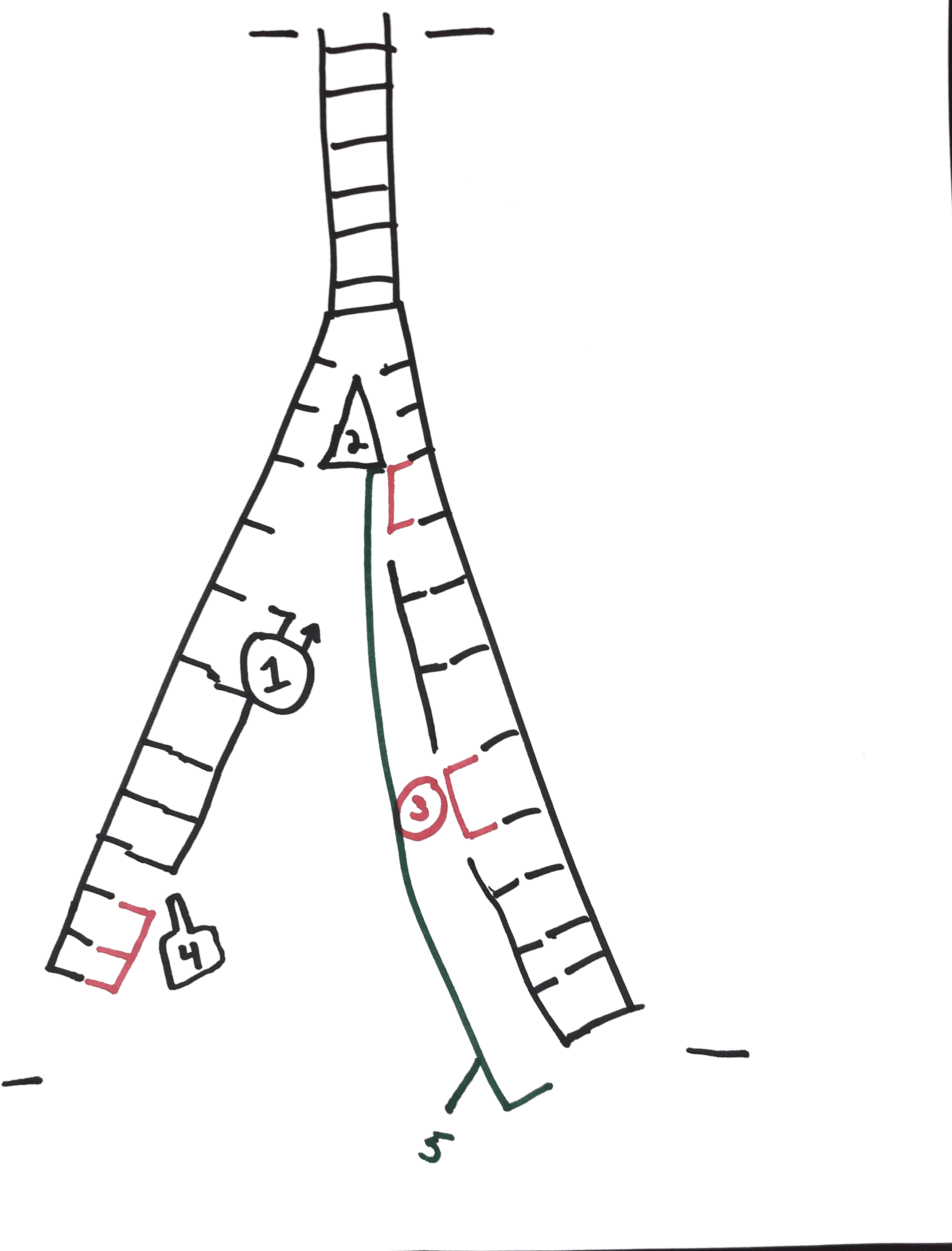
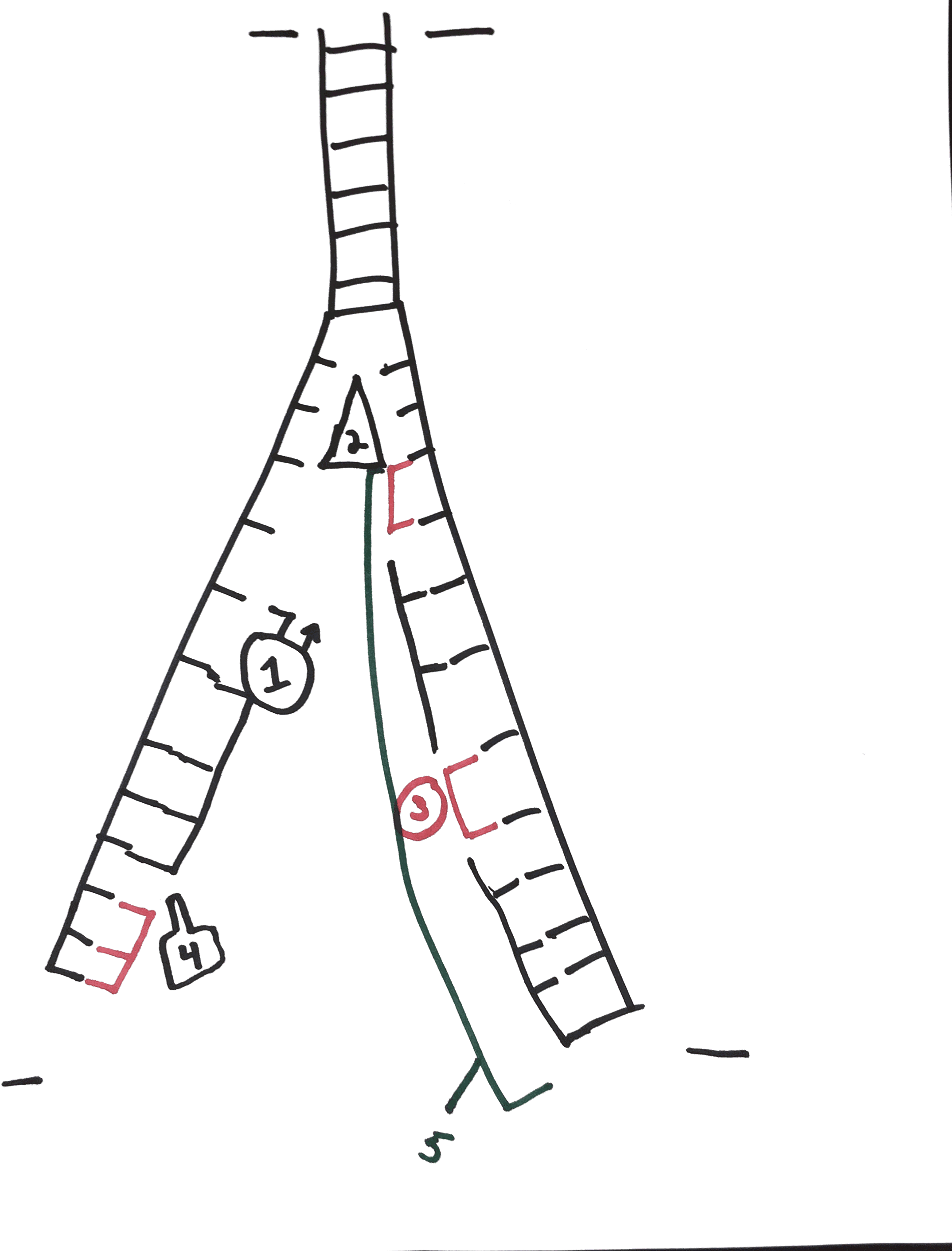
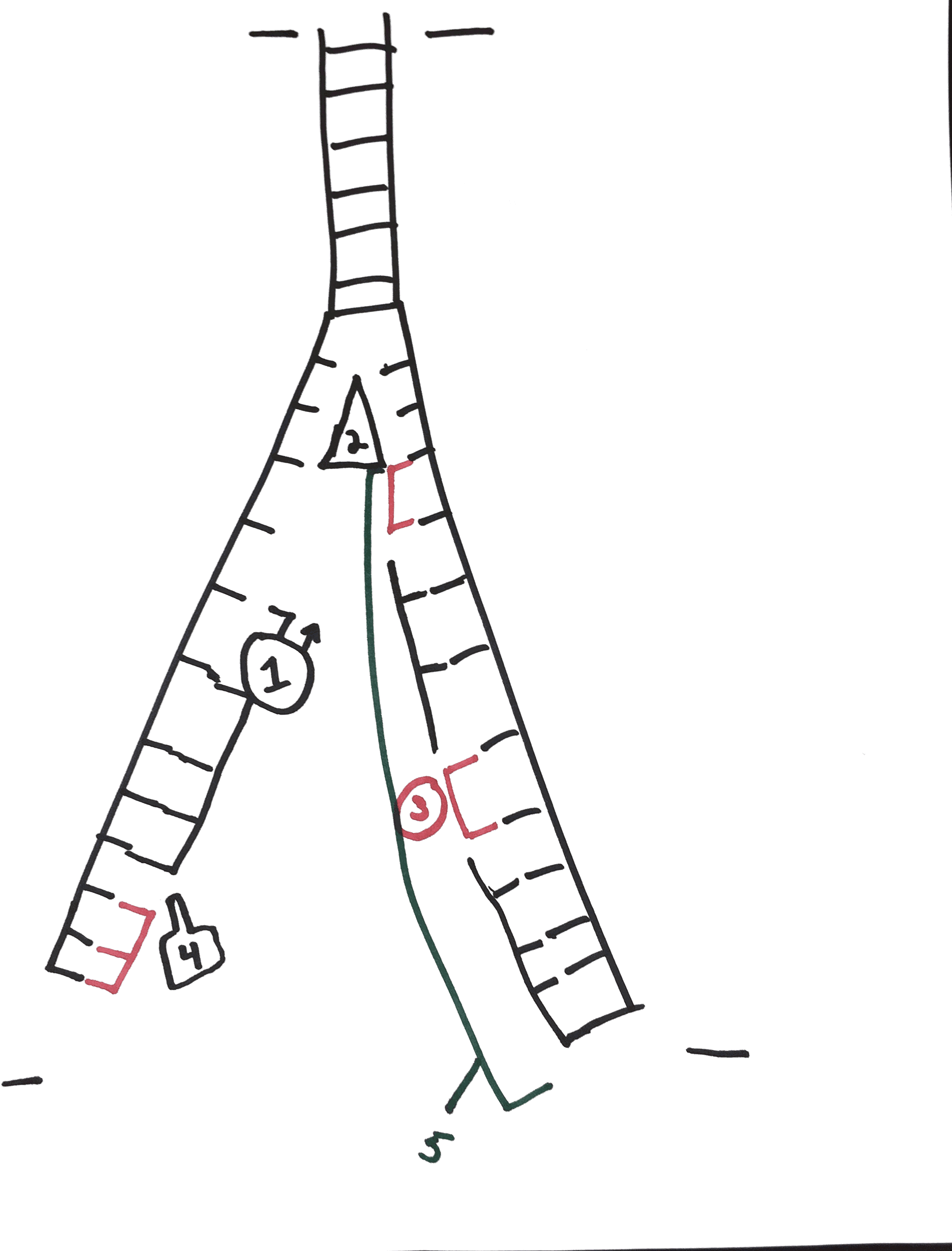
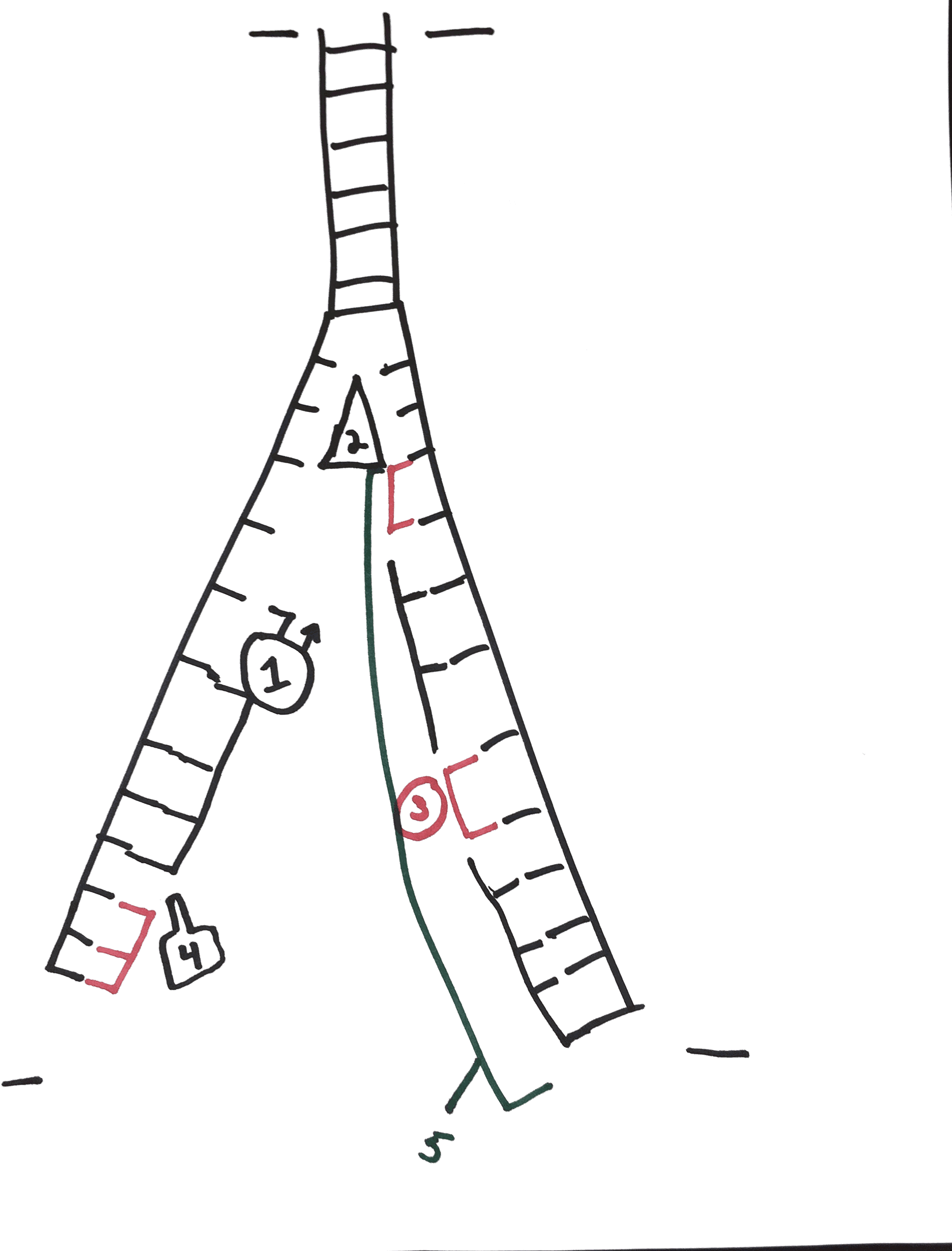
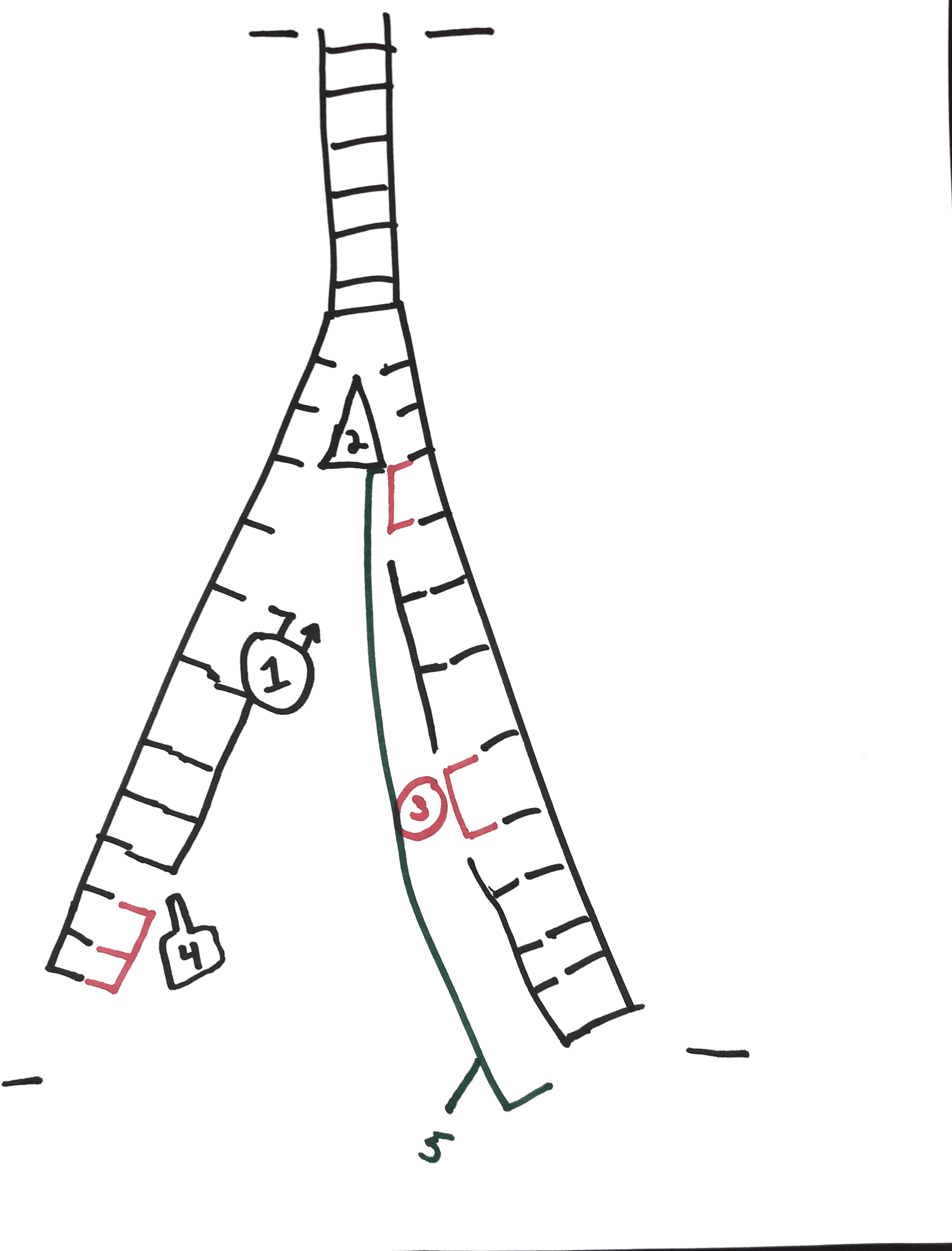
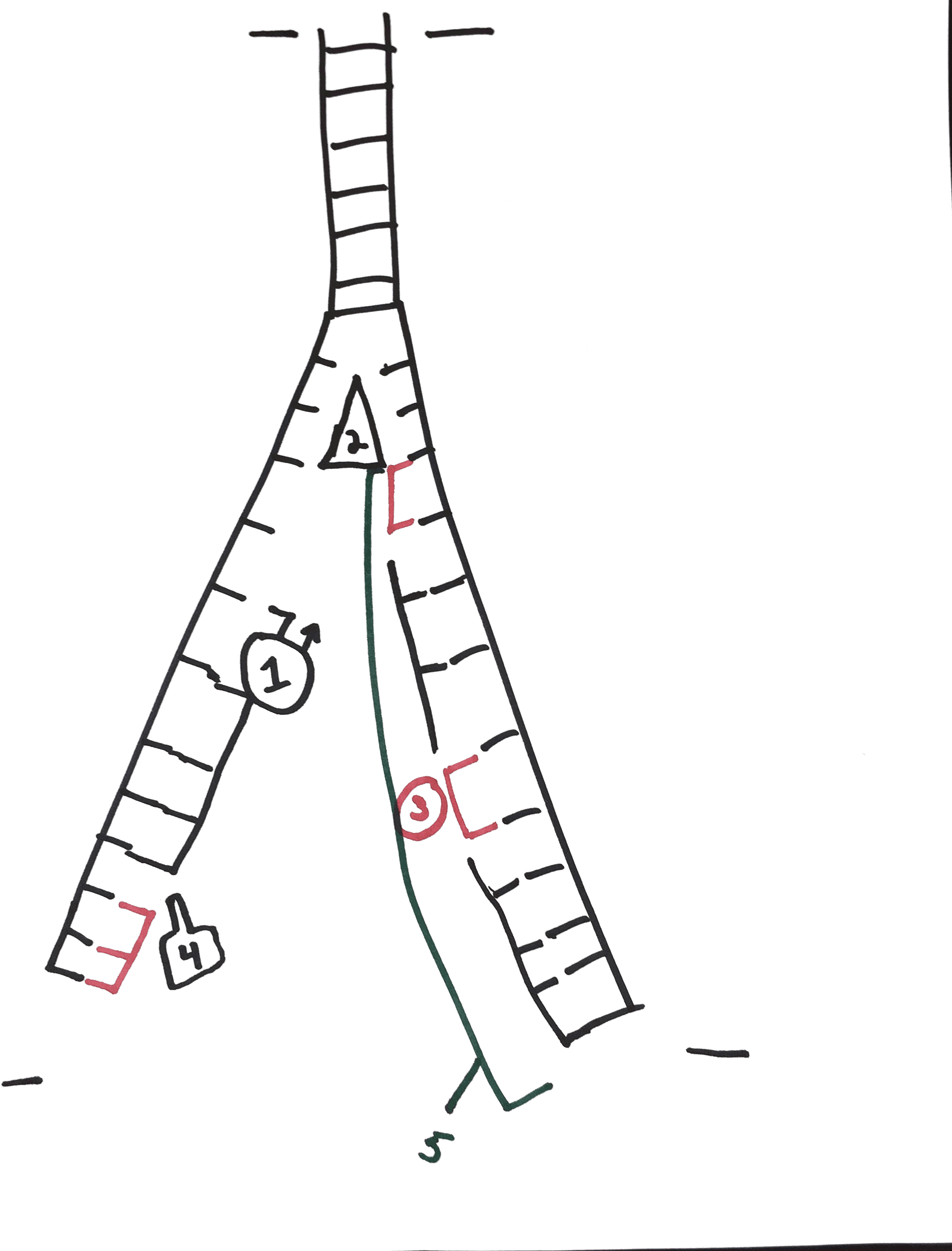
Number 1 in the picture above

a)

Replication

b)

DNA Polymerase

c)

Primase

d)

Ligase

24.

Number 1 in the picture above

a)

Replication

b)

DNA Polymerase

c)

Primase

d)

Ligase

25.

#4 in the picture

a)

Polymerase

b)

Primase

c)

Helicase

d)

Ligase

26.

#1 in the picture above (builder)

a)

Helicase

b)

Primase

c)

Polymerase

d)

Ligase

27.

#3 setting Primers

a)

Ligase

b)

Helicase

c)

Polymerase

d)

Primase

28.

#5

a)

Leading strand

b)

Lagging Strand

c)

Replication fork

d)

Helicase

29.

#5

a)

Leading strand

b)

Okazaki Fragments

c)

Replication fork

d)

Helicase

30.

Right Hand Side

a)

Lagging strand

b)

Leading Strand

31.
Okazaki fragments form on the:
a)
lagging strand
b)
leading strand
c)
base-pairs
d)
5' end
32.

Which enzyme is responsible for adding nucleotides to the free three prime end

a)

Helicase

b)

Topoisomerase

c)

DNA Polymersase 3

d)

DNA Polymersase 1

33.

Direction that DNA is READ?

a)

3' to 5'

b)

5' to 3'

34.

The separation of the two single strands of DNA creates a ‘Y’ shape?

a)

enzyme

b)

unzip

c)

A replication fork

35.
What strand is copied faster?
a)
Leading
b)
Lagging
36.

Structure C is

a)

helicase

b)

primase

c)

DNA polymerase III

d)

gyrase

37.

H is the

a)

leading strand

b)

lagging strand

c)

parent strand

d)

none of these

38.

Structure G is

a)

primase

b)

gyrase

c)

DNA polymerase III

d)

DNA polymerase I

39.

Replication is occurring AWAY FROM the replication fork on strand

a)

I, the leading strand

b)

I, the lagging strand

c)

H, the leading strand

d)

H, the lagging strand

40.

This structure is an Okazaki fragment.

a)

A

b)

D

c)

F

d)

G