
 Worksheets
Ecosystems
Total questions: 25
Worksheet time: 18mins

A trophic cascade is
An ecosystem in a waterfall
A series of food chains that fall apart
eating lots of food in a specific order
a food web that is effected from the top down


Taking into account the image, People can explain that it is an ecosystem because it shows
Variety of biodiversity such animals, plants and organisms.
Non-living environments like weather, sun, water and climate.
Wonderful and touristic places.
Communities of living and non- living things that work together.

Peter is an artistic person, the last week he visited Amazon Rainforest. Peter found that Amazon is an example of biodiversity because it has
diversity of dances.
living and no-living things.
a terrestrial ecosystem
variety of life.

Some examples of non-living things in the ecosystem are
flowers and plants.
frog and ducks.
rocks and water.
fish and grass.


Plants use _____________ to make their own food during photosynthesis.
water
energy from the Sun
CO2
water, energy from Sun, CO2
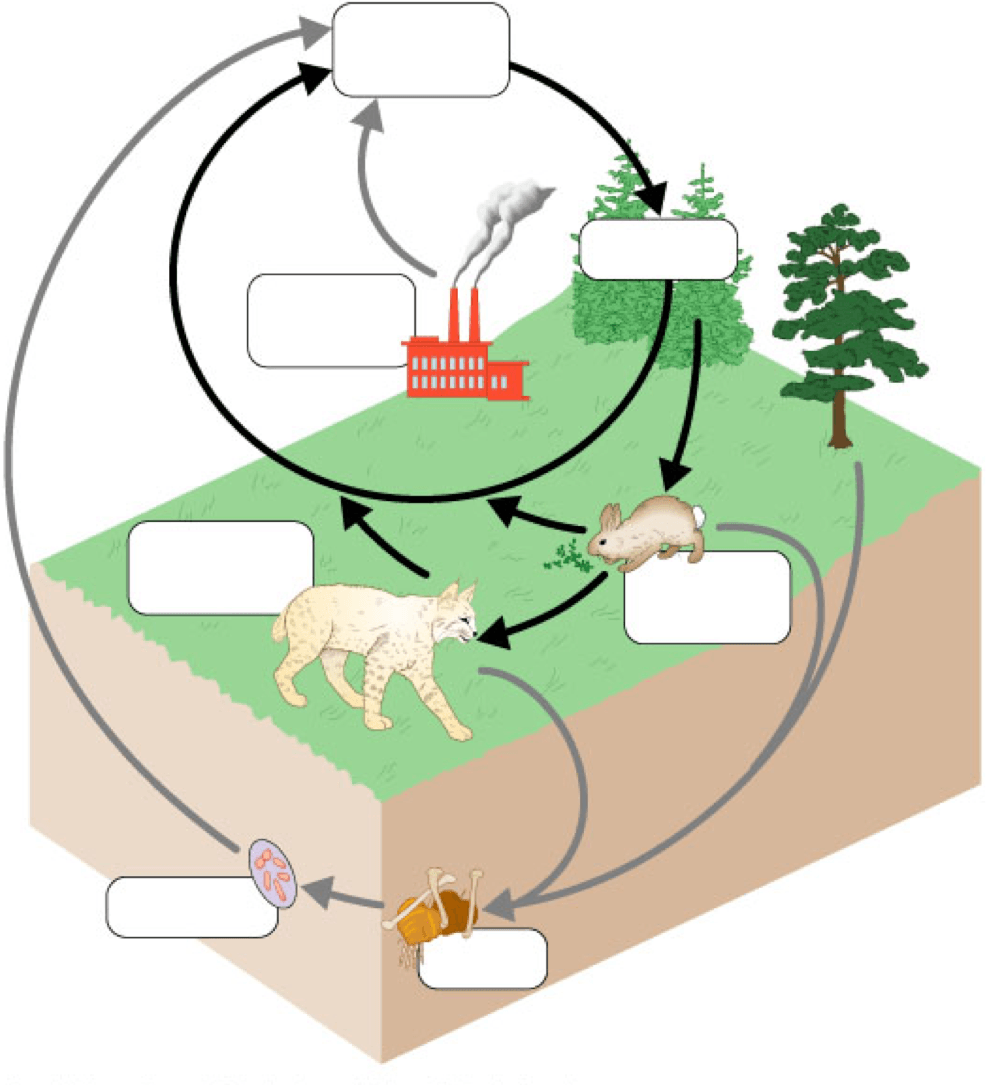

How do animals get carbon?
By eating plants and or other animals.
They absorb it from the atmosphere.
From the ground
They do not get carbon from anywhere.

Which two biomes have the least precipitation?
tropical rain forest and temperate grasslan
savanna and tropical dry forest
tundra and desert
boreal forest and temperate woodland


The largest number of individuals that an environment can support long term is...
carrying capacity
emigration
immigration
population density

Something that regulates the size of a population is called...
a limiting measure
a limiting factor
carrying capacity
biodiversity

Which of these nitrogen cycle processes happens when bacteria converts atmospheric nitrogen to a soil form of nitrogen that is usable by plants?
nitrogen fixation
nitrification
denitrification
ammonification
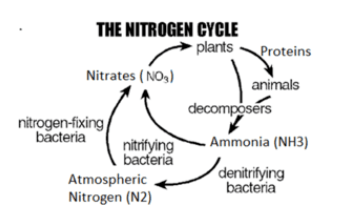
According to this diagram, plants and animals use nitrogen to make _________________________
carbohydrates
cellulose
proteins
unsaturated fats
What % of the air is made of nitrogen?
21%
52%
61%
78%

What happens to the amount of energy available to organisms when moving from trophic level 1 to trophic level 2?
The energy decreases by approximately 90%
The energy increases by approximately 90%
The energy increases by approximately 10%
The energy decreases by approximately 10%



