wayground logo

Free Printable Worksheets

NEW

Font size

S
M
L
XL
Worksheets

Cells

Total questions: 40

Worksheet time: 24mins

Name
Class
Date
1.

The fluid that surrounds the organelles is... (hint... "Try to pull a fast one and..."

a)

chloroplast

b)

cytoplasm

c)

vacuole

d)

cell wall

2.

Which of the following converts food into energy for the cell?

a)

vacuole

b)

mitochondria

c)

cytoplasm

d)

cell membrane

3.
The nucleus is like the ____________ of the cell.
a)
foot
b)
hand
c)
stomach
d)
brain
4.
Which of the following are NOT found in animal cells
a)
chloroplasts and cytoplasm
b)
chloroplasts and cell wall
c)
cell wall and cell membrane
d)
mitochondria and nucleus
5.
A cell is...
a)
the basic unit of structure and function in living organism
b)
an organism
c)
a basic part of everything that we see
d)
found only in animals, not plants
6.
Every living organism is made up of one or more cells
a)
True
b)
False
7.
Michael looked at a cell through a microscope.  He identified a nucleus, chloroplast, and cytoplasm.  What kind of cell did Michael observe?
a)
animal
b)
plant
c)
vertebrate
d)
bacteria
8.
A rigid layer that lies outside the cell's  membrane is...
a)
Cytoplasm
b)
Cell membrane
c)
Cell Wall
d)
Flagella
9.

A group of organs working together create an

a)

organelle

b)

organ

c)

organ system

d)

organism

10.

What organelle packages proteins?

a)

Ribosome

b)

Mitochondria

c)

Golgi Body

d)

Cell Membrane

11.

What organelle is like a storage tank for food, water, & waste?

a)

Chloroplast

b)

Ribosome

c)

Vacuole

d)

Lysosome

12.

Who gave cells their name when he looked at cork?

a)

Hooke

b)

Van Leeuwenhook

c)

Schlieden

d)

Schwann

13.

What is the correct order of levels?

a)

atom, organelle, cell, molecule

b)

organelle, cell, tissue, organ

c)

organelle, organism, organ, organ system

d)

organism, community, population, ecosystem

14.

Which organelle breaks down waste & is similar to the "clean up crew?"

a)

cell membrane

b)

Ribosome

c)

Lysosome

d)

Smooth ER

15.

Which organelle is responsible for transport of proteins & has ribosomes attached?

a)

Chloroplast

b)

Rough ER

c)

Smooth ER

d)

Cell Wall

16.

Choose the correct order below. (small to big)

a)

atom, molecule, organelle, tissue, cell

b)

organism, organ, cell, tissue

c)

cell, tissue, organ, organ system, organism

d)

atom, organelle, organ, organism

17.

_____ makes lipids (fats) for the cell.

a)

Mitochondria

b)

Smooth ER

c)

Ribosome

d)

Rough ER

18.

Who are the 3 scientists that had a part in the CELL THEORY?

a)

Schlieden, Schwann, Virchow

b)

Hooke, Schwann, Schlieden

c)

Schlieden, Virchow, Hooke

d)

Jansen, Hooke, Virchow

19.
DNA is a single strand and circular in shape
a)
Prokaryote
b)
Eukaryote
20.
DNA is free floating, not in a nucleus
a)
Prokaryote
b)
Eukaryote
21.
Include kingdoms: Protist, Animal, Fungi, and Plant
a)
Prokaryote
b)
Eukaryote
22.
Only contain structures like ribosomes, cytoplasm, cell wall, flagella, and DNA
a)
Prokaryote
b)
Eukaryote
23.
Made up of one cell
a)
Prokaryote
b)
Eukaryote
24.
Contain membrane-bound organelles such as mitochondria, endoplasmic reticulum, and vacuoles
a)
Prokaryote
b)
Eukaryote
25.
DNA is found in the nucleus
a)
Prokaryote
b)
Eukaryote
26.
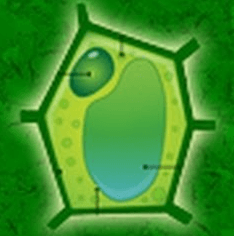
This is a picture of:
a)
Prokaryote
b)
Eukaryote
27.

Which of the following needs energy?

a)

prokaryotes

b)

eukaryotes

c)

prokaryotes and eukaryotes

28.

Bacteria are an example of __________.

a)

prokaryotes

b)

eukaryotes

29.

Which of the following are relatively large?

a)

prokaryotes

b)

eukaryotes

30.

Which of the following does not have organelles?

a)

prokaryotes

b)

eukaryotes

c)

prokaryotes and eukaryotes

31.
What is the total magnification of a microscope with two lenses when one lens has a magnification of 10x, and the other lens has a magnification of 30x?
a)
15x
b)
30x
c)
40x
d)
300x
32.
When should the fine adjustment knob always be used?
a)
with the low power objective only
b)
with the medium power objective only
c)
with the high power objective only
d)
with both the medium and high power objectives
33.
When you focus on a new specimen, always begin with
a)
low power and coarse adjustment.
b)
low power and fine adjustment
c)
high power and coarse adjustment
d)
high power and fine adjustment
34.
If your teacher asks you to move a microscope to table, how do you carry it?
a)
by the body tube and the eyepiece
b)
with one hand
c)
one hand on the arm and the other under the base
d)
with one hand on the base and the other on the eyepiece.
35.
Which part of the microscope controls the amount of light available?
a)
coarse adjustment knob
b)
diaphragm
c)
objective lens
d)
revolving nosepiece
36.
Which part lets you turn up the power of magnification, such increasing from 40x to 100x?
a)
coarse adjustment knob
b)
diaphragm
c)
field-of-view
d)
revolving nosepiece
37.
What part is 5?
a)
coarse adjustment
b)
fine adjustment
c)
diaphragm
d)
stage
38.
What is part 2?
a)
arm
b)
base
c)
body tube
d)
illuminator
39.

Cellular Respiration turns sugar into:

a)

donuts

b)

ATP energy

c)

solar energy

d)

glucose

40.

What are the 3 key ingredients (inputs) needed for photosynthesis?

a)

glucose, oxygen, carbon dioxide

b)

carbon dioxide, water, glucose

c)

water, soil, sunlight

d)

sunlight, water, carbon dioxide