
NEW
Font size
 Worksheets
Math vocabulary-ALL
Total questions: 57
Worksheet time: 57mins

distance away from 0 on a number line
absolute value
additive inverse
unit rate
integer

opposite of a number
absolute value
additive inverse
unit rate
integer

a rate in which the denominator is 1
absolute value
additive inverse
unit rate
proportional relationship

a decimal that ends
absolute value
repeating decimal
terminating decimal
bar notation

A decimal that does not end
absolute value
repeating decimal
terminating decimal
bar notation

shows which numbers repeat in a decimal
absolute value
percent
constant of proportionality
bar notation

a relationship between 2 quantities that have the same ratio
absolute value
additive inverse
proportional relationship
bar notation
The constant number (k) created when you divide 2 quantities
xypercent
constant of proportionality
additive inverse
repeating decimal

"per hundred"
percent
additive inverse
absolute value
constant of proportionality

a decrease in the price of something; can also refer to the percentage off the original price
discount/markdown
markup
additive inverse
tax

an increase in the price of something
markdown
markup
percent
constant of proportionality

The space inside an object is called it's
area
perimeter
volume
circumference

The distance around an object is called the
area
perimeter
volume
circumference

terms that contain the same variable raised to the same power in an expression
distributive
additive inverse
absolute value
like terms

the term on the outside of the parentheses is multiplied by everything inside the parentheses
distributive property
additive inverse
constant of proportionality
percent
A letter that represents a number
variable
ratio
event
direct variation

Number from zero to one (0-1) that describes the likelihood of an event.
probability
percent of change
rate
frequency

All possible outcomes of an experiment
sample space
median
Greatest Common Factor (GCF)
frequency

Operations that undo each other
inverse operation
mode
outlier
absolute value

The sum of a data set divided by the number of items in the data set
mean
mode
median
range

the distance around a circle
perimeter
circumference
radius
diameter

The difference between the greatest and least values
range
mode
outlier
median

A line segment that passes through the center of a circle and has endpoint on the circles edge
diameter
radius
circumference
area
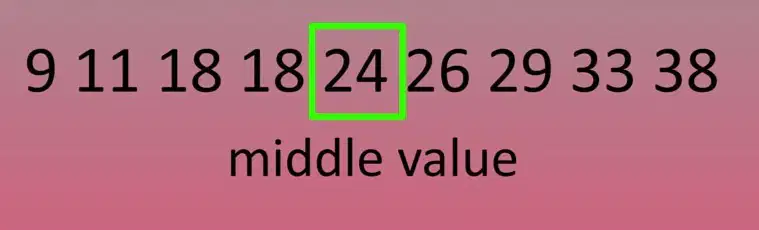
the middle number in an ordered set of data
median
mean
mode
range

The number of cubic units needed to fill a space
volume
perimeter
area
unit rate

A line segment with one endpoint at the center of a circle and the other on the circle
radius
diameter
chord
circumference

Angles have measures that add up to 90 degrees.
Supplementary Angle
Vertical
Adjacent Angle
Complementary Angle
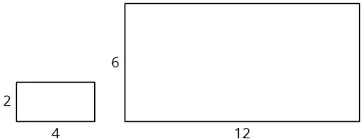
To create a scaled copy, we multiply all the lengths in the original figure by the same number. This number is called the _______.
sum
scale factor
variable
sample

Angles have measures that add up to 180 degrees.
Complementary Angle
Supplementary Angle
Vertical Angle
Adjacent Angle

A copy of a figure where every length in the original figure is multiplied by the same number.
scaled copy
sample
scale factor
similar
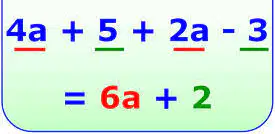
combine like-terms
simplify
term
coefficient
solution
The value that occurs the most times in a data set
mode
range
mean
median
An event that has a 0% chance of happening
unlikely
impossible
certain
likely
An event that has a 50% chance of happening
unlikely
impossible
equally likely
likely
An event that has a 100% chance of happening
certain
impossible
equally likely
likely
An event that has more an a 0% chance but less than a 50% chance of happening
certain
unlikely
equally likely
likely
An event that has more an a 50% chance but less than a 100% chance of happening
certain
unlikely
equally likely
likely

Two angles that are across from each other and congruent
adjacent
supplementary
complementary
vertical
Pi is the number:
3.14
2.54
6.54
7.89
the answer to a multiplication problem
product
sum
difference
quotient
the constant ratio in a proportional linear relationship
percent error
least common multiple
constant of proportionality
greatest common factor
A statement that compares two quantities using <, >, ≤,≥.
percent error
expression
equation
inequality
How do you turn a fraction into a decimal?
divide the bigger number by the smaller number
divide the numerator by the denominator
divide the denominator by the numerator
the answer to a division problem
product
sum
difference
quotient
A statement that compares two quantities using an = sign
percent error
expression
equation
inequality
the number of square units that is necessary to cover the entire rectangular prism
volume
area
surface area
perimeter
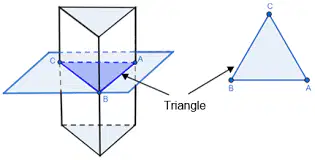
The 2d shape you get when you slice a 3d shape.
cross section
area
surface area
perimeter

A vertical plane that intersects (crosses) the base
to form right angles.
perpendicular cross section
parallel cross section

A horizontal plane that never intersects (crosses) the base.
perpendicular cross section
parallel cross section
greater than
<
>
≤
≥
less than
<
>
≤
≥
less than or equal to
<
>
≤
≥
greater than or equal to
<
>
≤
≥

