
 Worksheets
Unit 2 Review
Total questions: 20
Worksheet time: 13mins
T/F: An example of carbohydrates is C6H12O6 (glucose).
True
False
Enzymes are made up of ______.
nucleotides
monosaccharides
fatty acids and glycerol
amino acids

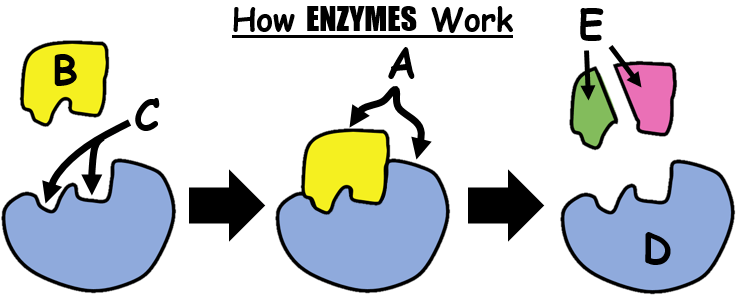
Letter C is the ______.
active site
enzyme
substrate
products

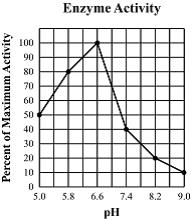
Which enzyme works best in a basic solution?
A
B
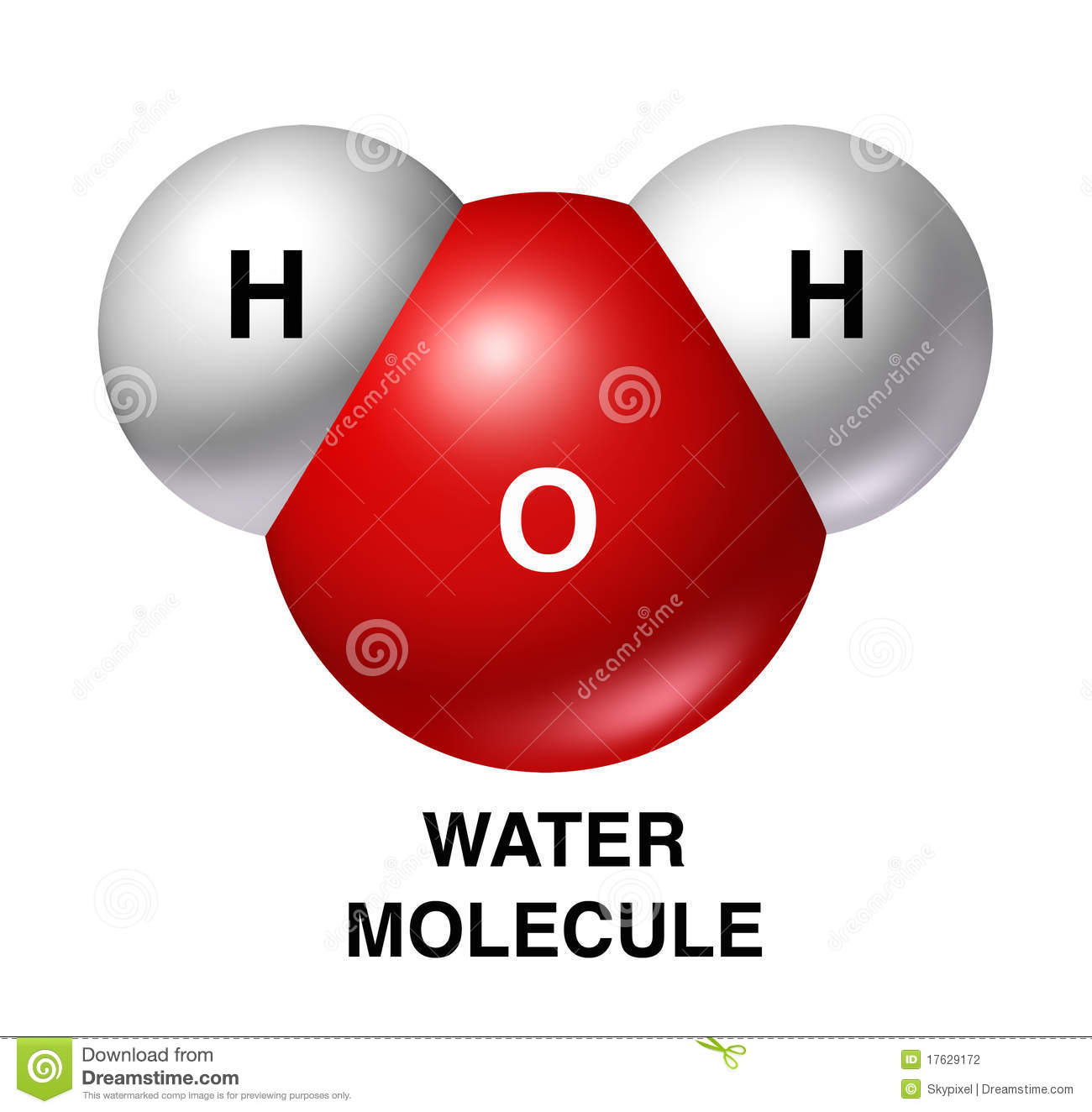
Which part of a water molecule has a positive charge?
the hydrogen atoms
the oxygen atom
the carbon atom
all atoms are positive
Because water has a positive end and a negative end, water is a _________ molecule.
mickey mouse
polar
ionic
miracle
Lipase is an enzyme that is secreted to further break down lipids into their monomers, called ____________.
monosaccharides
nucleotides
fatty acids & glycerol
amino acids

Animals, such as bears, that hibernate for long periods of time use lipids to ______________.
defend against pathogens
store long-term energy.
release quick energy.
store genetic information.
What type of energy do all living things use to do work?
(a)
ATG TGA CAG?


This entire molecule is called a _____
nucleotide
protein
amino acid
fatty acid
The purple circle in this molecule is called a ________.
lit
nitrogenous base
phosphate group
pentose sugar
T/F: Diffusion is the movement of small molecules from an area of _______ concentration to _______ without energy.
high to low
low to high
Lactase is an enzyme that breaks up lactose into its monomers. This is an example of ________.
hydrolysis
dehydration synthesis
molecular marriage
radiation energy
Which carbohydrate is found in the cell wall of fungi and the exoskeleton of insects?
cellulose
shatzin
fructose
chitin

