
 Worksheets
Production of nuclear energy
Total questions: 17
Worksheet time: 17mins
How does a nuclear reactor produce energy?
Atoms, such as uranium, undergo fusion in a reactor. This
generates heat which turns water to steam in a turbine
which generates electricity.
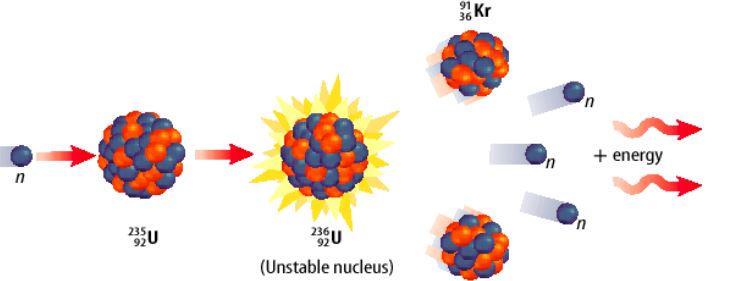
Atoms, such as uranium, undergo fission in a reactor. This
generates heat which turns water to steam in a turbine
which generates electricity.
Atoms, such as uranium, burn in a reactor. This generates
heat which turns water to steam in a turbine which
generates electricity.
We do not currently have the technology to harness nuclear
reactions to generate electricity.
Scientists have continuously been searching for ways to create a system for energy production through fusion reactions but have been unsuccessful. Which of the following explains why it is still not a practical source of power?
Fusion can create a huge amount of energy with very little
fuel.
Fusion radioactive byproducts have a shorter half-life than
fission byproducts.
Fusion requires a large amount of energy to force atoms to
initially fuse together.
Fusion reactions have virtually little to no risk of nuclear
accidents.
What is nuclear fission reaction?
The process of splitting the nucleus of an atom.
The process of combining nuclei to form a larger nucleus.
The process of changing the physical arrangement of
particles.
The process of combining atoms together into a molecule.
What is nuclear fusion reaction?
The process of splitting the nucleus of an atom.
The process of combining nuclei to form a larger nucleus.
The process of changing the physical arrangement of
particles.
The process of combining atoms together into a molecule.
What makes the turbine in the nuclear power station rotating?
Cold water
Heat energy
Steam
Light
Choose the correct energy change in generating electricity from nuclear energy
heat energy - nuclear energy - kinetic energy - electrical energy
nuclear energy - heat energy - kinetic energy - electrical energy
nuclear energy - heat energy - kinetic energy - potential energy - electrical energy
nuclear energy - light energy - electrical energy

