
NEW
Font size
 Worksheets
DP014_Pre-UPS3@1: Ch5 & Ch6
Total questions: 20
Worksheet time: 12mins
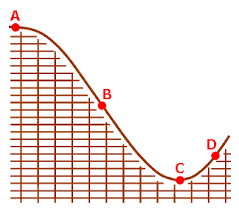
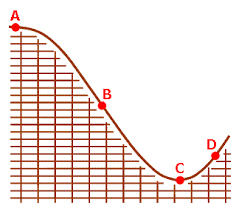

What type of energy is in this picture?
Kinetic energy
Elastic potential energy
Gravitational potential energy
Mechanical energy
The Law of Conservation of Energy states:
Energy can created or destroyed but not transformed
Energy cannot be created or destroyed, it can only transformed
Energy can't be created, destroyed or transformed
Energy cannot be created or destroyed.

What kind of energy does an object possess when it's resting on top of the hill?
Potential Energy
Chemical Energy
Kinetic Energy
All of the above

Which form of energy is represented in this image?
kinetic
thermal
potential
radiant

What happens when the ball goes from the highest position to the lowest position
PE and KE increases and decreases together
Impossible to know without knowing the mass of the object
the PE decreases while KE increases
A student is holding a stone at a certain height. The stone has 50 joules of potential energy and 0 joules of kinetic energy. The stone is released from that height. How much energy does the stone have right before it hits the ground?
The stone will have no energy.
The stone will have about 50 joules of kinetic energy and 0 joules of potential energy.
The stone will have about 50 joules of potential energy and 0 joules of kinetic energy.
The stone will have about 25 joules each of kinetic and potential energy.
Is it possible for an object moving with a constant speed to accelerate? Explain.
A) No, if the speed is constant then the acceleration is equal to zero.
B) No, an object can accelerate only if there is a net force acting on it.
C) Yes, although the speed is constant, the direction of the velocity can be changing.
D) Yes, if an object is moving it can experience acceleration
A
B
C
D
A) Both vectors point in the same direction.
B) The vectors point in opposite directions.
C) The vectors are perpendicular.
D) The question is meaningless, since the acceleration is zero
When an object experiences uniform circular motion, the direction of the acceleration is
A) in the same direction as the velocity vector.
B) in the opposite direction of the velocity vector.
C) is directed toward the center of the circular path.
D) is directed away from the center of the circular path.
A
B
C
D
A) free fall
B) constant acceleration
C) linear acceleration
D) centripetal acceleration
When an object experiences uniform circular motion, the direction of the net force is
A) in the same direction as the motion of the object.
B) in the opposite direction of the motion of the object.
C) is directed toward the center of the circular path.
D) is directed away from the center of the circular path.
A
B
C
D
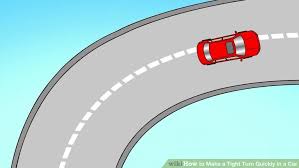
Why does an object experiencing uniform circular motion have an acceleration?
because it ir changing speed
because it is changing direction
because it is moving n a straight line
because it has mass
In uniform circular motion, which two variables point toward the center of the circle?
the centripetal force and the acceleration
the velocity and the mass
the period and the mass
the time and the radius

The _______________________ supplies the centripetal force requirement for the car to move in a horizontal circle. Without it, the car would turn its wheels but would not move in a circle (as is the case on an icy surface).
friction force
centrifugal force
normal force
applied force

