
 Worksheets
Sound
Total questions: 49
Worksheet time: 21mins

Sound is a form of ?
energy
vibrations
all above
an object that doesn't vibrate cant produce
sound
energy
heat
you will see a flash of lightning before you hear the thunder that goes with it because-
lightning travels through solid that's why it travels faster causing us to see it first
thunder occurs much later than the lightning
sounds travels slower than light
wrong answer
what is medium
the material which affects sound by stopping or transferring it
moderate sound
not too much not too less frequency
which sound has higher frequency


sound travels by which type of wave
longitudinal
transverse
none
both
if you keep ping pong ball on a loud speaker what would happen
they will transfer the sound better as they are solid.
they will move up and down due to the vibration
there would have no effect on it as sound has no force
witch animal has highest frequency
cat
dog
bat
lion
what is a vacuum?
the way sound is produced
how long it takes for sound to travel
an objects which absorbs sound
a place with no matter
what causes sound waves
friction
Amplitude
frequency
vibration
what is compression
to compress
sound getting trapped/ compress when it has traveled its maximum distance
sound being compressed in your ear
a part of a sound wave where air particles are close together
What is rarefaction
a rare sound produced by cats or other high pitch animals
sound wave which is not audible
a part of a sound wave where air particles are far apart
where sound waves reach the ear and are detected by our ear drum

An ________ is a reflected sound.
Vibration
Echo
Pitch
Volume

Which device measures sound waves?
Oscilloscope
Stethoscope
Radio
I don't know

___________ affects how fast or slow sound waves travel.
Temperature
Speed
Amplitude
Frequency
In which medium speed of sound are fastest?
vacuum
solid
liquid
gas
What is the range of frequencies audible to the human ear
lower than 20 Hz
20 Hz - 20.000 Hz
higher than 20.000 Hz
0 Hz - infinite Hz

What is ultrasound?
Sound with a frequency higher than 20.000 Hz
Sound with a frequency lower than 20 Hz
Sound with a frequency 20 Hz
sound with a frequency 20.000 Hz

This word refers to any substance that sound can travel through. Sound can travel through solids, liquids, and gases.
Decibel
Medium
Vibration
Oscilloscope


What is this?
Ear Drum
Ear Canal
Pinna
Cochlea
Hearing Nerve
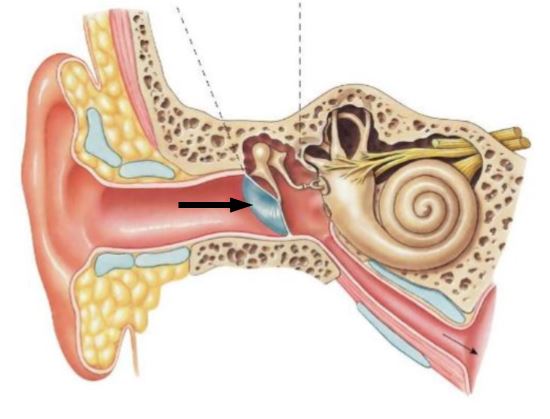
What is this?
Ear Drum
Ear Canal
Pinna
Hammer
Cochlea
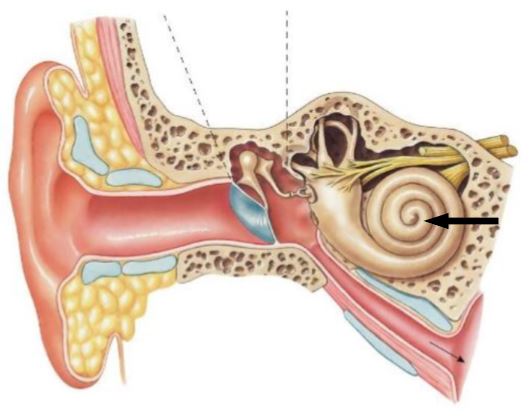
What is this?
Pinna
Hearing Nerve
Cochlea
Ear Drum
Anvil

What is this?
Anvil
Hammer
Stirrup
Cochlea
Ear drum

What is this?
Anvil
Hammer
Stirrup
Cochlea
Ear drum

What is this?
Hearing Nerve
Cochlea
Pinna
Stirrup
Hammer

What is this?
Anvil
Hammer
Stirrup
Auditory canal
Ear drum
Which part(s) of the ear are found in the middle ear?
eardrum
hammer
anvil
cochlea
stirrup
what is noise
Sound that we don't want to hear
the sound you hear in the class when the teacher is gone
your annoying neighbor's dog barking

What is risk?
risk is the possibility of something bad happening
number of air particles in a sound wave
how can a sound be dangerous
imagine you are a pilot. What can you do to prevent your ears from damage
wear ear defenders
stick cottons in your ears
decrease the distance between the engine.
what is wave length?
the distance from one point on a wave to the same point on the next wave.
the distance from one point on a wave to the opposite point on the next wave.
the length of the whole wave
What is amplitude
the distance from the center of the wave to its highest or lowest point
how many waves are produced by a vibrating body
the farthest distance a sound wave can travel
how much energy is needed produced by a vibration

the property of sound determined by its frequency is
pitch
hertz
harmonics
define: "harmonics"
the harmonies produce when you hear music
frequency of a sound wave that are multiples of the fundamental frequency
frequency of a sound wave that are followed by fundamental frequency
the difference between the first and last wave's frequency.
what is the audible range of hearing for an adult
14 000 hz
150 000 hz
65 000hz
27 000 hz
What is timbre
the distinctive sound than an instrument makes
unique sound produced by timbre woods
sound produced by a high pitched instrument
unit of measuring frequency
what is hertz (Hz)
another unit used to measure sound
the unit used to measure volume
the unit used to measure pitch
the unit used to measure frequency
The highest pitch is made by the _______ instrument.
biggest
wooden
smallest
shiniest
higher notes have higher frequencies'
true
false
High pitched sounds have short wavelengths
True
False
the sound from 20Hz to 20 00Hz are known as audible range
True
False
was this fun
YES, I Enjoyed it
No
50 50
WRONG ANS

