
 Worksheets
Magnetism - Review
Total questions: 48
Worksheet time: 41mins

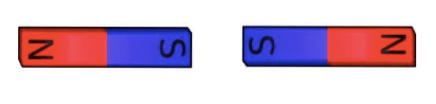
What will happen when these magnets are brought close together?
they will attract each other
they will repel each other
both magnets will turn to the left
both magnets will turn to the right
Where is the force of attraction the strongest on a magnet?
at the poles
in the middle
above the magnet
below the magnet

This substance is...
magnetized
unmagnetized
positively charged
negatively charged

You know this substance is magnetized because...
the domains point to the right
the arrows are drawn in red and green
the domains are aligned
the domains are random

In this image, the pattern of iron filings shows the ____________________________.
north pole
south pole
magnetic field
bar magnet
A stronger magnetic field is found where...
the field lines are longer
the field lines are shorter
the field lines are closer together
the field lines are father apart

Where is the magnetic force the strongest in this picture?
location 1
location 2
location 3
location 4
A permanent magnet...
has no magnetic domains until a magnet is near
has magnetic domains aligned only when another magnet is near
has magnetic domain aligned all the time
has no magnetic domains
What happens when two south poles of a magnet are placed together?
they repel
they attract
they cancel each other out
the strength of the magnet is doubled

Are the magnetic field lines in this picture correct?
yes, because the north pole is on the left in all the pictures
yes, because they point from the north pole to the south pole
no, because they point from the north pole to the south pole
no, because the north pole should be on the right in all pictures

The area of magnetic force around a magnet is known as its __________________________.
magnetic tan lines
magnetic fan lines
mangetic declination
magnetic field

Dylan puts two magnetic toy trains very close to each other on a track. What will happen next and why?
the trains will not move because the magnets are not touching
the trains will move closer to each other because the magnetic force will pull the trains together
the trains will move away from each other because the magnetic force will push the trains apart
the trains will move away from each other because the magnets are not touching

Why are paper clips attracted to magnets?
paper clips contain silver
paper clips contain aluminum
paper clips contain iron
paper clips contain tin
Which of the following is true of a bar magnet?
its magnetic field is strongest near its center
it is surrounded by a magnetic field
the north pole is stronger than the south pole
the south pole is stronger than the north pole

The system of magnets in the image are ________________________________ each other.
attracting
repelling
neutralizing
Where is Earth's magnetic field strongest?
near the magnetic poles
closest to the equator
near the geographic poles
it's the same strength at all locations
As magnets get farther apart, the strength of the field becomes...
stronger
weaker
stays the same
What would happen if you cut a bar magnet in half?
both pieces would lose its magnetic field
both pieces would have its own north and south pole
one piece would be only a north pole and the other would only be a south pole
one would still be a magnet, the other would no longer be magnetic
What subatomic particle causes magnetism in an atom?
protons
neutrons
electrons
quarks
A magnet is defined as...
a force between two opposite poles
a material that has a magnetic field
the electron cloud surrounding an object
the pull of gravity
A magnet is is any material that produces a...
refrigerator magnet
magnetic field
Northern Lights
atomic domain
Which of these is not a magnetic metal?
iron
copper
nickel
cobalt
What does a magnetic field look like?
a series of white, dotted lines
nothing, it's invisible
a clear piece of plastic or glass
a shimmering area in the air
Which of the following metals can be magnetized?
lead
iron
copper
silver
How can you create a magnetic field?
by stringing many magnets together
by plugging the refrigerator magnet into an electric socket
by rubbing a piece of glass against a piece of wool
by running current through a wire
Which of the following statements is true?
a compass is affected by the earth's magnetic field
an object's magnetic field gets weaker as you move closer to it
once a piece of metal becomes magnetized, it stays magnetized
the earth's magnetic north pole is located at the geographical north pole
What can you conclude about electricity and magnetism?
they have nothing to do with one another
they cannot be controlled
they are related phenomena
they have no practical applications
Which type of forces does magnetism have? (check ALL that apply
push
pull
push and pull
none, there is no force
From which pole do magnetic field lines appear to emanate from?
North
South
Both
Neither
Which object in our solar system has the largest magnetic field?
the Sun
Jupiter
Earth
the Moon
Which of the following are properties all magnets have in common? (click all that apply)
exert magnetic forces on each other
have a north pole
have a south pole
exert more force the farther away they are
are only magnetic part of the time
What are the two basic kinds of magnets?
permanent
temporary
longlasting
bar magnet
iron powder
All magnetism occurs because of...
protons
neutrons
electrons
magic
How are electrons like teeny tiny magnets?
the will attach to a refrigerator
they can only be found in cobalt
they have a north and south pole
they are shaped like a horseshoe
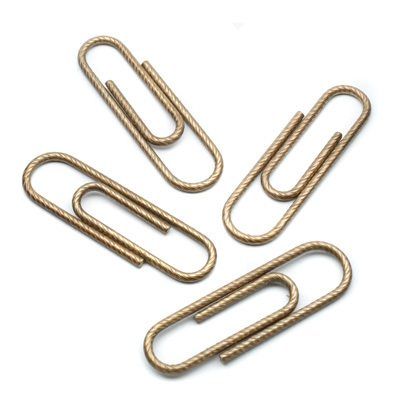
Magnetic
Not magnetic
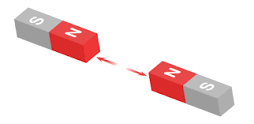
What will happen when these magnets are brought close together?
They will attract each other.
They will repel each other.
They will stay the same.
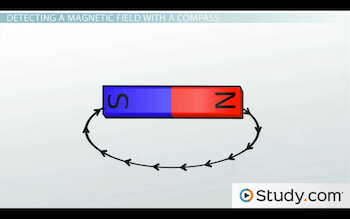
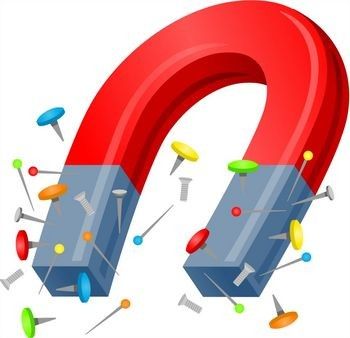
Where on a magnet is the magnetic force strongest?
The Poles
All over
Middle

Earth is like a giant magnet due to....
its liquid iron core
the wind patterns of Coriolis Effect
the alignment of the continents
solar particles moving through the atmosphere

Where is Earth's magnetic field strongest?
Along the outside lines
Along the inside lines on either side
Where the lines are close together at the poles
In the space outside of the lines
Magnetic Field lines....
Go into the N side AND go into the S side
Go out of the S side and into the N side
Go out of the N side AND out of the S side
Go out of the N side and into the S side
When _______________ travels through a
conductor, a magnetic field is created
current
a magnetic field
neutrons
Electric currents produce _____________
electron clouds
magnetic fields
sound waves

