wayground logo

Free Printable Worksheets

Font size

S
M
L
XL
Worksheets

Unit 2 Review

Total questions: 55

Worksheet time: 56mins

Name
Class
Date
1.
How many planets are in the solar system?
a)
1 planet
b)
8 planets
c)
10 planets
d)
100 planets
2.

Which of the following lists the correct order of the planets from the sun?

a)

Mercury, Venus, Mars, Earth, Jupiter, Saturn, Uranus, Neptune

b)

Mercury, Venus, Earth, Mars, Saturn, Jupiter, Uranus, Pluto

c)

Mercury, Venus, Earth, Mars, Jupiter, Saturn, Uranus, Neptune

d)

Mars, Venus, Earth, Mercury, Jupiter, Saturn, Uranus, Neptune

3.

Select all of the following that are considered "inner planets".

a)

Venus

b)

Neptune

c)

Earth

d)

Saturn

4.

Which group of planets are only made of gases and liquids and have no solid surface?

a)

Uranus, Neptune, Saturn

b)

Earth, Mercury, Mars

c)

Neptune, Venus, Jupiter

d)

Mercury, Uranus, Earth

5.

Which best describes the inner and outer planets?

a)

the inner planets are gaseous and much closer together than the outer planets

b)

the inner planets are much smaller and more spread out than the outer planets

c)

the outer planets are terrestrial and much further apart than the inner planets

d)

the outer planets are much larger and more spread out than the inner planets

6.

Which is the smallest planet?

a)

Saturn

b)

Uranus

c)

Earth

d)

Mercury

7.

Select the following planets that have rings.

a)

Neptune

b)

Saturn

c)

Jupiter

d)

Mercury

e)

Uranus

8.
A person would weigh more on Jupiter than on the Earth because . . .
a)
Jupiter has more mass, and therefore more gravity
b)
Jupiter has less mass, and therefore more gravity
c)
Jupiter has more mass, and therefore less gravity
d)
Jupiter has less mass and therefore less gravity
9.

Which statement about gravity is true?

a)

gravity causes objects to pull towards one another

b)

gravity causes objects to push away from each other

c)

gravity only takes place between planets

d)

the moon doesn't have any gravity

10.
Because of inertia, a moving object will keep ________.
a)
at rest
b)
moving
c)
in one spot
d)
inertia 
11.

A force which tries to pull two objects towards each other is

a)

gravity

b)

inertia

c)

mass

d)

speed

12.

What two forces affect gravity?

a)

mass and inertia

b)

mass and distance

c)

mass and force

d)

mass and weight

13.

Objects with more mass are..

a)

harder to speed up or slow down

b)

easier to speed up or slow down

14.
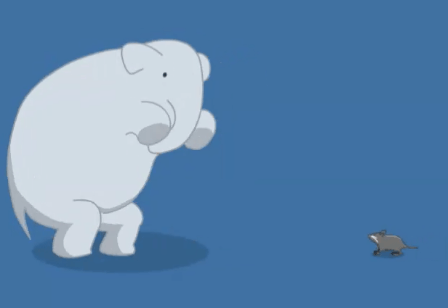
Which objects have a STRONG force of gravity?
a)
Objects with GREATER mass, like elephants
b)
Objects with LESS mass, like mice
15.
Which planet is the largest?
a)
Jupiter
b)
Saturn
c)
Uranus
d)
Neptune
16.
Day and night is caused by the _____________ of earth on its axis.
a)
revolution
b)
orbit
c)
rotation
17.
What are the reasons for the seasons?
a)
Earth's tilt and rotation.
b)
Earth's rotation and revolution.
c)
Earth's tilt and revolution.
d)
Earth's tilt and resolution
18.
How many outer planets are there?
a)
4
b)
8
c)
9
d)
20
19.
What is the sixth planet from the sun?
a)
Saturn
b)
Uranus
c)
Neptune
d)
Asteroid Belt
20.
Which planet is closest to the sun?
a)
Earth
b)
Mars
c)
Neptune
d)
Mercury
21.
Which planet is NOT considered a gas giant?
a)
Jupiter
b)
Saturn
c)
Venus
d)
Neptune
22.
How many stars are in our solar system?
a)
1
b)
1,000
c)
1 million
d)
Over 1 billion
23.

noun. a large body in outer space that circles around the sun or another star.

(a)  

24.

noun. a real or imaginary line on which something rotates.

(a)  

25.

noun. the star at the center of our solar system.

(a)  

26.

noun. a ball of gas in space that makes its own light and heat.

(a)  

27.

verb. to move in a circle around a fixed point. Earth revolves around the sun.

(a)  

28.
This is the largest planet in the solar system.
a)
Saturn
b)
Jupiter
c)
Uranus
d)
Venus
29.
This is the smallest planet in the solar system
a)
Mercury
b)
Venus
c)
Earth
d)
Mars
30.
Most likely due to a massive collision, this planet rotates from top to bottom.
a)
Saturn
b)
Venus
c)
Neptune
d)
Uranus
31.
The earth orbits around...
a)
the sun.
b)
the moon
c)
other planets
d)
the Milky Way
32.
This gas giant has a large storm in its atmosphere known as The Red Spot
a)
Jupiter
b)
Saturn
c)
Uranus
d)
Neptune
33.
Which of the following orbits the sun?
a)
asteroids
b)
comets
c)
planets
d)
all of the above
34.
What divides the inner planets from the outer planets?
a)
Kuiper Belt
b)
Oort Cloud
c)
Asteroid Belt
35.
When the Earth travels all the way around the Sun, it is called a . . .
a)
Day
b)
Rotation
c)
Year
d)
Spin
36.
When the Earth spins around its own axis one whole time, it is called a ....
a)
Year
b)
Day
c)
Hemisphere
d)
Seasons
37.
Which planet is Mercury?
a)
1
b)
2
c)
3
d)
4
38.
What force keeps the planets orbiting the sun?
a)
Gravity
b)
Magnetism
c)
Electricity
d)
Friction
39.
The surface of this planet appears red due to rusting iron in the rocks.
a)
Mercury
b)
Mars
c)
Pluto
d)
Venus
40.
This is the only planet in the solar system with oceans of liquid water.
a)
Mercury
b)
Mars
c)
Venus
d)
Earth
41.

What two things affect gravity?

a)

mass

b)

inertia

c)

gravity

d)

distance

42.
Which definition accurately describes the Astronomical Unit (AU)?
a)
The average distance between the planets. 
b)
The average distance between Earth and Mars.
c)
The average distance between the Earth and the Sun. 
d)
The average size of the Earth compared to the Sun. 
43.
How do the sizes of the inner planets compare to the sizes of the outer planets?
a)
The inner planets are larger.
b)
The outer planets are smaller.
c)
There is no size difference between the inner and outer planets.
d)
The inner planets are smaller.
44.
Describe how the distances between the orbits of the inner planets compare to the distances between the orbits of the outer planets.
a)
The distances between orbits of the outer planets are much smaller.
b)
The distances between orbits of the outer planets are much larger.
c)
The distances between orbits of the inner planets are much larger.
d)
There is no difference between the distances of the orbits of the inner planets and the outer planets.
45.
Which planet in the Solar system has the shortest revolutionary period?
a)
Mercury
b)
Earth
c)
Jupiter
d)
Neptune
46.
What planet has a day closest to the length of day of Earth?
a)
Mercury
b)
Venus
c)
Mars
d)
Earth
47.

A student made a model of how the planets orbit the sun. She used a tennis ball to represent the sun. She used ping-pong balls to represent each planet and painted each one a different color. Then, she placed all the ping-pong balls equal distances apart in a line extending out from the sun.


What are two limitations of the student's model? (Limitations are things about the model that limit its accuracy.)

a)

She used the same size balls to represent the planets.

b)

She made planets orbit the sun.

c)

The planets are not the correct distances from the sun.

d)

The solar system can't be modeled using actual objects.

48.

This model shows...

a)

the size differences among the planets accurately.

b)

the distances between the planets accurately.

c)

both the sizes of the planets and the distances between them accurately

49.

Our Solar System_________

a)

Has 8 planets that are very close together

b)

Has 8 planets, but is mostly empty space

c)

Has 9 planets that are very close together

d)

Has 9 planets, but is mostly empty space

50.

Why do scientists use scale models to study the Solar System?

a)

The solar system is too large to study without using models

b)

The solar system is too small to study without using models

c)

Scientists don't need to use models because we have satellites

d)

All of these options are true

51.

Why is making a model of the solar system difficult?

a)

Don't have the right materials

b)

The solar system is so big and the objects in it are so small in comparison

c)

There are too many parts in a model

d)

Because the science concepts are too difficult

52.

The graph shows the average temperatures of the planets in our solar system. Which planet has the highest average temperature?

a)

Mercury

b)

Venus

c)

Earth

d)

Jupiter

53.

If you were going to make a scale model of the Solar system what planet should be the second largest?

a)

Jupiter

b)

Saturn

c)

Earth

d)

Uranus

54.

Which of the following bodies in our solar system orbit the sun? (Select all that are correct)

a)

Meteoroids

b)

Moons

c)

Dwarf Planets

d)

Comets

e)

Asteroids

55.

Which planet doesn't have an atomsphere?

a)

Mars

b)

Mercury

c)

Venus

d)

Neptune