wayground logo

Free Printable Worksheets

NEW

Font size

S
M
L
XL
Worksheets

Adaptations - Quiz.

Total questions: 50

Worksheet time: 48mins

Name
Class
Date
1.

What adaptation makes the most sense for living in a cold snowy area?

a)

gills

b)

colorful wings

c)

white fur

d)

striped skin

2.

Chameleons are reptiles that have the ability to hide from predators and prey by blending in with their environment. They can change the pattern and/or color of their skin. This ability is known as --

a)

natural selection

b)

imitations

c)

mimicry

d)

camouflage

3.
An example of a behavioral adaptation is
a)
The long neck of a giraffe
b)
Penguins huddling together for warmth
c)
A camel's hump used to store water
d)
A polar bear's white fur used for camouflage
4.
A black bear hibernates during the winter months.
a)
Behavioral Adaptation
b)
Structural Adaptation
5.
A lion has pointed teeth to help it tear meat off of the bone.
a)
Behavioral Adaptation
b)
Structural Adaptation
6.
An owl is mostly nocturnal meaning it hunts and is active at night.
a)
Behavioral Adaptation
b)
Structural Adaptation
7.
Parrots have special feet, with two toes on the front and back to help them cling to branches.
a)
Behavioral Adaptation
b)
Structural Adaptation
8.
When threatened, some animals make warning sounds to help other animals escape a predator.
a)
Behavioral Adaptation
b)
Structural Adaptation
9.
Anything that helps an animal survive in its environment.
a)
counter-shading
b)
mimicry
c)
adaptation
d)
camouflage
10.
When an animal looks like another animal it is called ______________.
a)
camouflage
b)
mimicry
c)
warning coloration
d)
protective resemblance
11.

Living things have two kinds of adaptations: __________________. Choose the best answer.

a)

behavioral and physical

b)

physical makeup and structural

c)

behavioral and structural

d)

thrive and survive

12.
How do adaptations help animals?
a)
To escape animals
b)
to hunt for food
c)
to survive in their habitats
d)
All of these are correct
13.

Which one is a behavioral adaptation for humans?

a)

walking upright

b)

having thumbs

c)

eyes on the front of our heads

d)

molar teeth

e)

all of the above

14.

An adaptation that helps a cactus live in the desert is its

a)

wide, flat leaves to catch water

b)

bright green color

c)

thin, spiny needles

d)

tall stems

15.

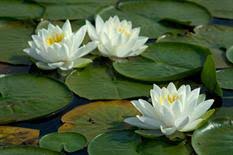
Water lilies live in lakes and ponds. It is an example of

a)

Free floating plant

b)

Fixed plant

c)

Submerged plant

16.

What is it called when a plant or animal has a trait that helps it survive in a specific environment?

a)

instinct

b)

mimicry

c)

camouflage

d)

adaptation

17.

Mangrove trees have this feature

a)

Stilt roots

b)

Breathing roots

c)

Both 1 and 2

d)

None

18.

Turtles have a shell that -

a)

protects them from the cold

b)

protects their eyes

c)

protects them from predators

d)

protects them from the rain

19.

When an animal sleeps for a long period of time it is called...

a)

hibernation

b)

migration

c)

communication

d)

protection

20.

Which organism has a long structure that it uses to reach the tallest part of plants for food?

a)
b)
c)
d)
21.

What characteristic allows organisms to blend in with their environment?

a)

hibernation

b)

migration

c)

camouflage

d)

defense

22.

Jackrabbits have long ears to help them-

a)

hear better

b)

stay cool

c)

keep water in

d)

blend in to their surroundings

23.

If an animal has sharp teeth, I know

a)

it eats plants (herbivore)

b)

it eats meat (carnivore)

c)

it uses camouflage for protection

d)

it hibernates for the winter

24.

In a food web, the energy flow always starts with

a)

the plant

b)

the predator

c)

the prey

d)

the sun

25.

An animal that copies or looks like another animal is using

a)

structure

b)

camouflage

c)

mimicry

d)

migration

26.

Webbed feet help a duck-

a)

walk on rocky surfaces

b)

swim

c)

catch prey

d)

run faster

27.

A camel has long eyelashes to-

a)

attract other camels

b)

protect eyes from sand going in

c)

sleep better

d)

see farther away

28.
_______________ is when an animal blends into its environment.
a)
camouflage
b)
mimicry
c)
warning coloration
29.
Anything that helps an animal survive in its environment.
a)
counter-shading
b)
mimicry
c)
adaptation
d)
camouflage
30.
How do adaptations help animals?
a)
To escape animals
b)
to hunt for food
c)
to survive in their habitats
d)
All of these are correct
31.
An example of a behavioral adaptation is
a)
The long neck of a giraffe
b)
Penguins huddling together for warmth
c)
A camel's hump used to store water
d)
A polar bear's white fur used for camouflage
32.
Which is an example of a behavioral adaptation?
a)
claws
b)
beak
c)
thumb
d)
migration
33.
Why do hollow bones help birds during flight?
a)
Hollow bones make the birds weigh less
b)
Hollow bones are full of heavy blood
c)
Hollow bones store water
d)
Hollow bones are made of feathers 
34.
Birds migrate during the winter to less cold areas. What type of adaptation is this?
a)
Behavioral 
b)
Physiological 
35.
Why might some plants have thorns?
a)
to stay safe from animals that want to eat the plant
b)
to attract insects that spread pollen to other plants
c)
to take in nutrients from the air
d)
to provide shade for the plant
36.
Some grasses grow in hot dry areas. Why might they grow deep roots?
a)
to protect the plant from sun damage
b)
to take in as much light as possible
c)
to spread seeds to new places
d)
to reach water down below
37.
An octopus can change its color to match its surroundings. This is an example of which type of behavior?
a)
camouflage
b)
mimicry
c)
cooperative behavior
d)
estivation
38.
Why Do aniamals Adapt?
a)
To make their life better
b)
To Survive in their envorment.
c)
To make people happy
d)
ALL of the above
39.

Helps the plant to anchor to the soil and get water and nutrients.

a)

Leaves

b)

Stems

c)

Roots

d)

Odd shapes

40.
A penguin is white on its belly and black on its back so it harder to see underwater from above and below.
a)
Behavioral Adaptation
b)
Structural Adaptation
41.
An owl is mostly nocturnal meaning it hunts and is active at night.
a)
Behavioral Adaptation
b)
Structural Adaptation
42.
A cat has a long tail to help it balance.
a)
Behavioral Adaptation
b)
Structural Adaptation
43.
Arctic foxes are white in the winter to blend in with the snow. What adaptation is this?
a)
behavioral adaptation
b)
camouflage
c)
migration
d)
hibernation
44.

_______ is to go into a deep sleep-like state during winter.

a)

hibernate

b)

migrate

c)

camouflage

d)

adaptation

45.

A kangaroo has a pouch to protect its young.

a)

Structural/Physical Adaptation

b)

Behavioral Adaptation

46.

Gills on a fish

a)

structural

b)

physiological

c)

behavioral

47.

When threatened, some animals make warning sounds to help other animals escape a predator.

a)

Behavioral Adaptation

b)

Structural Adaptation

48.
The feet of this bird tell us that this animal can...
a)
Run fast
b)
Swim 
c)
Fly fast
d)
Climb rocks 
49.

Frogs have sticky pads for climbing

a)

structural

b)

behavioural

50.
I am an animal that lives in the arctic. I have adaptations that allow me to survive in my environment. Which of the following is an adaptation that will allow me to survive the arctic?
a)
thick white fur 
b)
speed
c)
digging in the ground 
d)
short, fluffy tail