
 Worksheets
Tide Pool
Total questions: 22
Worksheet time: 12mins

The main photosynthetic region of a seaweed is the ....
thallus/frond
holdfast
gas bladder
blade
stipe
Keeps the seaweed buoyant/afloat
thallus/frond
holdfast
gas bladder
blade
stipe
The region that keeps the seaweed anchored to rocks.
frond/thallus
holdfast
gas bladder
blade
stipe

the stem-like portion of then of seaweeds
thallus/frond
blade
stipe
gas bladder/pneumatocyst
holdfast
Seaweed is which Kingdom of Life?
Plant
Fungus
Protista
Bacteria
Seaweed has a root system that transports nutrients through its flesh.
True
False
Seagrasses have a root system that transports nutrients through its flesh.
True
False
Seaweed produce this molecule in photosynthesis that enables it to grow its body/flesh
Glucose
Photons
Carbon Dioxide
Water
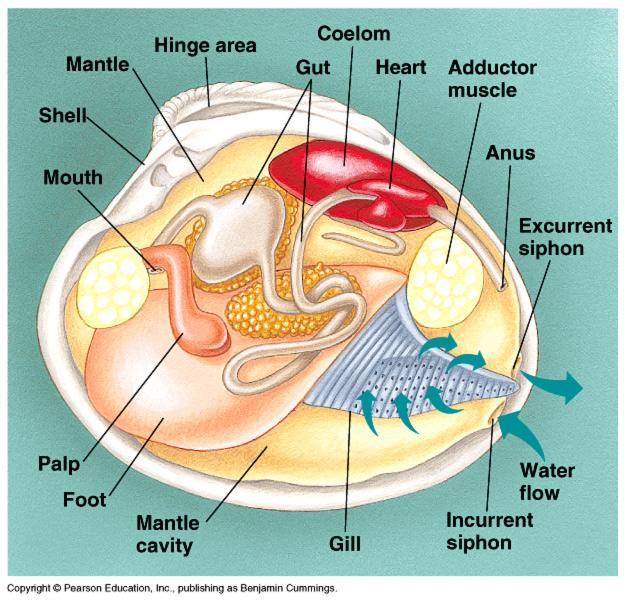
Which part of the Mollusk body is specialized for burrowing, feeding, and movement?
shell
siphon
mantle
foot

What is a radula?
A Tounge like sturcture used to scrape plant matter into easy to eat pieces.
A part used to make protection.
the fancy way to say "Tentacle"
Movment
What are filter feeders?
A large pile of living organisms and the animals that live among them.
An organism that attaches onto another organism and feeds off of it.
Animals that feed by removing tiny bits of food from the water.
Animals that use sunlight to obtain nutrients.
Bivalves have a(n) __ circulatory system
Closed
Open

Which of the following in NOT an adaptation for withstanding wave shock?
Being tall
Living in groups
Suction cup foots
Mussel Byssal Threads
Which of the following is an adaptation to avoid drying out?
Hiding in moist rock crevices
Mucus coating on seaweed
Rocks/empty shells covering the outside of an anemone's body.
Securely closing shells and operculums.
Which is true of the honeycomb worm? Choose 2
It is a type of flatworm
It uses calcium carbonate to build its home
It is a filter feeder
It has a hydrodynamic, colonial burrow.
Why are some sharks considered a keystone species?
Because they are a top predator
They scare off smaller fish that may overgraze an area of sea grass
They are tertiary consumers
They are cartilaginous
Why were the mussels in Mukkaw Bay able to quickly cover the rockface in Paine’s experiment?
The starfish took up most of the room on the rocks, and when the starfish were removed, the mussels
occupied the empty spaces.
Paine added more mussels to the rocks, causing the starfish to move to other habitats.
The starfish were competing directly with the mussels for food, and removing the starfish allowed the
mussels more access to the food
Starfish feed on mussels, so when the starfish were removed the mussels no longer had a predator and
their populations grew unchecked.
Which of the following is the best explanation of the green world hypothesis?
The world is green because predators keep herbivores in check.
The world is green because of chlorophyll.
The world is green because there are mot many producers.
The world is green because of the reflection of the sky on plants.
Which of the following is the best definition of trophic cascade?
A change in the amount of energy passed through an ecosystem.
The removal or addition of an apex predator that has an effect on the ecosystem.
Addition of numerous food chains into an ecosystem.

